

Guides
Best Heel Spur Exercises: 7 Gentle Moves for Heel Comfort
Jun
Best Heel Spur Exercises: 7 Gentle Moves for Heel Comfort
Heel spur exercises cannot erase a bony spur, but gentle stretching and strengthening can help reduce tension, improve mobility, and support more comfortable daily movement.
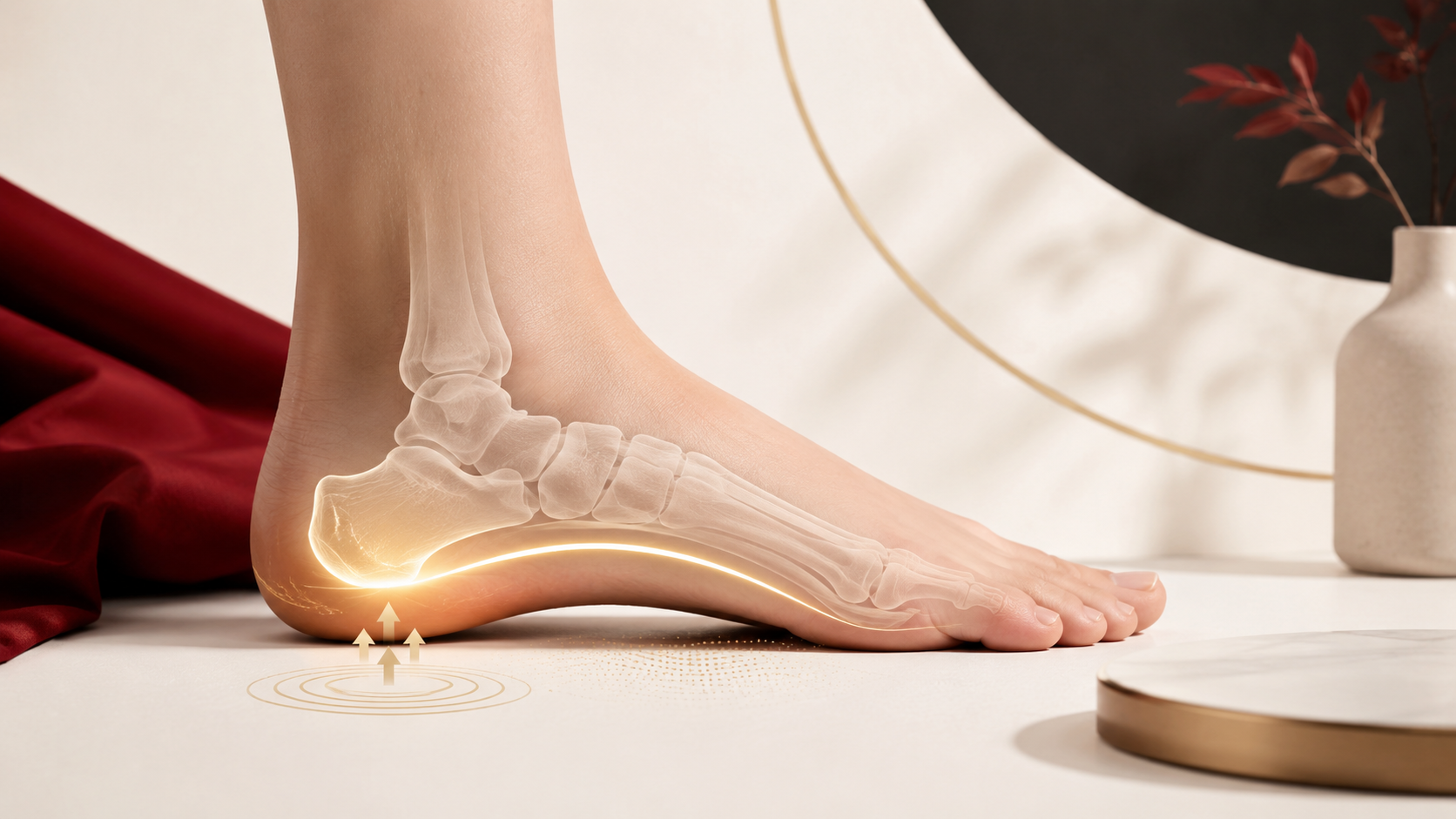
A heel spur is a bony growth that can form on the heel bone. Many heel spurs do not cause symptoms by themselves, but they are often discussed alongside plantar fasciitis because both can be linked with heel pain and tension through the bottom of the foot.
If your heel feels sore, stiff, or sensitive when walking, the right exercises may help by reducing calf tightness, easing plantar fascia tension, and improving foot strength. The goal is comfort and better load tolerance — not forcing the spur to disappear.
Quick Answer: Do Exercises Help Heel Spurs?
Exercises may help reduce heel spur-related discomfort when the pain is connected to tight calves, plantar fascia strain, or weak foot muscles. They do not remove the bony spur, but they can support better comfort and movement.
A practical routine usually combines gentle stretching, gradual strengthening, supportive shoes, and avoiding activities that repeatedly irritate the heel.
Stretch Tension
Calf and plantar fascia stretches can reduce pull through the heel and bottom of the foot.
Build Control
Heel raises and towel curls help strengthen the foot and lower leg for better daily support.
Support the Heel
Cushioned, stable shoes and supportive insoles may help reduce repeated strain during walking.
Before You Start: Keep It Gentle
Heel pain responds better to consistency than force. These exercises should feel like a mild stretch or controlled effort, not sharp pain.
Simple Rules
- Warm up with light walking or ankle movement first.
- Move slowly and avoid bouncing during stretches.
- Use a wall, chair, or railing for balance.
- Start with fewer repetitions if your heel is sensitive.
- Do not push through sharp or worsening pain.
Exercise 1: Wall Calf Stretch
Tight calf muscles can increase tension through the heel and plantar fascia. A wall calf stretch is a simple place to start.
Set Your Position
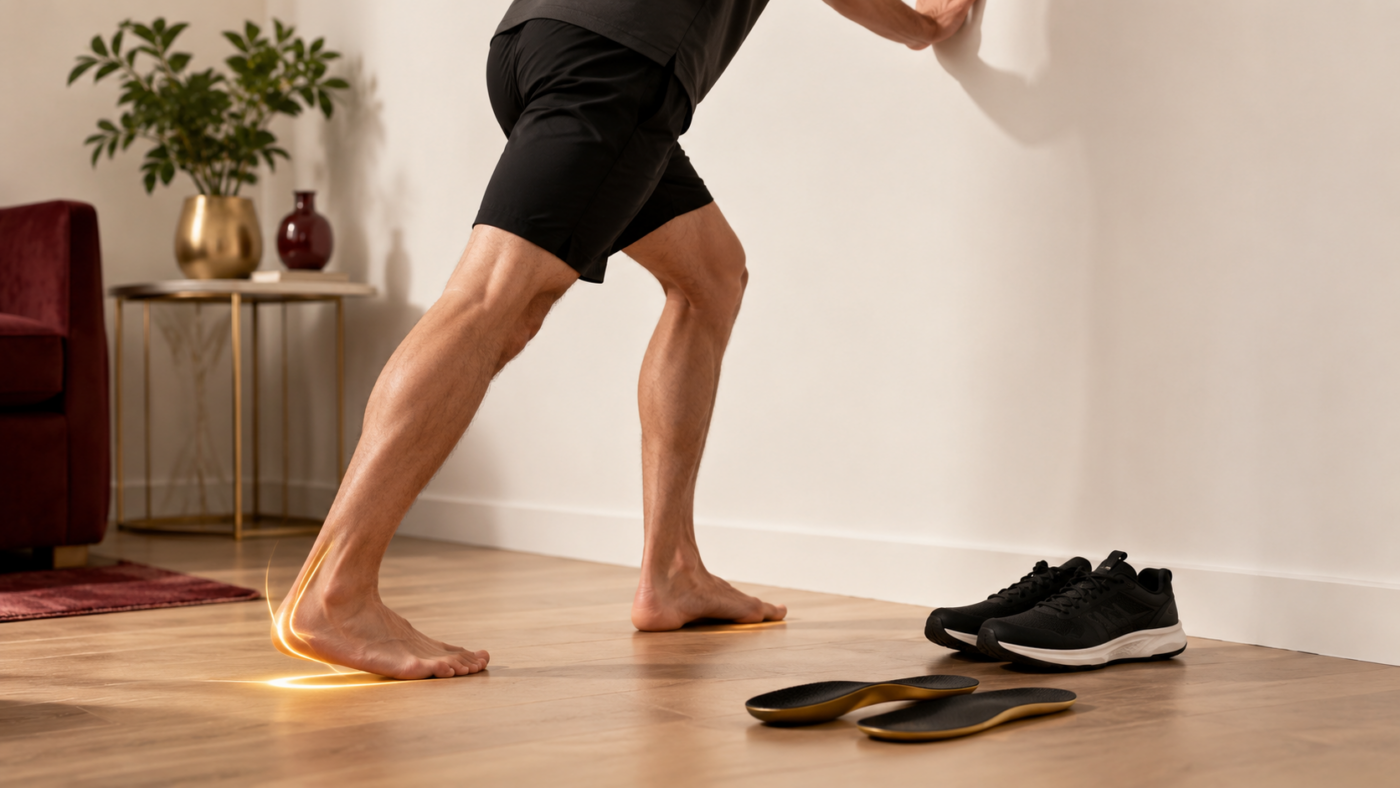
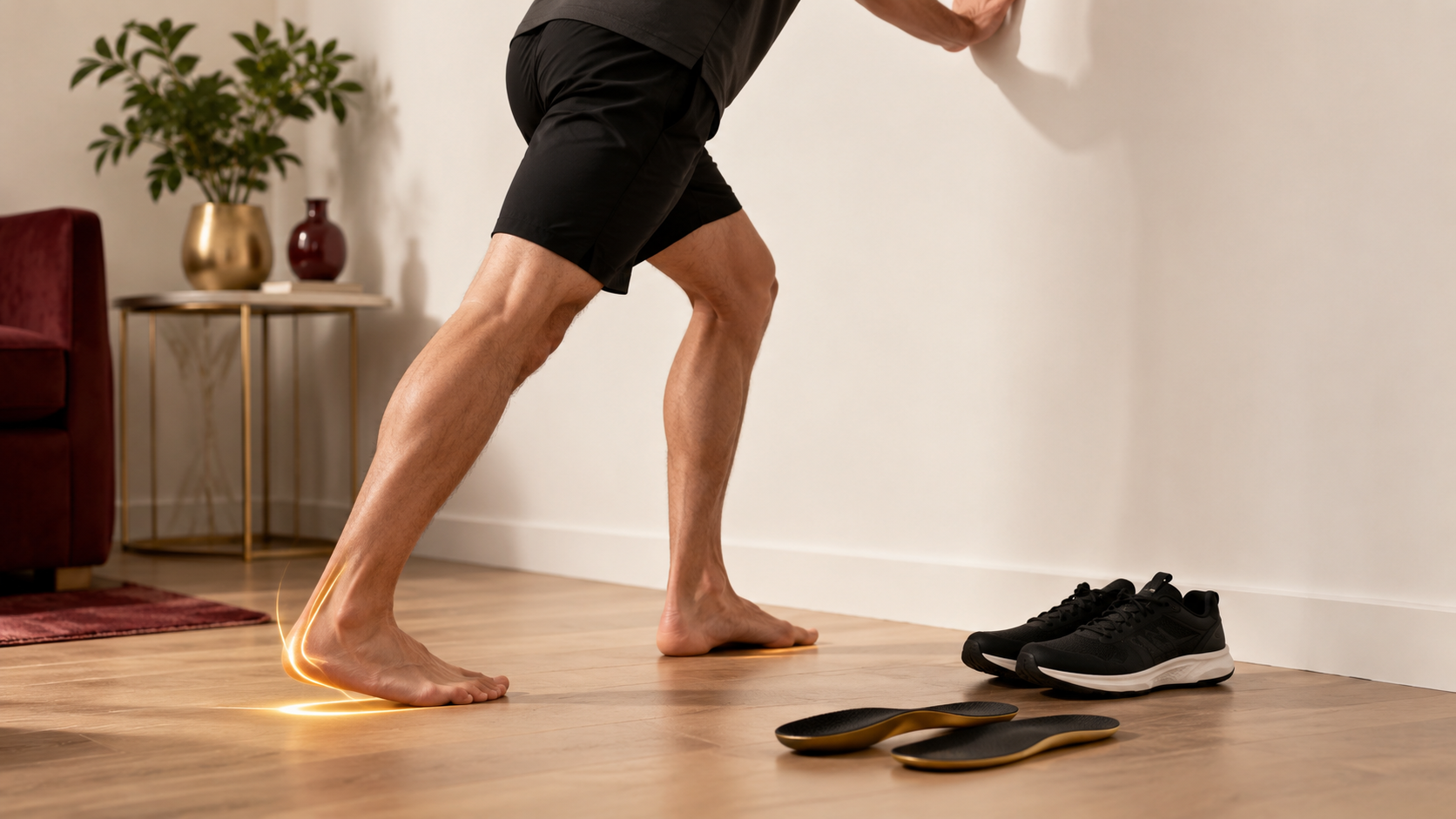
Stand facing a wall. Place the affected leg behind you with the knee straight and heel flat on the floor.
Lean Forward Slowly
Bend the front knee and gently move your hips toward the wall until you feel a stretch in the back calf.
Hold and Repeat
Hold for 20–30 seconds, relax, and repeat 2–4 times on each side.
Exercise 2: Bent-Knee Calf Stretch
This variation targets the deeper calf area and heel cord. It is useful when the lower calf or Achilles area feels tight.
- Stand facing a wall with one foot behind you.
- Keep both heels on the ground.
- Gently bend the back knee while keeping the heel down.
- Hold for 20–30 seconds.
- Repeat 2–4 times on each side.
Exercise 3: Plantar Fascia Stretch
A plantar fascia stretch targets the bottom of the foot directly. This can be especially helpful before your first steps in the morning or after sitting for a long time.
- Sit down and cross the affected foot over the opposite knee.
- Gently pull your toes back toward your shin.
- You should feel a stretch along the arch and bottom of the foot.
- Hold for 10–20 seconds.
- Repeat 2–4 times.
Keep this stretch gentle. The goal is to ease tension, not aggressively pull the foot into discomfort.
Exercise 4: Heel Raises
Heel raises build calf and foot strength, which may improve support during walking and standing.
| Step | How to Do It | Comfort Tip |
|---|---|---|
| Start | Stand near a wall or chair for balance with feet hip-width apart. | Keep weight even across both feet. |
| Lift | Slowly rise onto the balls of your feet. | Move smoothly, not explosively. |
| Lower | Lower your heels back down with control. | Avoid dropping quickly into the floor. |
| Repeat | Try 2 sets of 8–12 repetitions. | Reduce reps if symptoms increase. |
Exercise 5: Controlled Heel Drops
Heel drops can stretch and strengthen the calf-Achilles complex, but they can also be too intense if your heel is very irritated. Start carefully.
- Stand on a step while holding a railing or wall.
- Place the ball of one foot near the edge of the step.
- Slowly lower the heel until you feel a controlled calf stretch.
- Pause briefly, then return to the starting position.
- Start with a small range of motion and build gradually.
Exercise 6: Ball Rolling
Rolling the bottom of the foot over a small ball can help some people feel temporary relief by relaxing the arch and sole. Use light pressure.
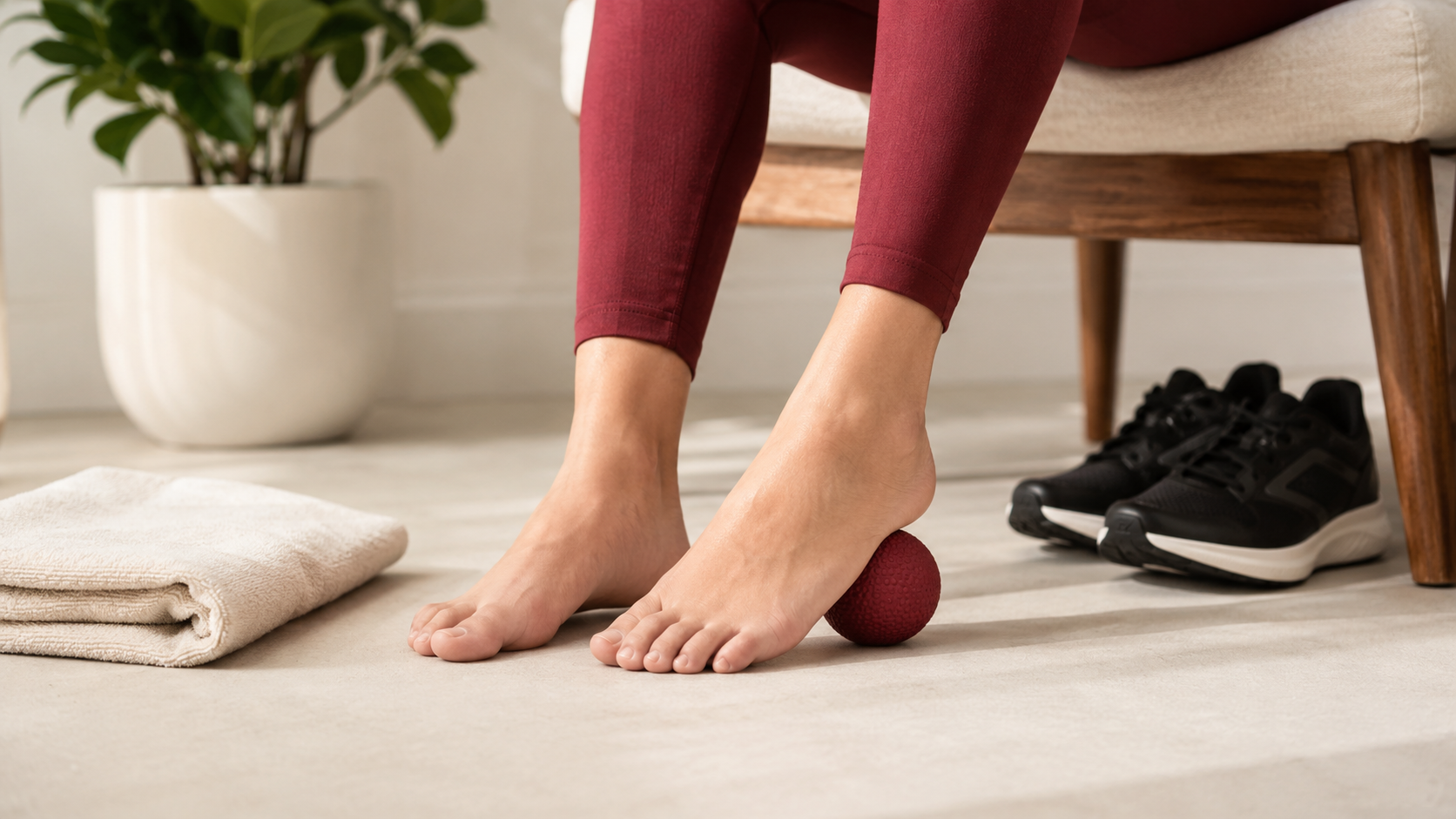
- Sit down so you can control the pressure.
- Place a small ball under the arch area.
- Roll forward and backward slowly for 1–2 minutes.
- Avoid aggressive pressure directly into sharp heel pain.
- Stop if symptoms feel worse afterward.
Exercise 7: Towel Curls
Towel curls strengthen the small muscles inside the foot. These muscles help with arch control and foot stability.
- Sit in a chair with a small towel on the floor.
- Place your foot flat on the towel.
- Use your toes to gently scrunch the towel toward you.
- Relax and repeat 8–12 times.
- Start with one set and increase gradually if comfortable.
If your toes cramp, reduce the number of repetitions and move more slowly.
A Simple Heel Spur Exercise Routine
You do not need to do every exercise every day. Start with a small routine that your heel tolerates well.
| Time | Routine | Goal |
|---|---|---|
| Morning | Plantar fascia stretch + gentle calf stretch. | Ease first-step stiffness. |
| Midday | Wall calf stretch or bent-knee calf stretch. | Reduce calf and heel tension. |
| After Activity | Light ball rolling if it feels helpful. | Calm foot tightness after load. |
| Strength Days | Heel raises + towel curls. | Build foot and calf support gradually. |
Shoes, Insoles, and Daily Support
Exercises can help, but your foot still spends most of the day inside shoes. If your shoes are worn out, flat, unstable, or lacking heel cushioning, your heel may keep getting irritated.
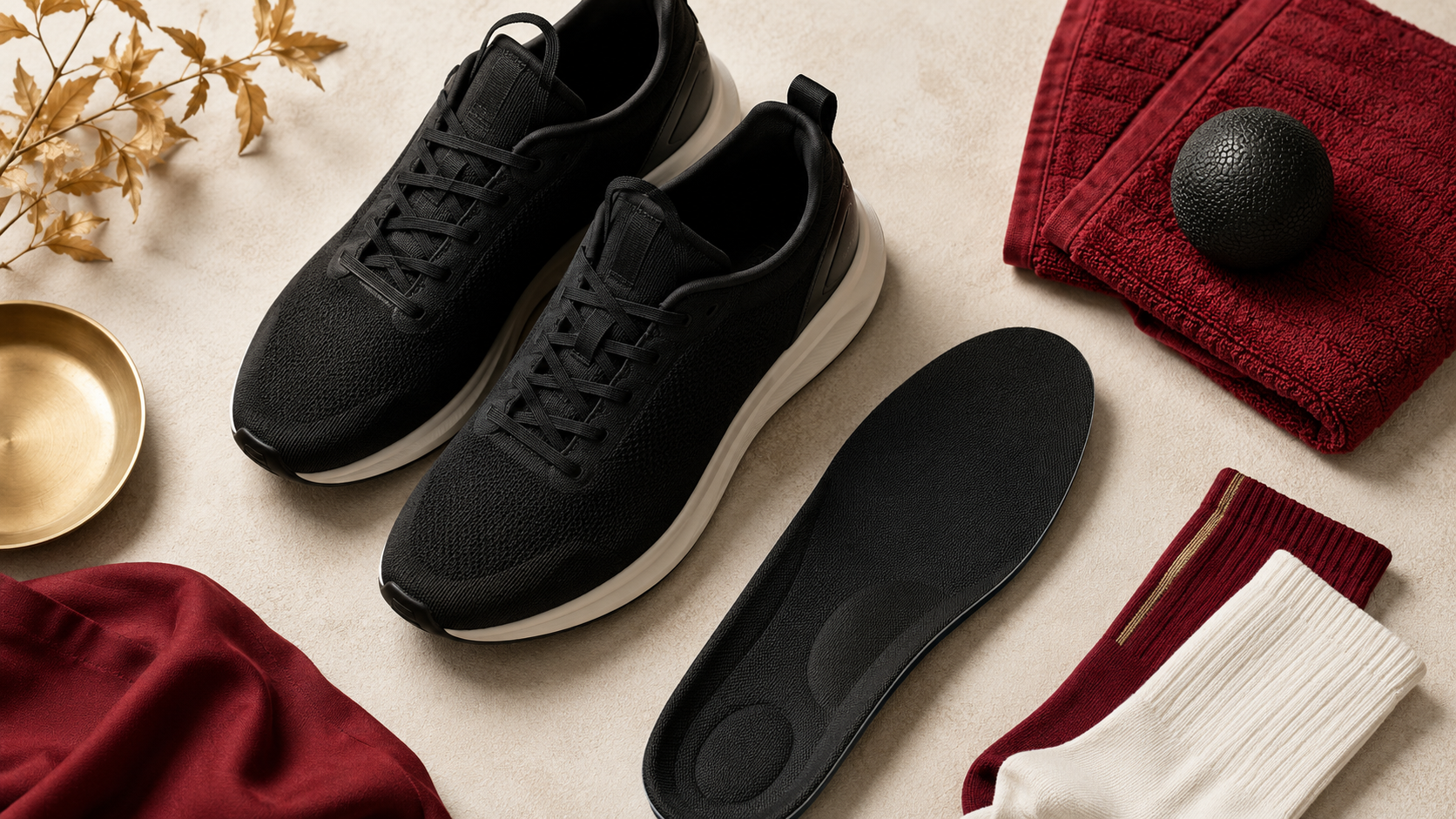
What to Look For
- Heel cushioning: Helps soften impact during walking and standing.
- Stable midsole: Reduces excessive collapse or wobble under the foot.
- Secure heel fit: Helps prevent sliding inside the shoe.
- Arch support: Helps support the foot’s natural shape and reduce strain through the bottom of the foot.
- Low-profile insole fit: Adds support without making everyday shoes feel crowded.
When Exercises Are Not Enough
Exercises are not a substitute for medical care when pain is severe, worsening, or unusual. Heel pain can come from plantar fasciitis, heel spurs, stress fractures, Achilles issues, nerve irritation, fat pad problems, or other conditions.
Support Your Heel Comfort Between Exercise Sessions
Gentle exercises can help reduce tension, but daily support matters too. InsoleLux insoles are designed to improve underfoot comfort inside compatible shoes with a clean, low-profile fit.
FAQ
Can exercises remove a heel spur?
No. Exercises do not remove a bony spur. They may help reduce tension, improve mobility, and support comfort when heel pain is related to plantar fascia or calf strain.
What is the best exercise for heel spur pain?
Many people start with gentle calf stretches and plantar fascia stretches. The best exercise depends on what triggers your pain and what your foot tolerates comfortably.
Should heel spur exercises hurt?
No. Mild stretching or controlled effort is okay, but sharp pain is a sign to stop. Do not push through worsening heel pain.
How often should I do heel spur stretches?
A gentle routine once or twice daily may be enough to start. Build gradually based on comfort and professional guidance if needed.
Are insoles good for heel spurs?
Insoles do not remove heel spurs, but supportive insoles may help improve heel and arch comfort inside compatible shoes, especially during long walking or standing days.
When should I see a doctor for heel spur pain?
Seek care if pain is severe, worsening, linked with swelling or bruising, caused by injury, painful at rest, or not improving with supportive footwear and gentle care.
Final Take
Heel spur exercises are not about grinding away a bony growth. They are about reducing tension, improving foot and calf mobility, and helping your heel tolerate daily movement more comfortably.
Start gently with calf stretches, plantar fascia stretching, ball rolling, heel raises, and towel curls. Pair the routine with supportive shoes and avoid pushing through sharp or worsening pain.
For daily comfort, supportive insoles can be a practical addition inside compatible shoes — especially when long standing or walking keeps irritating your heel.
