

Guides
5 Best Methods to Relieve Heel Pain
Jun
5 Best Methods to Relieve Heel Pain
Heel pain can make walking, standing, and daily routines feel harder. These five practical methods may help reduce strain, support comfort, and guide you toward the right next step.
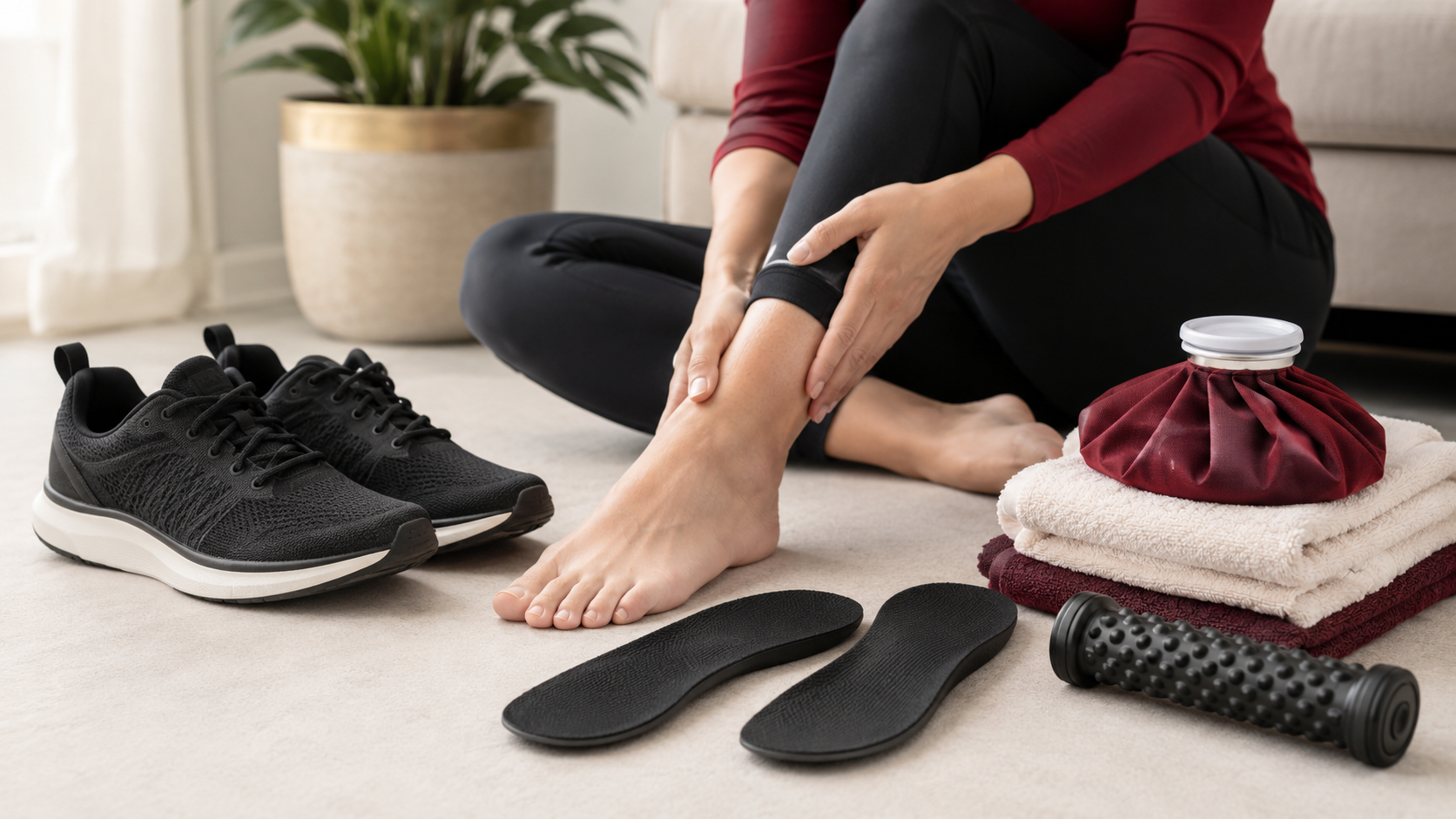
Heel pain often starts as a small discomfort that is easy to ignore. Over time, it can become more noticeable during walking, standing, exercise, or the first steps after rest.
The right approach depends on the cause of the pain. For many people, heel discomfort is linked with overuse, long standing, poor footwear, plantar fasciitis, heel spurs, stress fractures, fat pad changes, or other foot conditions.
The five methods below are practical starting points for everyday heel comfort. They are not a substitute for a diagnosis, but they can help you reduce unnecessary strain while you monitor your symptoms.
Quick Answer: What Can Help Heel Pain?
Heel pain may improve with a combination of rest, foot elevation, gentle stretching, careful ice use, supportive footwear, and professional guidance when symptoms are persistent or severe.
The goal is not to mask pain and keep overloading the heel. The goal is to reduce pressure, support the foot, calm irritation, and understand whether the pain needs a clinician’s evaluation.
Reduce Load
Rest and elevation can help tired or swollen feet recover after long standing or walking days.
Move Gently
Stretching and rolling may help reduce stiffness through the arch, calf, and plantar fascia area.
Support Daily
Supportive shoes and insoles can help reduce repeated heel impact during everyday movement.
5 Methods at a Glance
Use this quick overview first, then read the full sections for safety notes and practical details.
| Method | Best For | Key Caution |
|---|---|---|
| Put Your Feet Up | Tired, swollen, overloaded feet after long standing or walking. | Rest helps, but recurring heel pain still needs a cause-based plan. |
| Regular Stretching | Heel and arch tightness linked with plantar fascia or calf tension. | Do not force stretches into sharp pain. |
| Ice Pack | Short-term comfort after activity or irritation. | Protect skin and avoid over-icing. |
| Supportive Footwear | Daily walking, work shoes, standing, and impact reduction. | Bad fit can create new pressure points. |
| Pain Relief Guidance | More intense pain that affects daily tasks. | Ask a professional, especially if you have medical conditions or take medication. |
1. Remember to Put Your Feet Up
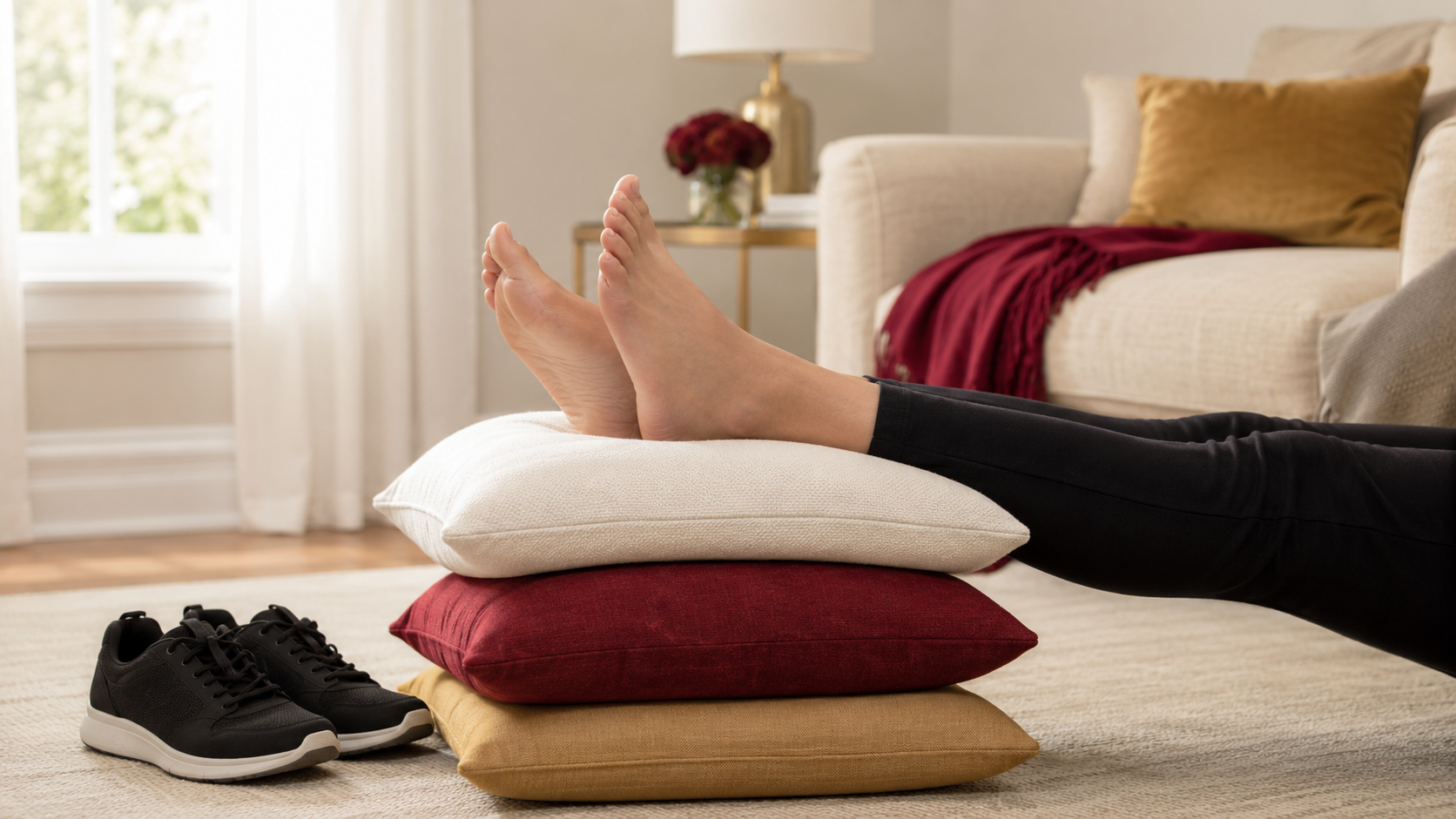
If your heels have been under pressure all day, the first method is simple: reduce the load. Long standing, long walks, hard floors, running, and unsupportive shoes can all add repeated pressure to the heel.
Elevating the feet on a footrest, pillow, or sofa can help you rest more comfortably after a high-load day. This is especially useful when the feet feel tired, heavy, or mildly swollen.
When to Try It
- After standing for hours at work.
- After a long walk or exercise session.
- When the feet feel tired or heavy.
- During a lunch break or at the end of the evening.
- When heel discomfort feels linked with overuse.
2. Stretch Regularly
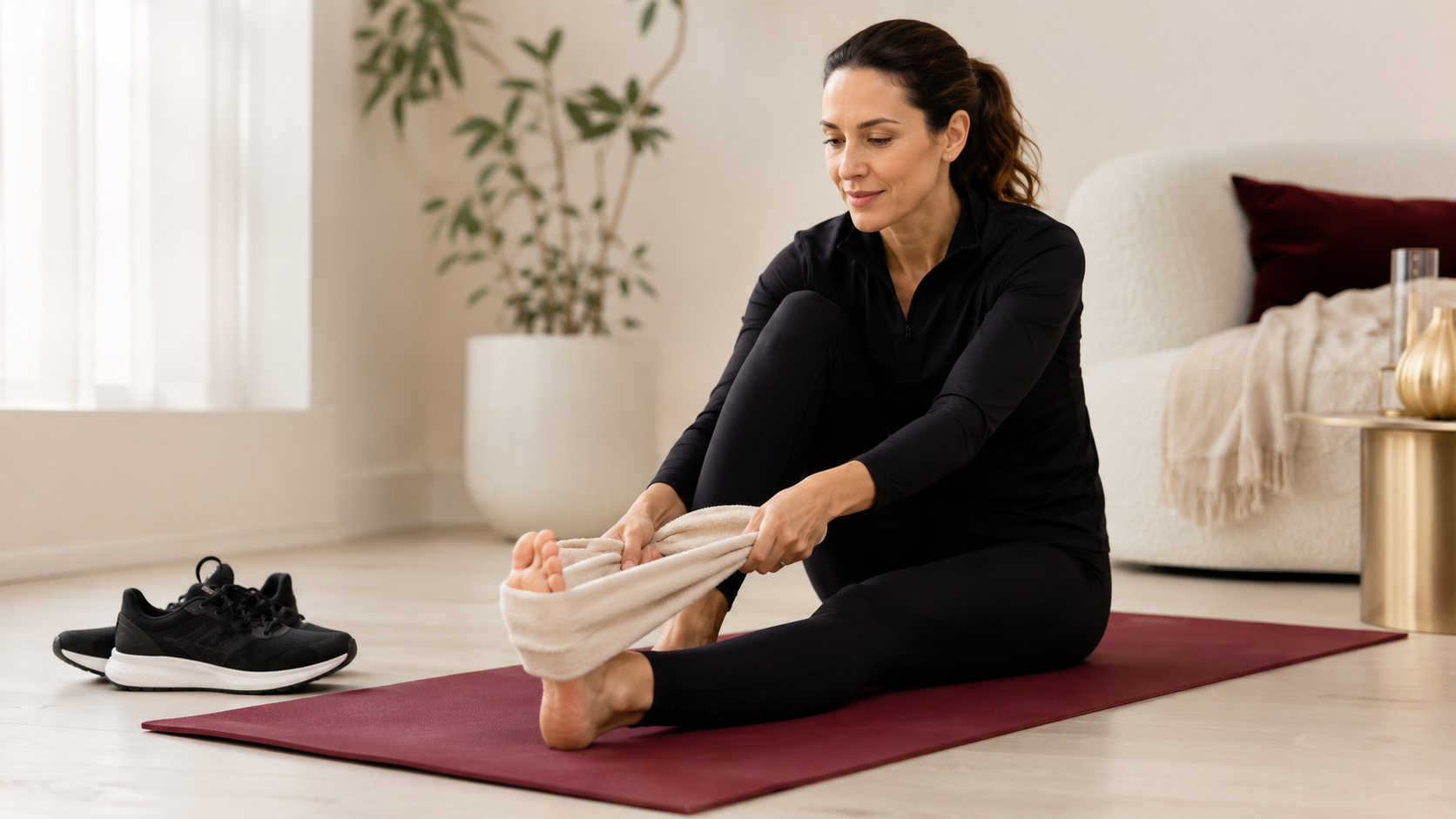
Regular stretching can help the plantar fascia, calf, and arch feel less tight. The plantar fascia is the tissue that connects the heel area toward the toes and helps support the arch.
The source article highlights two common approaches: rolling the feet and doing a plantar fasciitis toe stretch. Both should be done gently and slowly, without forcing painful pressure into the heel.
Stretching Options
- Foot rolling: Roll the sole of the foot gently over a foot roller, massage ball, or bottle.
- Toe stretch: Gently pull the toes back until you feel mild tension through the heel-to-arch area.
- Calf stretch: Stretch the calf against a wall while keeping the movement controlled.
- Towel stretch: Loop a towel around the ball of the foot and gently pull toward you.
3. Apply an Ice Pack Carefully
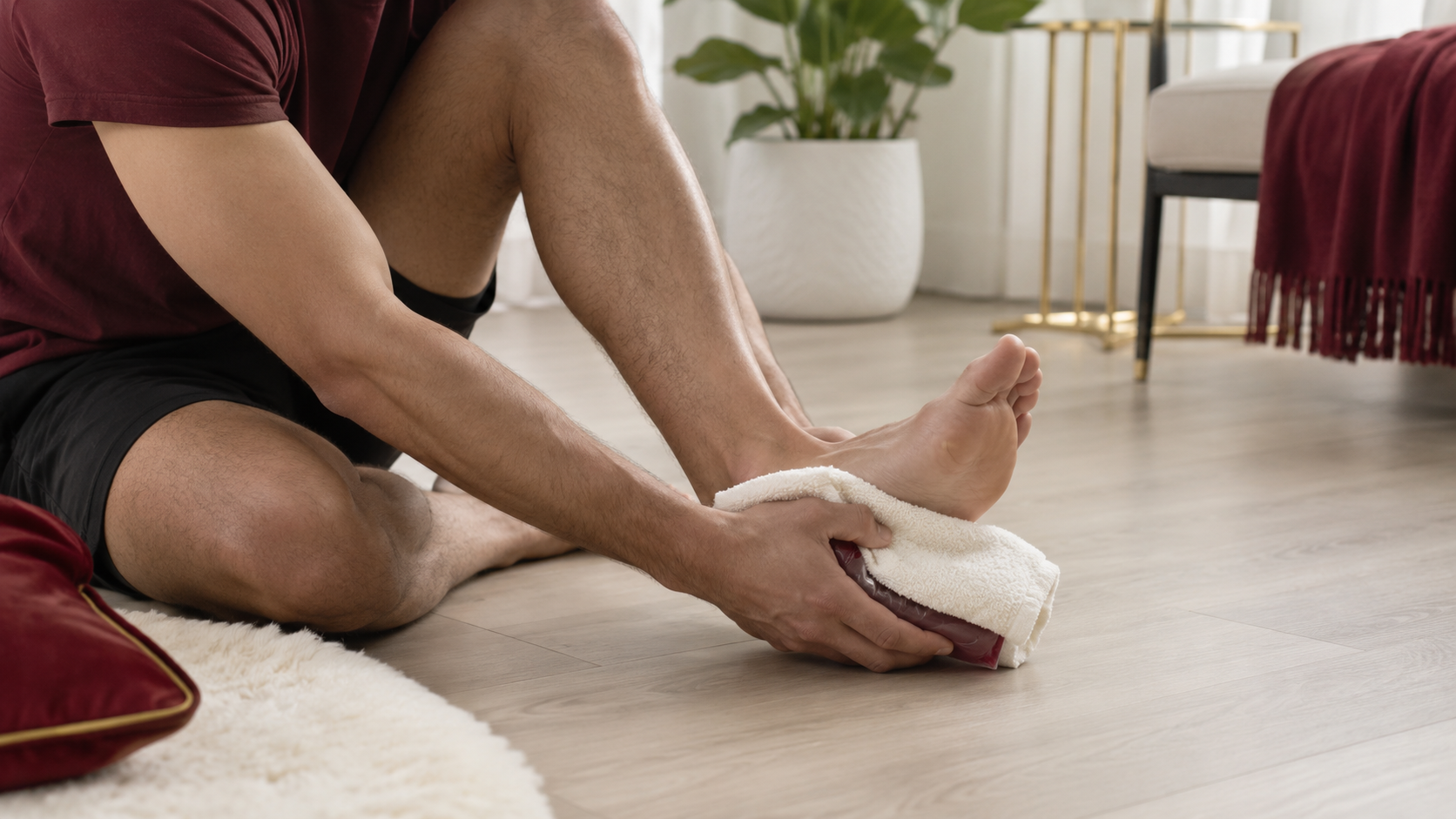
Ice is often used after activity or irritation to help the area feel calmer. For heel discomfort, some people use a wrapped ice pack around the foot or place a cold pack beneath the heel for a short period.
The key is safe use. Do not place ice directly on bare skin unless the product directions specifically say it is safe. Protect the skin with a thin towel and allow the skin to re-warm between sessions.
Ice Safety Tips
- Wrap the ice pack in a thin towel.
- Use short sessions rather than prolonged freezing.
- Stop if the skin feels numb, painful, or irritated.
- Be extra careful if you have sensitive skin or reduced sensation.
- Ask a professional if you have circulation problems, diabetes, or nerve symptoms.
4. Wear Supportive Footwear
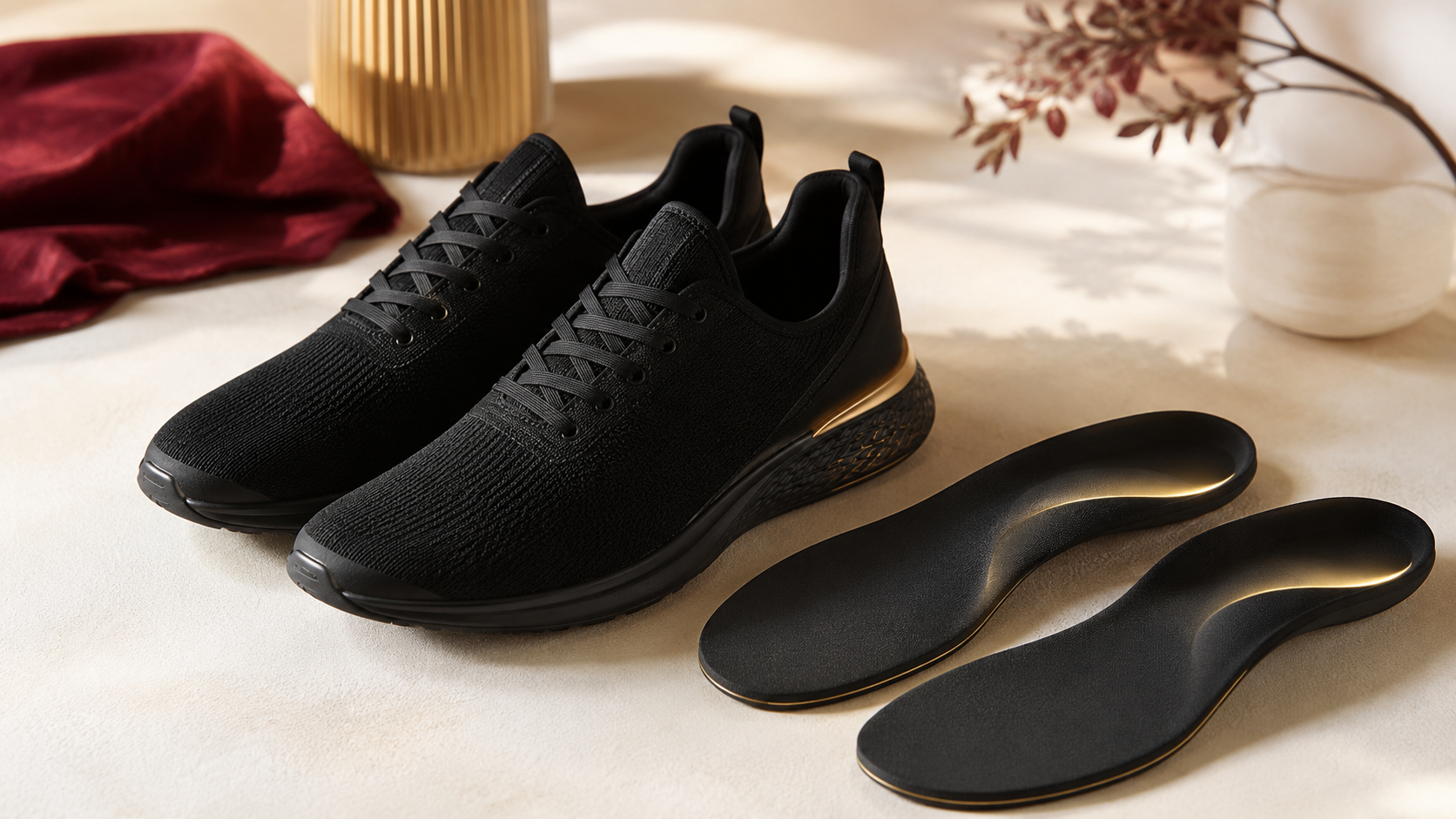
Footwear can make heel pain better or worse. Shoes that are too flat, too narrow, too stiff, too worn out, or poorly cushioned can increase pressure through the heel.
Supportive shoes, heel cushions, heel cups, and contoured insoles may help soften impact and improve foot support during walking, standing, running, or jumping.
What to Look For
- Heel cushioning: Helps soften repeated impact under the heel.
- Arch support: Helps support the foot’s natural shape.
- Stable midsole: Helps reduce wobble and uncontrolled foot movement.
- Secure fit: Helps prevent sliding, rubbing, and toe gripping.
- Enough toe room: Helps prevent forefoot crowding and pressure.
5. Consider Pain Relief Guidance When Needed
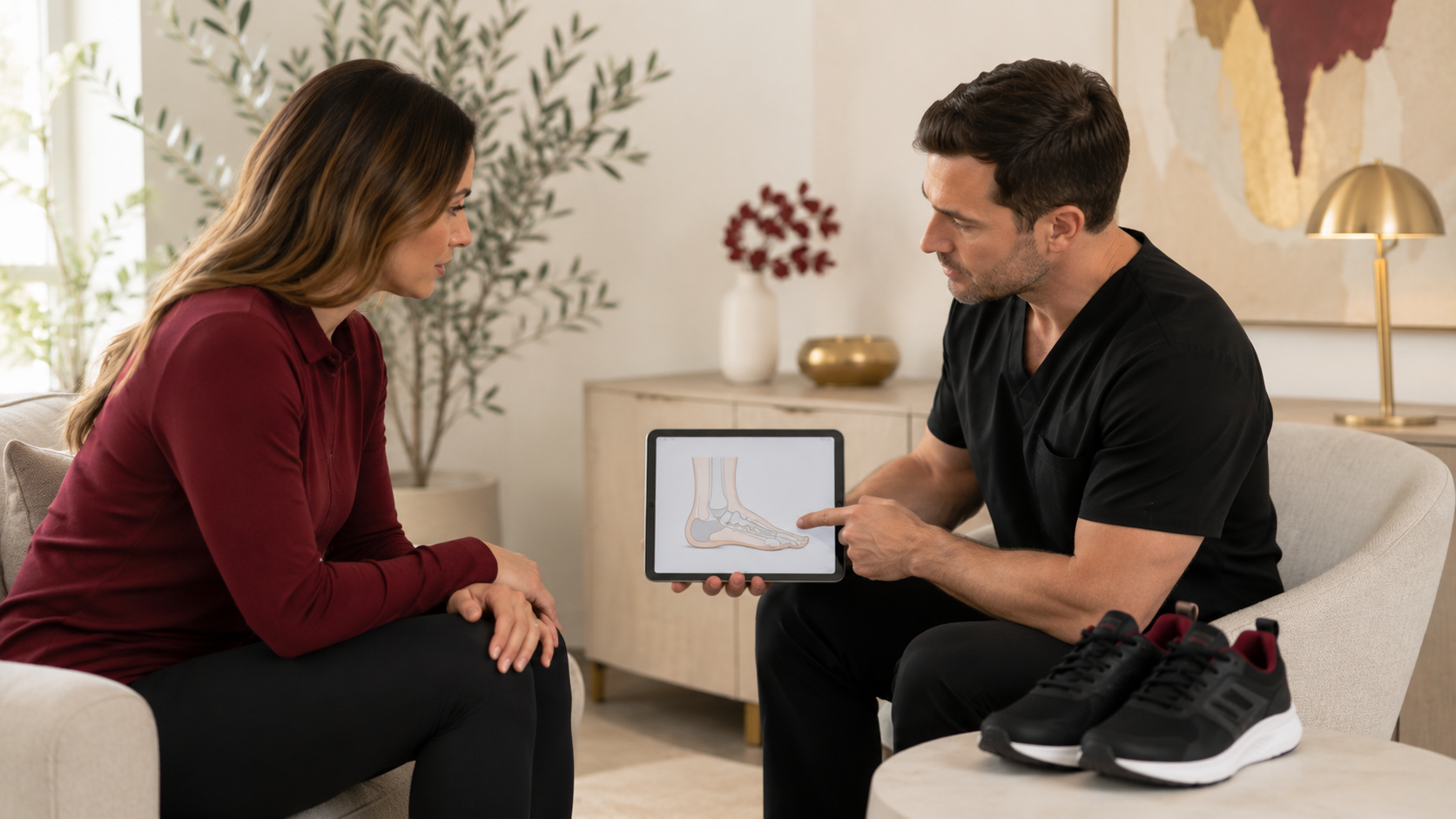
Some people consider over-the-counter pain relief when heel pain becomes difficult to manage. Non-steroidal anti-inflammatory drugs, such as ibuprofen, may be used by some people for short-term pain or inflammation support.
However, medication is not the right choice for everyone. It can interact with health conditions, other medicines, and individual risk factors. It is also important not to use pain relief to keep overloading an injured or irritated heel.
Ask for Advice If
- Pain is constant or unbearable.
- You cannot walk normally.
- Pain follows a fall, impact, or injury.
- Heel pain includes swelling, bruising, warmth, numbness, or tingling.
- You are considering medication but have health conditions or take other medicines.
- Symptoms do not improve with rest, support, and basic care.
Why You May Be Experiencing Heel Pain
Plantar fasciitis is one of the most common causes of heel pain, but it is not the only possibility. Heel pain may also come from heel spurs, Sever’s disease, tarsal tunnel syndrome, fat pad atrophy, stress fractures, body load, or other conditions.
Plantar fasciitis affects the tissue that runs from the heel toward the toes. It may become irritated or thickened from repeated strain, wear and tear, or physical activity that places repeated pressure on the heel.
| Possible Cause | Common Clue | What to Do |
|---|---|---|
| Plantar Fasciitis | Sharp pain under the heel, often worse with first steps after rest. | Supportive shoes, stretching, insoles, and professional care if persistent. |
| Heel Spur | Aching or sharp pain under or behind the heel. | Get checked if pain persists; spurs do not always explain pain alone. |
| Stress Fracture | Deep heel pain with impact, swelling, or worsening weight-bearing pain. | Stop impact activity and seek medical evaluation. |
| Tarsal Tunnel Syndrome | Heel or ankle pain with burning, tingling, numbness, or radiating symptoms. | Professional evaluation is recommended. |
| Fat Pad Atrophy | Aching directly under the heel, worse on hard floors. | Improve cushioning and pressure distribution. |
Where Insoles Fit Into Heel Pain Support
Insoles do not cure heel pain or replace medical care, but they can help improve everyday comfort when your shoes lack cushioning, arch support, or stable pressure distribution.
Consider Supportive Insoles If
- Your shoes feel flat or unsupportive.
- Your heels feel tired after walking or standing.
- You want extra cushioning under the heel.
- You need low-profile arch support inside compatible shoes.
- You are trying to reduce barefoot walking on hard floors.
For fit help, see our Fit & Trim Guide and Size Guide.
Related Guides
These guides can help you understand heel pain patterns and build a more complete comfort plan:
Support Your Heels During Daily Movement
Rest, stretching, ice, and better footwear can all play a role in heel comfort. InsoleLux insoles are designed to add low-profile heel cushioning and arch support inside compatible everyday shoes.
FAQ
What is the fastest way to relieve heel pain?
There is no single fastest method for everyone. Rest, reducing pressure, gentle stretching, careful ice use, supportive shoes, and professional guidance may help depending on the cause.
Should I put my feet up for heel pain?
Elevating your feet may help tired, swollen, or overloaded feet feel more comfortable, especially after long standing or walking.
Does stretching help heel pain?
Gentle stretching may help if heel pain is linked with plantar fascia or calf tightness. Avoid forcing stretches into sharp pain.
Can I use ice for heel pain?
Ice may help short-term comfort after activity or irritation. Wrap the ice pack in a towel and avoid direct contact with bare skin.
What shoes are best for heel pain?
Look for shoes with heel cushioning, arch support, a stable midsole, secure fit, and enough toe room. Worn-out or unstable shoes may increase strain.
Do insoles help heel pain?
Supportive insoles may help improve heel cushioning, arch support, and pressure distribution inside compatible shoes. They do not diagnose or cure heel pain.
Can I take ibuprofen for heel pain?
Some people use over-the-counter anti-inflammatory medication for short-term pain, but it is not suitable for everyone. Follow product directions and ask a professional if unsure.
When should I see a professional?
Seek professional care if heel pain is severe, worsening, caused by injury, affecting walking, lasting more than a few weeks, or linked with swelling, bruising, numbness, tingling, warmth, fever, or pain at rest.
Final Take
Heel pain can come from many causes, so the best method depends on what is irritating the heel. Still, five practical steps may help support comfort: rest and elevation, regular stretching, careful ice use, supportive footwear, and professional guidance when pain is difficult to manage.
Start by reducing strain. Avoid forcing painful stretches, do not overuse ice, and do not use medication to push through worsening pain.
For daily movement, supportive shoes and low-profile insoles can help make walking and standing feel more comfortable while you address the underlying cause.
