

Guides
3 Ways a Foot Roller May Help Plantar Fasciitis Pain
Jun
3 Ways a Foot Roller May Help Plantar Fasciitis Pain
A foot roller may help some people manage plantar fasciitis discomfort by gently stretching the foot, easing tension, and supporting a broader daily heel comfort routine.
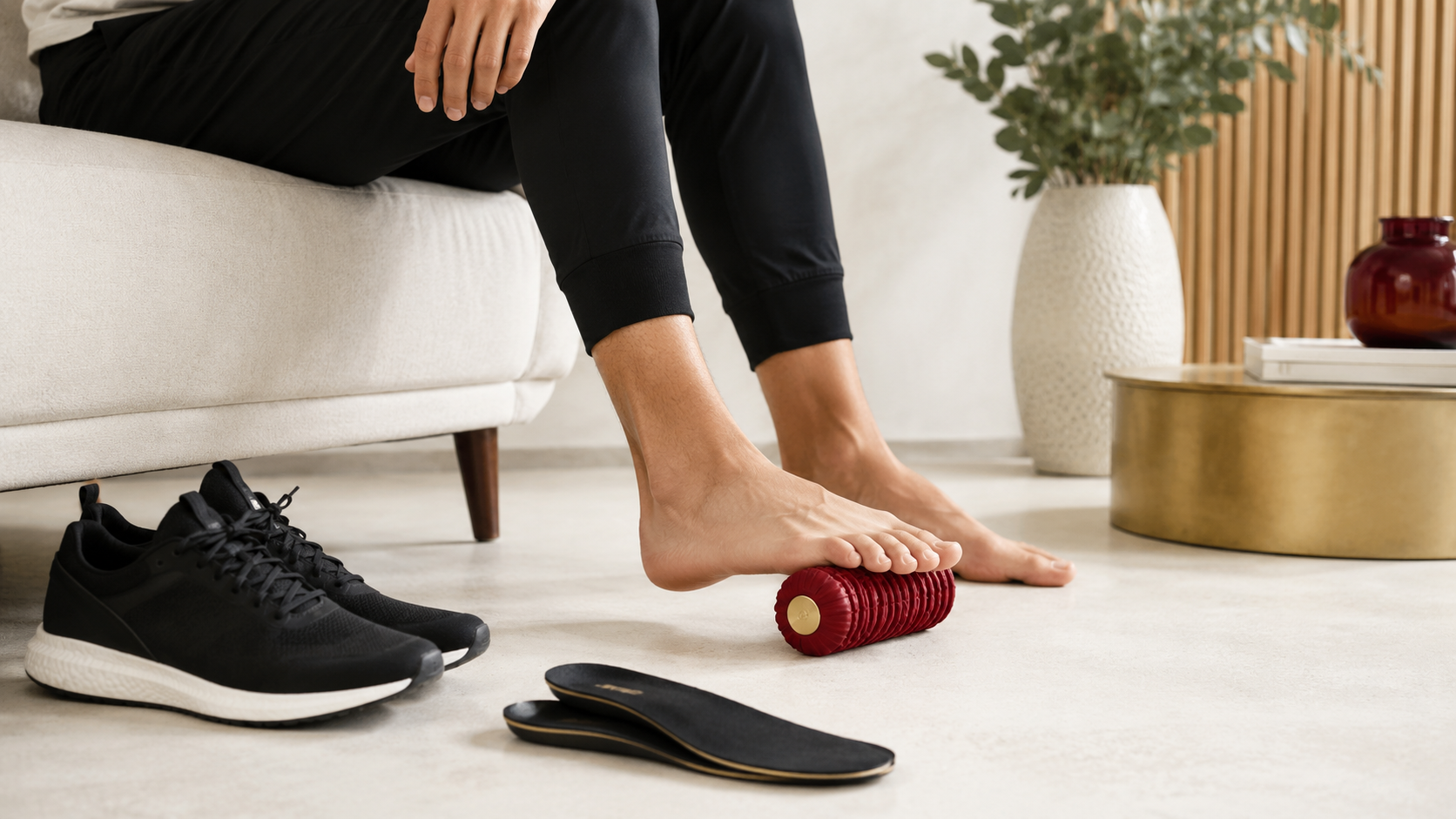
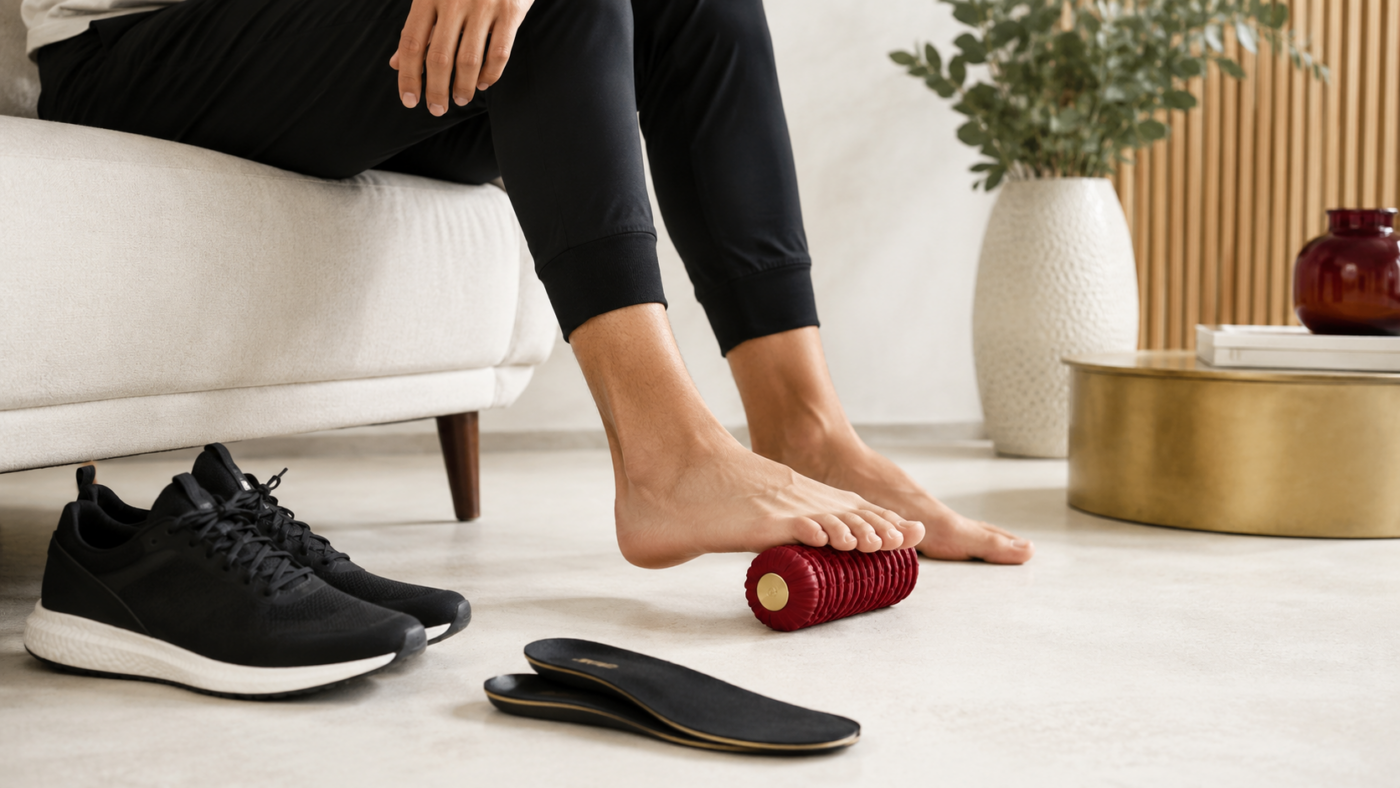
The first steps of the day can feel especially uncomfortable when plantar fasciitis is active. The heel may feel sharp, tight, or tender, and the arch can feel stiff after long periods of rest.
Plantar fasciitis involves irritation of the plantar fascia, the thick band of tissue that connects the heel bone toward the toes and helps support the arch. It can be linked with long standing, overuse, unsupportive shoes, extra pressure through the feet, and age-related changes.
A foot roller is not a cure, but it can be a useful self-care tool for some people. When used gently, it may help stretch the bottom of the foot, release tension, and keep the feet moving during long sitting periods.
Quick Answer: Can a Foot Roller Help Plantar Fasciitis?
A foot roller may help some people with plantar fasciitis feel more comfortable by gently massaging the bottom of the foot, encouraging movement through the arch, and reducing stiffness after rest.
It works best as part of a broader comfort plan: supportive shoes, insoles when appropriate, gentle stretching, load management, and professional care when symptoms persist.
Stretch & Mobilize
Gentle rolling can help move the arch and plantar fascia area without aggressive pulling.
Ease Tension
Controlled pressure may help the foot feel less stiff, especially after rest or sitting.
Keep Feet Moving
Rolling can be a simple way to keep the feet active during long desk or travel periods.
How to Use a Foot Roller Safely
Start seated so you can control the amount of pressure. Place the roller under the arch, then slowly roll from the heel area toward the ball of the foot and back again.
Basic Rolling Cues
- Start with light pressure.
- Roll slowly from heel to forefoot.
- Keep the toes relaxed.
- Avoid forcing directly into sharp heel pain.
- Use less pressure if the foot feels sensitive.
- Stop if symptoms feel worse afterward.
1. It May Stretch and Strengthen the Muscles in and Around the Foot
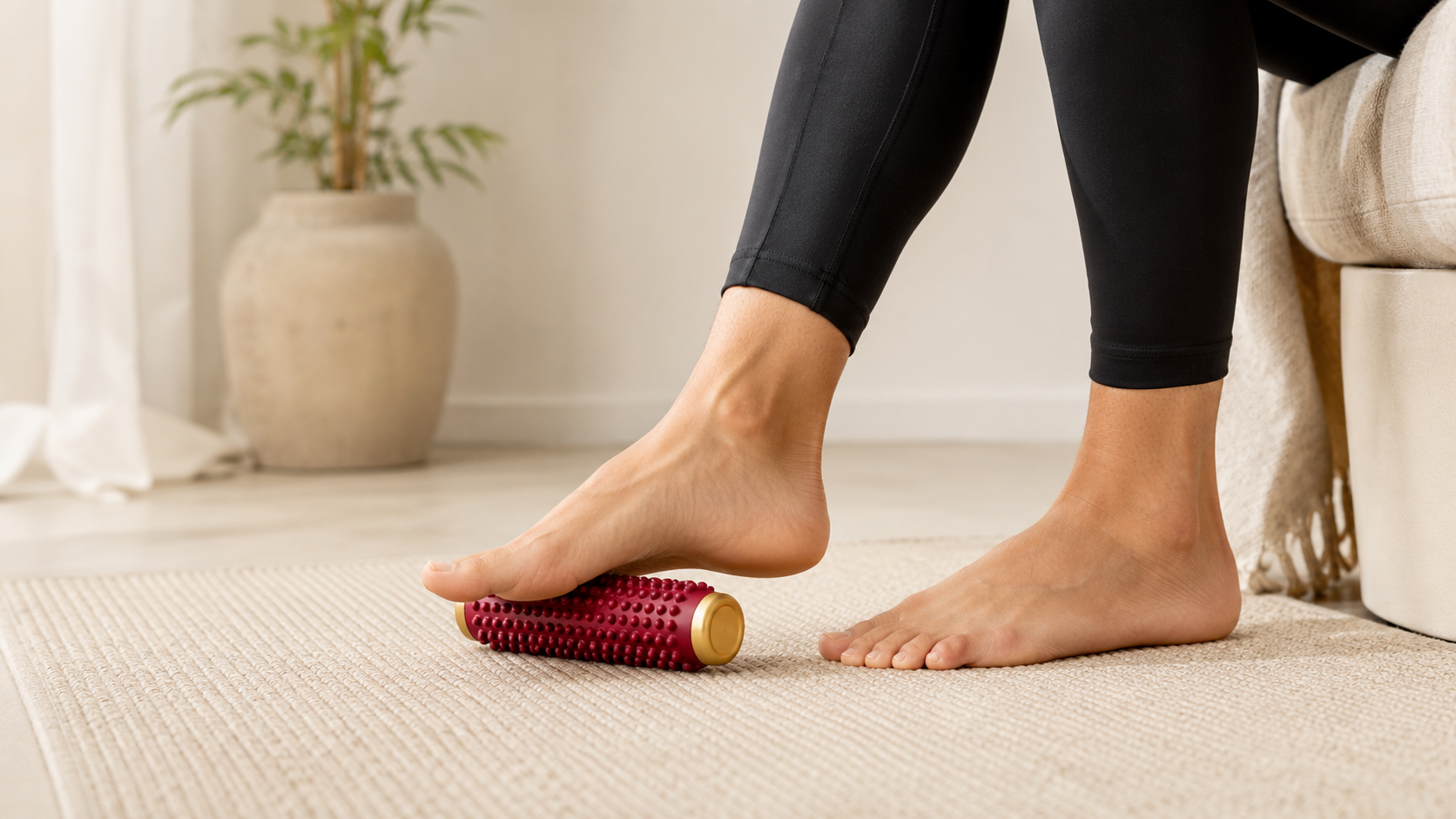
Most people remember to stretch larger muscle groups before activity, but the feet are easy to overlook. The foot works all day during standing, walking, stairs, and exercise, so it can become stiff or overloaded.
A foot roller can help create gentle movement through the sole of the foot. With consistent, comfortable use, it may help the arch and surrounding foot muscles feel more flexible during day-to-day activity.
The goal is not to aggressively “break up” tissue. The goal is to apply controlled movement that feels useful, not painful.
Best Use Cases
- Before standing after long rest.
- After a long day on your feet.
- Before gentle stretching exercises.
- As part of a morning or evening foot-care routine.
- When the foot feels stiff, but not sharply painful.
2. It May Release Muscle Tension Through Gentle to Firm Pressure
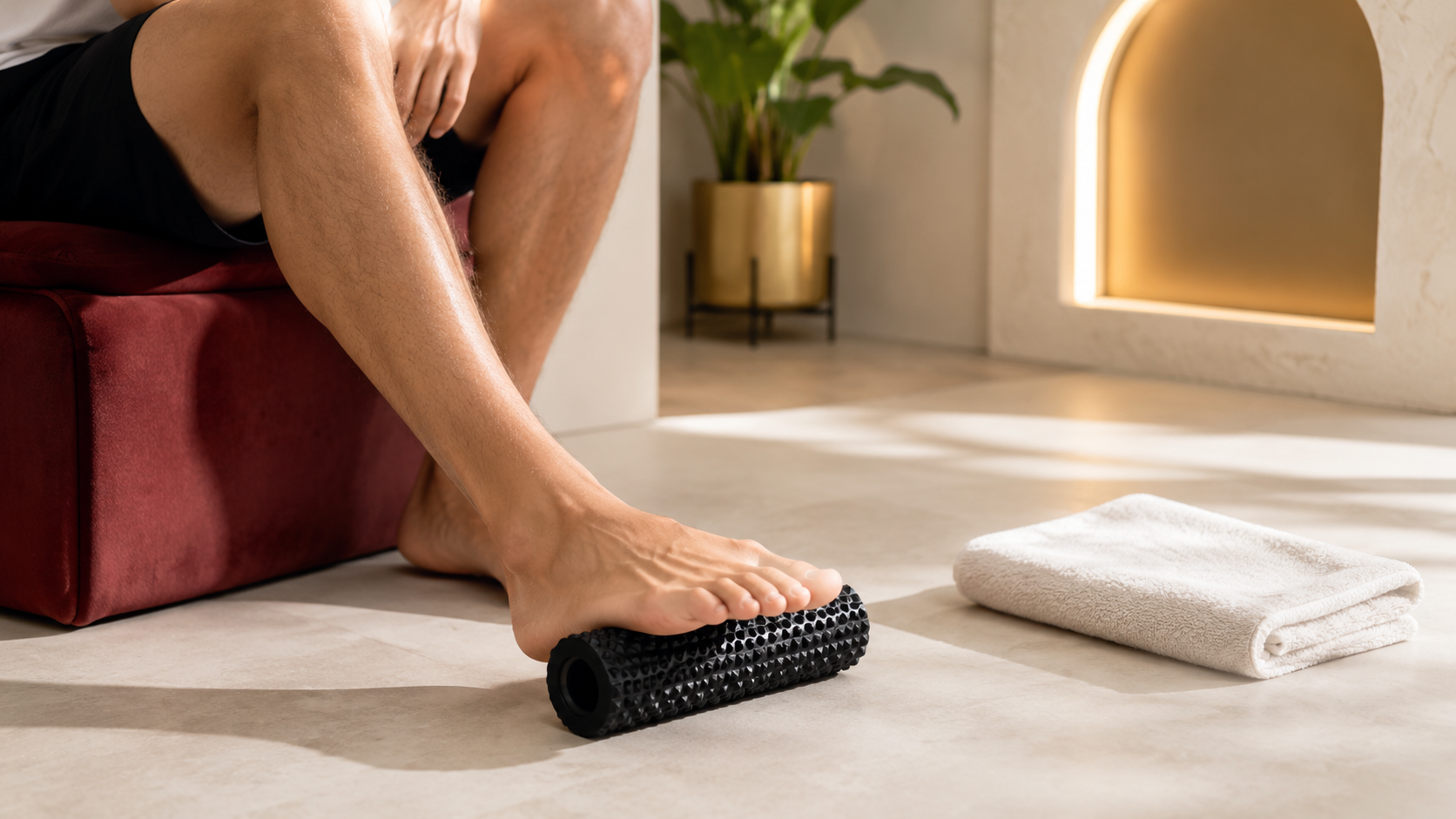
Plantar fasciitis often feels worse after inactivity, such as first thing in the morning or after sitting for a long time. During these moments, the bottom of the foot may feel stiff, tight, or tender.
A foot roller can apply gentle to firm pressure to the sole, depending on your sensitivity. Some rollers have ridges or massage points; others are smooth. Neither style should be used aggressively if the foot is highly irritated.
Think of pressure as something you control. More pressure is not automatically better. A mild, comfortable pressure that your foot tolerates well is usually the smarter starting point.
Pressure Tips
- Start seated before trying more bodyweight pressure.
- Use a smooth roller if ridges feel too intense.
- Avoid digging into one painful spot for too long.
- Reduce pressure if your foot feels sore afterward.
- Use slow rolling rather than quick back-and-forth motion.
3. It May Support Circulation During Long Sitting Periods
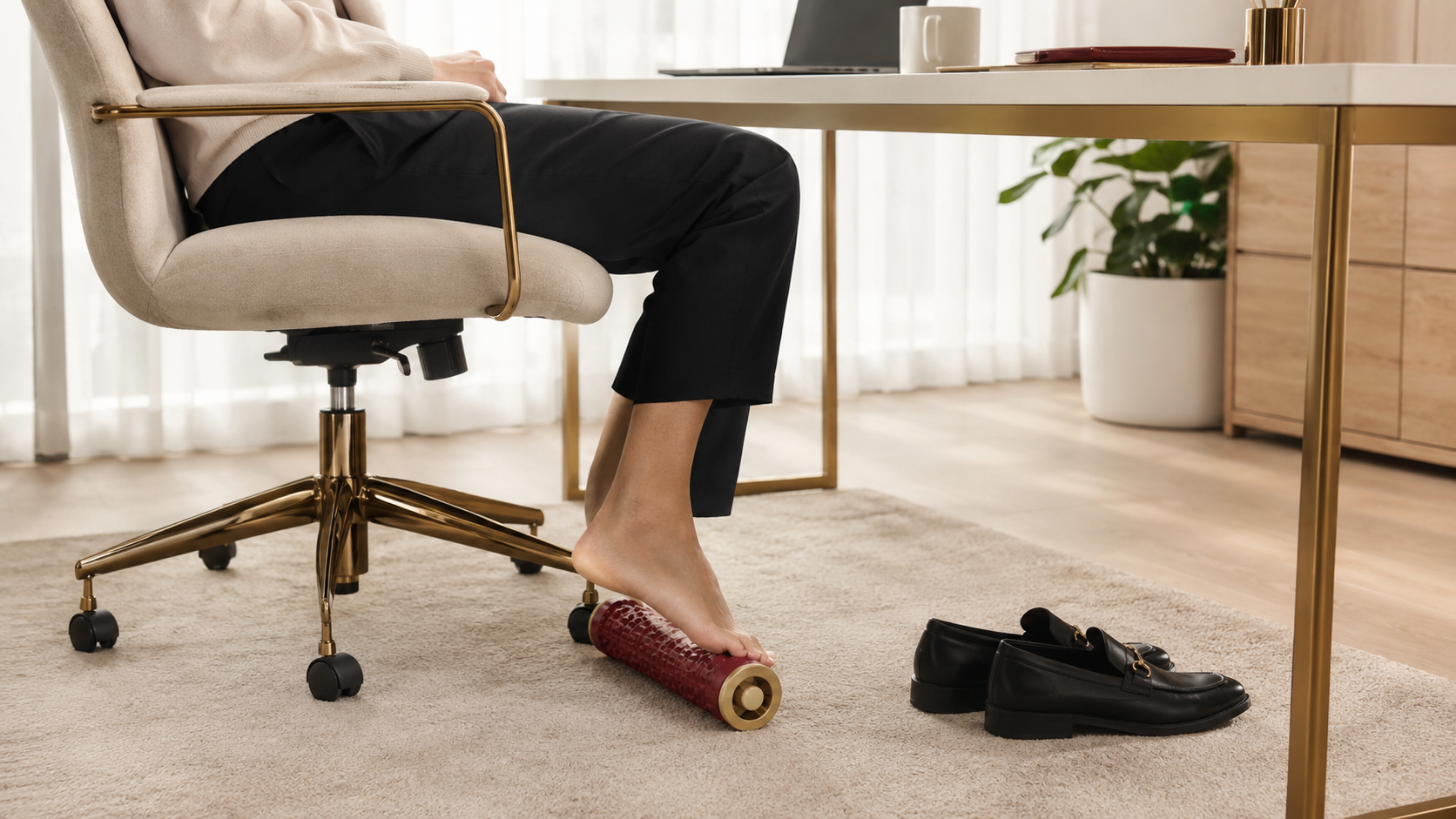
Long sitting periods can make the feet feel stiff or heavy. The source article highlights using a foot roller during desk work, travel, or time spent sitting at home as a simple way to keep the feet moving.
Rolling under a desk does not replace walking, exercise, or medical care for circulation problems. But for many people, gentle movement during long sitting periods can make the feet feel more awake and comfortable.
When This May Be Useful
- During long desk sessions.
- After sitting for a long time watching TV.
- During travel breaks when walking is limited.
- Before standing up after long inactivity.
- As a short foot-care break during the day.
Simple Foot Roller Routine
You do not need a long routine to start. A short, consistent routine is usually easier to maintain and less likely to irritate symptoms.
| Step | What to Do | Key Cue |
|---|---|---|
| 1. Start seated | Place the roller under the arch of one foot. | Use light pressure first. |
| 2. Roll slowly | Move from heel area toward the ball of the foot and back. | Keep the motion smooth. |
| 3. Adjust pressure | Add or reduce pressure based on comfort. | Do not force into sharp pain. |
| 4. Switch feet | Repeat on the other foot if needed. | Compare how each foot feels. |
| 5. Support afterward | Step into supportive shoes or insoles after rolling. | Avoid barefoot hard floors after a flare-up. |
Support Beyond Rolling
A foot roller can be helpful, but it should not be your only plantar fasciitis strategy. Your feet still need support during walking, standing, and daily movement.
Build a Broader Comfort Plan
- Wear shoes with cushioned heels and good arch support.
- Use supportive insoles or heel pads inside compatible shoes.
- Try gentle stretching for the sole of the foot and heel.
- Avoid long barefoot walking on hard floors.
- Reduce sudden increases in walking, running, or standing time.
- Seek professional advice if symptoms persist or worsen.
Related Guides
These guides can help you build a more complete plantar fasciitis comfort routine:
Support Your Feet After Rolling
A foot roller can help some people manage stiffness and tension, but daily support still matters. InsoleLux insoles are designed to add low-profile heel cushioning and arch support inside compatible everyday shoes.
FAQ
Can a foot roller cure plantar fasciitis?
No. A foot roller may help some people manage stiffness or discomfort, but it does not cure plantar fasciitis. It works best as part of a broader comfort plan.
How long should I use a foot roller?
A simple starting point is 2–5 minutes per foot. Some people may tolerate more, but longer is not always better if the foot becomes sore.
Should foot rolling hurt?
No. Mild pressure may feel normal, but sharp pain, burning, numbness, tingling, or worsening symptoms are signs to stop.
Is a ridged roller better than a smooth roller?
Not always. Ridged rollers may feel more intense, while smooth rollers may be easier to tolerate. Choose the option that feels controlled and comfortable.
Can I use a tennis ball instead of a foot roller?
Yes, many people use a tennis ball, massage ball, rolling pin, or bottle. The same rule applies: use gentle pressure and stop if symptoms worsen.
When is the best time to use a foot roller?
Many people try it before first steps, after long sitting, or after a long standing day. The best timing is the one that feels helpful without irritating symptoms.
Should I wear insoles after using a foot roller?
Supportive insoles may help improve heel cushioning and arch support during the rest of the day, especially if your shoes feel flat or unsupportive.
When should I see a professional?
Seek professional advice if heel pain is severe, worsening, lasting more than a few weeks, affecting walking, linked with injury, or paired with swelling, numbness, tingling, diabetes, or pain at rest.
Final Take
A foot roller may help plantar fasciitis discomfort in three practical ways: gently stretching and mobilizing the foot, easing tension through controlled pressure, and keeping the feet moving during long sitting periods.
The key is to use it carefully. Start seated, apply light pressure, roll slowly, and stop if symptoms feel worse.
For better daily comfort, pair foot rolling with supportive shoes, low-profile insoles, gentle stretching, and professional guidance when symptoms persist.
