

Guides
Best Home Remedies for Plantar Fasciitis: 7 Ways to Support Heel Comfort
Jun
Best Home Remedies for Plantar Fasciitis: 7 Ways to Support Heel Comfort
Plantar fasciitis can make everyday steps feel sharp, stiff, or frustrating. These home remedies may help calm heel and arch discomfort while you reduce strain and support your feet more consistently.
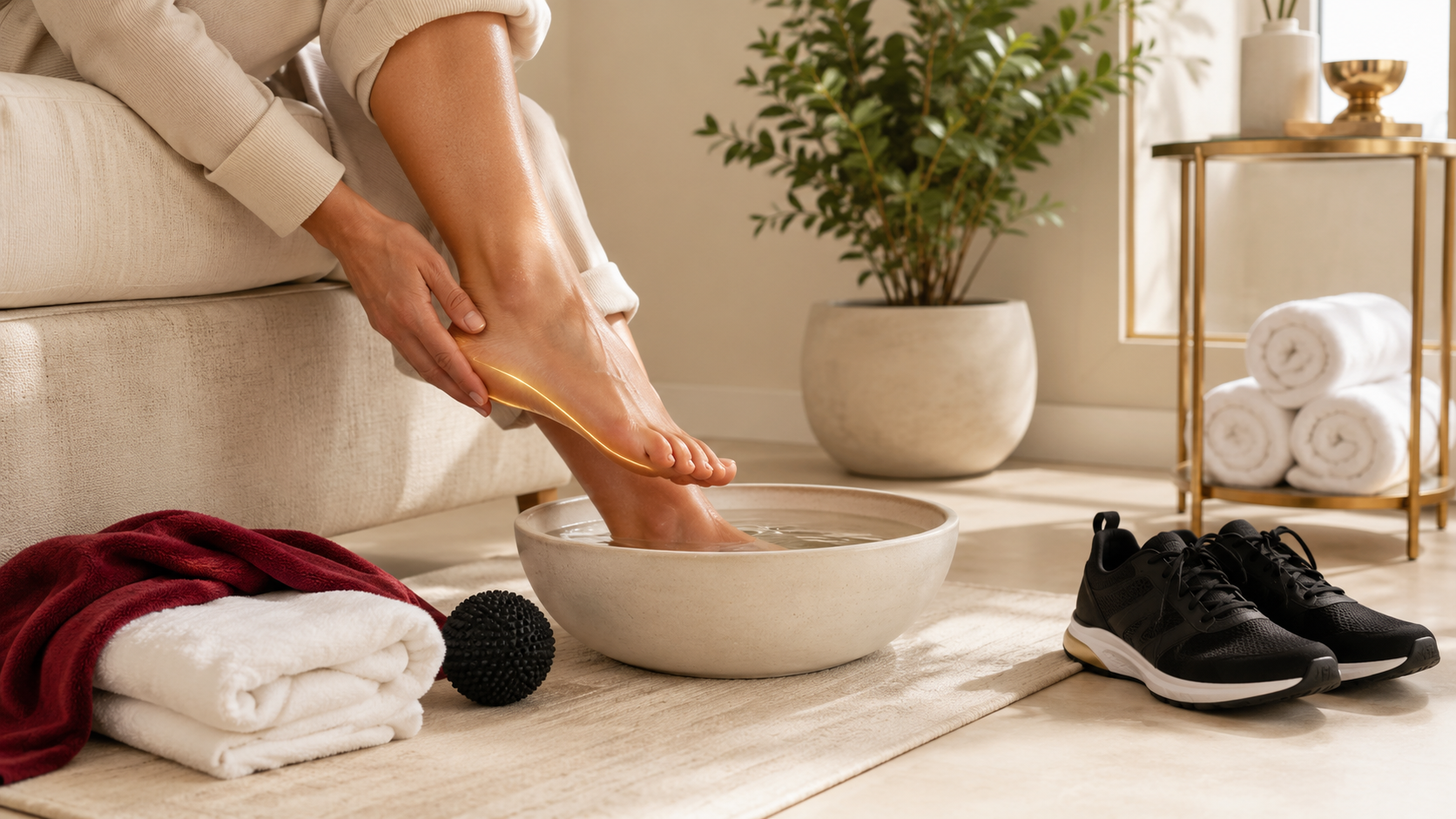
Plantar fasciitis is one of the most common reasons for pain at the bottom of the heel and arch. The discomfort is often worse with the first steps in the morning, after rest, or after long standing and walking.
While persistent heel pain should be checked by a professional, many people start with simple at-home care: soothing the foot, reducing irritation, stretching gently, and using more supportive footwear.
Quick Answer: What Are the Best Home Remedies for Plantar Fasciitis?
Common home remedies for plantar fasciitis include ice, frozen bottle rolling, gentle massage, foot soaking, calf and plantar fascia stretching, supportive shoes, and insoles or orthotics. Mayo Clinic also lists ice and simple home exercises for the plantar fascia, Achilles tendon, and calf muscles as common self-care steps. :contentReference[oaicite:1]{index=1}
The key is consistency. A single soak or stretch may feel good for a moment, but plantar fasciitis usually improves best when you reduce repeated strain throughout the day.
Soothe Irritation
Ice, gentle rolling, and warm foot soaks may help calm short-term soreness and stiffness.
Reduce Tension
Stretching the calf, Achilles, and plantar fascia can reduce pull through the heel and arch.
Add Support
Supportive shoes and insoles can help reduce daily strain while the foot calms down.
1. Essential Oils
The original home-remedy approach often includes essential oils because many people use them for relaxation, massage, or warm foot baths. Popular options include lavender, frankincense, peppermint, and eucalyptus.
It is important to keep expectations realistic. Essential oils may make a foot-care routine feel more soothing, but they should not be treated as a proven standalone treatment for plantar fasciitis. The source article also notes that research specifically on essential oils for plantar fasciitis is limited. :contentReference[oaicite:2]{index=2}
How to Use Them More Safely
- Dilute essential oils with a carrier oil before applying to skin.
- Patch test first if you have sensitive skin.
- Keep oils away from cuts, irritated skin, eyes, and mucous membranes.
- Do not rely on oils if pain is severe or worsening.
- Stop use if burning, rash, itching, or irritation appears.
2. Foot Bath or Warm Soak
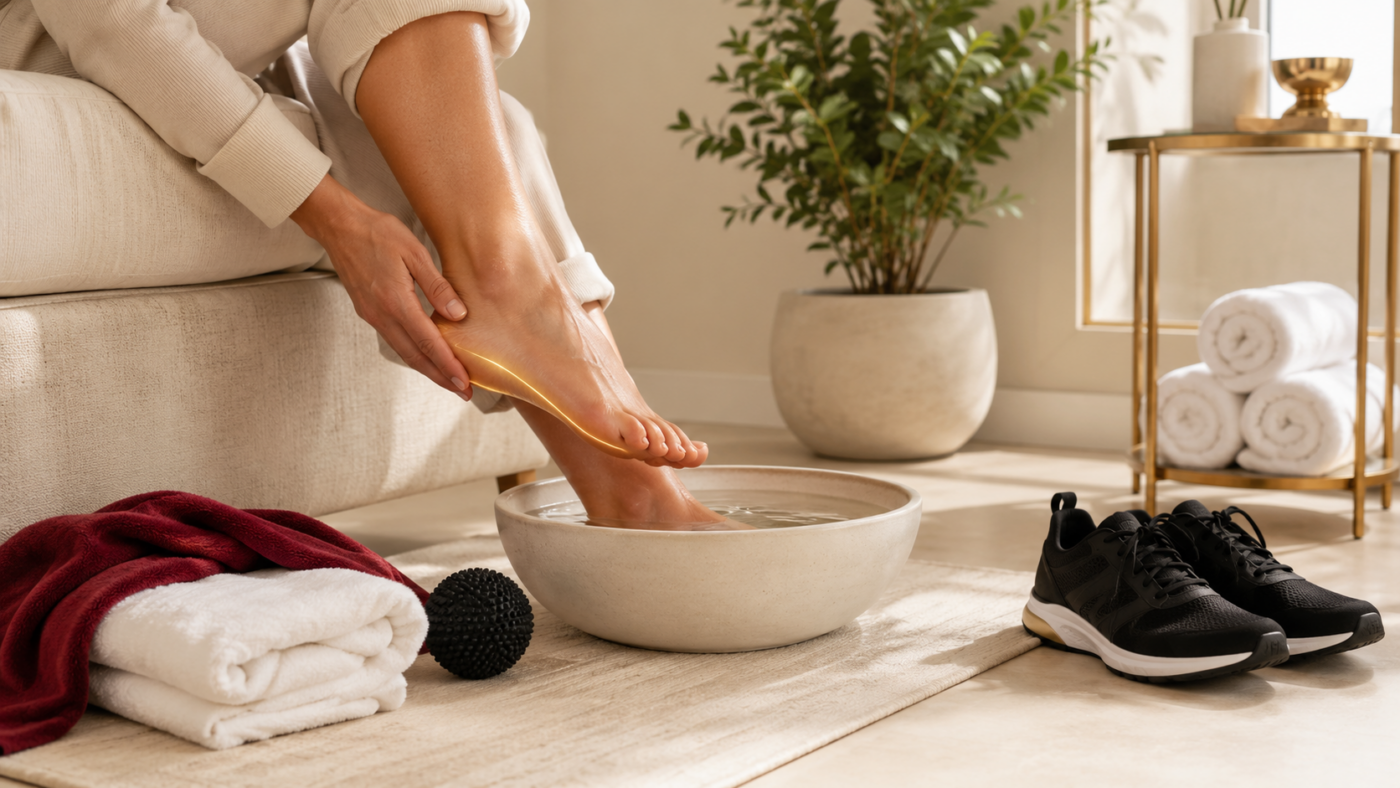
A warm foot bath can help your feet feel relaxed after a long day. Some people add Epsom salts or a few drops of diluted essential oil to make the routine feel more calming.
A soak does not repair the plantar fascia directly, but it may help reduce the feeling of tightness and prepare the foot for gentle stretching or massage.
Simple Foot Soak Routine
- Use warm water, not hot water.
- Soak for 10–15 minutes.
- Dry the foot thoroughly afterward.
- Follow with gentle calf or arch stretching.
- Avoid soaking if you have open skin, infection, or reduced sensation unless cleared by a clinician.
3. Ice Pack and Frozen Bottle Rolling
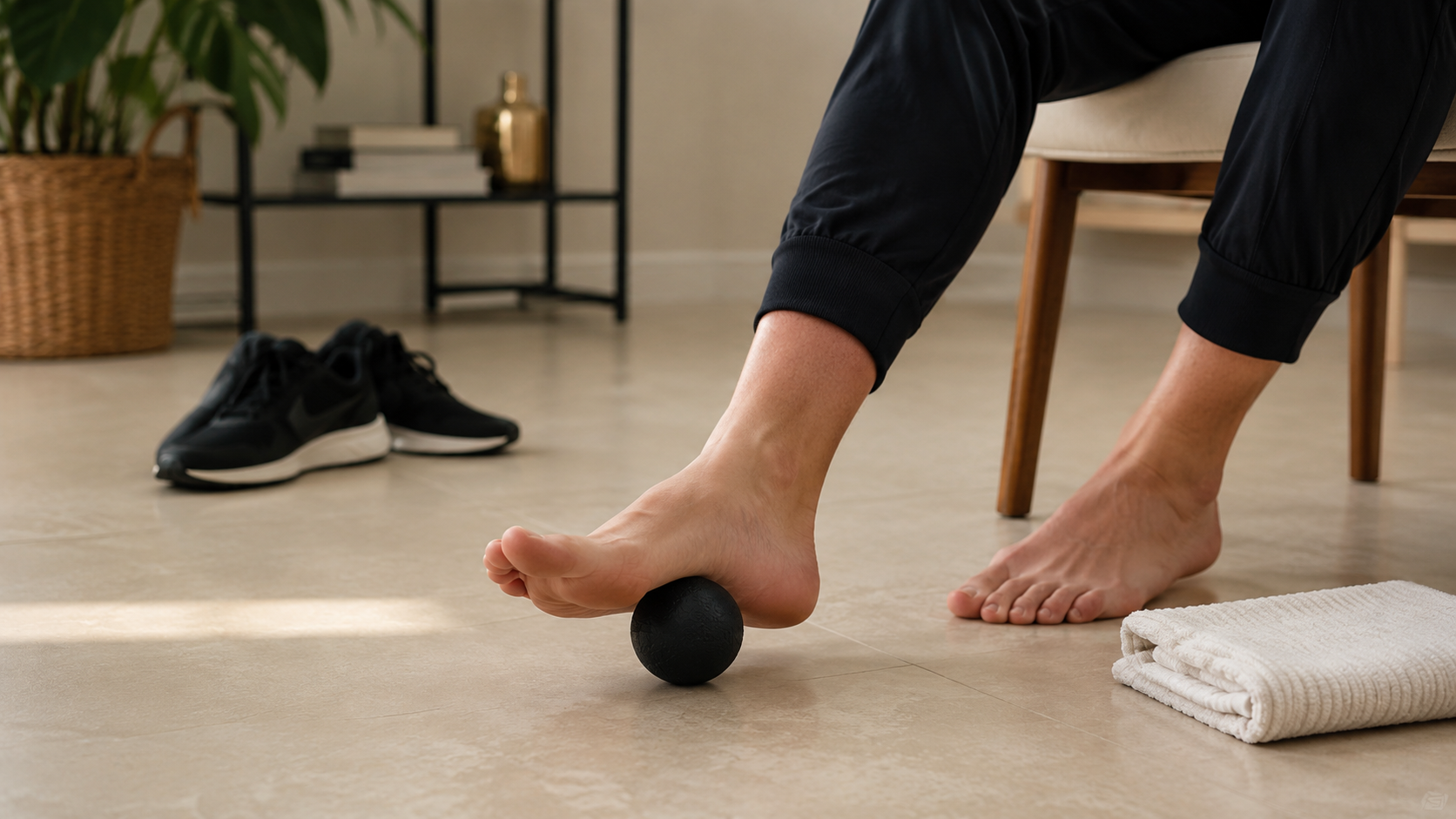
Ice is one of the most practical home remedies for plantar fasciitis flare-ups. Mayo Clinic suggests applying a cloth-covered ice pack to the painful area for 15 minutes several times daily, or rolling a frozen bottle under the foot for an ice massage. :contentReference[oaicite:3]{index=3}
How to Try It
- Wrap an ice pack in a thin towel before applying it to the heel.
- Use ice for about 15 minutes at a time.
- For bottle rolling, sit down and roll gently under the arch and heel area.
- Do not press aggressively into sharp pain.
- Stop if your skin becomes overly cold, numb, painful, or irritated.
Ice may be most useful after activity, after a long standing day, or when the heel feels irritated.
4. Gentle Massage
Massage may help some people reduce foot tightness and feel short-term relief. The goal is to relax the foot and improve comfort, not to force pressure into the most painful spot.
Massage Options
- Use your thumbs to gently massage the arch from heel toward the forefoot.
- Roll the sole over a soft massage ball while seated.
- Use light pressure around, not directly into, sharp heel pain.
- Try massage after a warm soak or before gentle stretching.
- Keep each session short and comfortable.
5. Stretching Exercises
Stretching is one of the most useful home strategies because plantar fasciitis is often linked with tension through the calf, Achilles tendon, and plantar fascia. AAOS patient guidance recommends plantar fasciitis stretches multiple times a day, including morning, midday, and before bed. :contentReference[oaicite:4]{index=4}
Easy Stretches to Start With
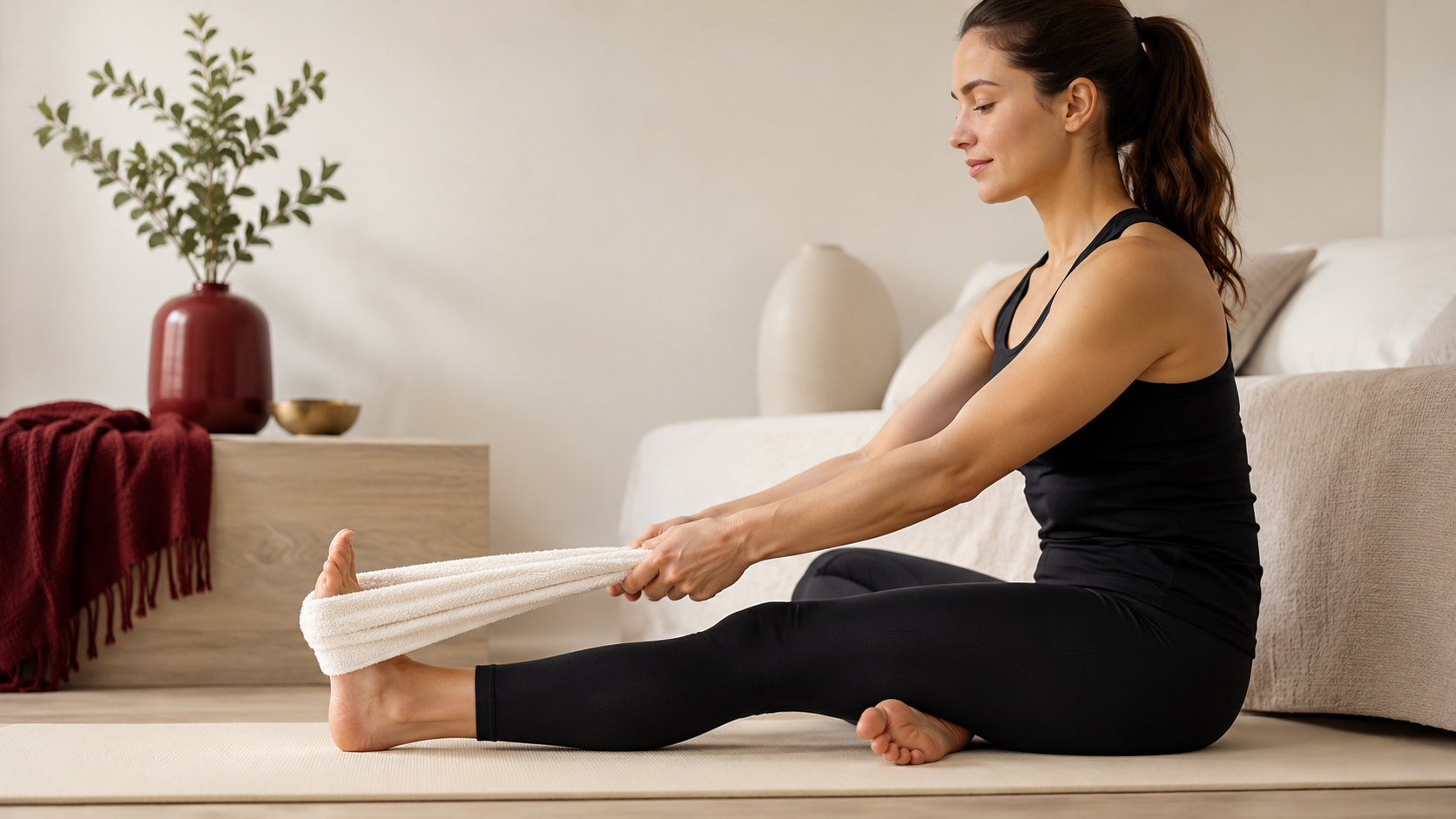
Towel Stretch
Sit with your leg extended. Loop a towel around the ball of the foot and gently pull the toes toward you until you feel a mild calf and arch stretch.
Plantar Fascia Stretch
Cross the affected foot over the opposite knee. Gently pull the toes back toward the shin until you feel a stretch along the bottom of the foot.
Wall Calf Stretch
Stand facing a wall with the affected leg behind you, heel down and knee straight. Lean forward gently until you feel a calf stretch.
Keep stretches gentle and avoid bouncing. A mild stretch is fine; sharp pain is not.
6. Orthotics and Supportive Insoles
Home remedies work better when your foot is not being re-irritated all day. If your shoes are flat, worn out, unstable, or lacking arch support, the plantar fascia may keep getting stressed with each step.
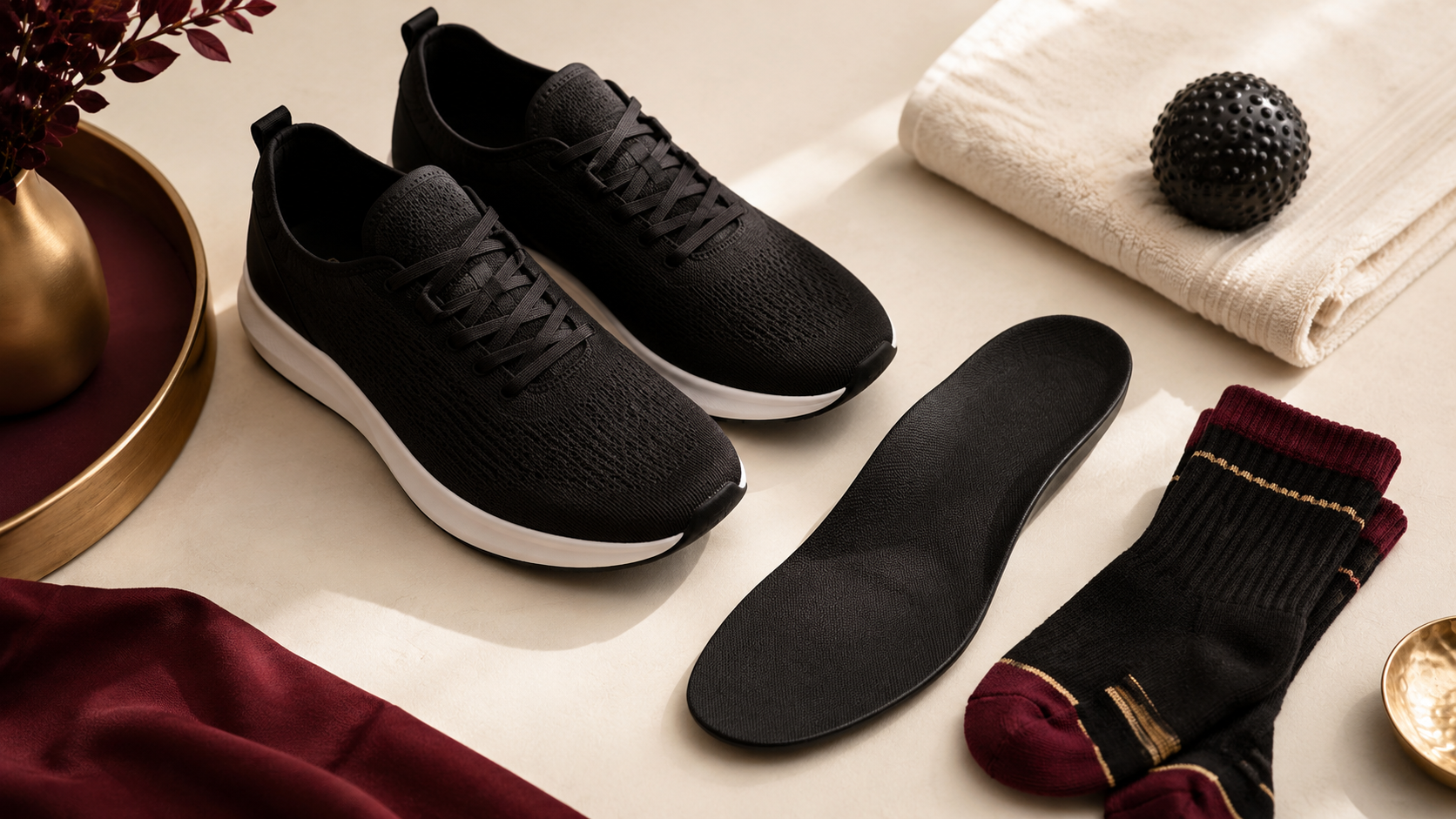
Supportive Insoles May Help By Adding
- Heel cushioning: Helps soften repeated impact during walking and standing.
- Arch support: Helps support the foot’s natural shape inside the shoe.
- Better pressure distribution: Helps reduce concentrated pressure under the heel.
- Stability: Helps the foot feel more secure during daily movement.
- Low-profile comfort: Adds support without crowding compatible everyday shoes.
7. Daily Habits That Reduce Strain
Home remedies can be useful, but small daily habits often decide whether the heel keeps calming down or keeps flaring up.
| Habit | Why It Helps | Simple Start |
|---|---|---|
| Avoid Barefoot Hard Floors | Hard surfaces can increase pressure under the heel and arch. | Wear supportive house shoes or cushioned footwear at home. |
| Reduce Trigger Activity | Running, jumping, or long standing can keep tissue irritated. | Temporarily reduce impact and increase activity gradually. |
| Check Shoe Wear | Collapsed cushioning or uneven soles can increase strain. | Replace shoes when the heel or midsole loses structure. |
| Stretch Before First Steps | Morning first-step pain often feels worse when the tissue is stiff. | Do a towel stretch or gentle ankle movement before standing. |
| Take Standing Breaks | Long standing can overload the plantar fascia. | Sit for a few minutes after long standing blocks when possible. |
When Home Remedies Are Not Enough
Home remedies are reasonable for mild, recent symptoms, but they are not a substitute for diagnosis when pain is persistent or unusual. Heel pain can also come from stress fractures, nerve irritation, Achilles problems, fat pad irritation, arthritis, or other conditions.
A clinician can check whether the pain matches plantar fasciitis and help guide treatment such as physical therapy, orthotics, night splints, imaging, injections, or other options when appropriate.
Support Your Heel Between Home-Care Sessions
Ice, stretching, and massage can help, but your feet still need support during the rest of the day. InsoleLux insoles are designed to add low-profile arch support and heel comfort inside compatible everyday shoes.
FAQ
What is the best home remedy for plantar fasciitis?
There is no single best remedy for everyone. Many people start with ice, gentle stretching, foot rolling, supportive shoes, and insoles. The best routine is the one that reduces strain consistently without increasing pain.
Does ice help plantar fasciitis?
Ice may help reduce pain and swelling during flare-ups. A cloth-covered ice pack or frozen bottle rolling can be used carefully for short sessions.
Can a foot soak cure plantar fasciitis?
A warm foot soak may feel soothing and help relax the foot, but it does not cure plantar fasciitis by itself. It works best as part of a broader comfort routine.
Are essential oils proven for plantar fasciitis?
Evidence specifically for essential oils and plantar fasciitis is limited. They may be used for relaxation or massage if tolerated, but they should not replace stretching, support, or professional care when needed.
Should I massage plantar fasciitis?
Gentle massage may help reduce tightness for some people. Avoid aggressive pressure or deep massage directly into sharp heel pain.
Do insoles help plantar fasciitis at home?
Supportive insoles can help improve arch and heel comfort inside compatible shoes, especially if your current footwear feels flat, unstable, or unsupportive.
When should I stop home remedies and see a professional?
Seek care if pain is severe, worsening, lasting more than a few weeks, affecting walking, linked with injury, swelling, numbness, tingling, or pain at rest or night.
Final Take
The best home remedies for plantar fasciitis are simple, consistent, and gentle: ice, foot soaking, light massage, stretching, supportive footwear, insoles, and smarter daily habits.
The goal is not to force the heel to feel better overnight. The goal is to reduce repeated strain so the plantar fascia has a better chance to calm down.
If symptoms persist or worsen, get professional guidance. Home care is useful, but the right diagnosis matters when heel pain does not follow the expected pattern.

Pingback: 10 Best Plantar Fasciitis Exercises for Heel Pain | InsoleLux