

Guides
How to Heal Plantar Fasciitis Quickly: 8 Practical Steps
Jun
How to Heal Plantar Fasciitis Quickly: 8 Practical Steps
Plantar fasciitis rarely disappears overnight, but smart early care can help calm heel pain, reduce daily strain, and support a faster return to comfortable movement.
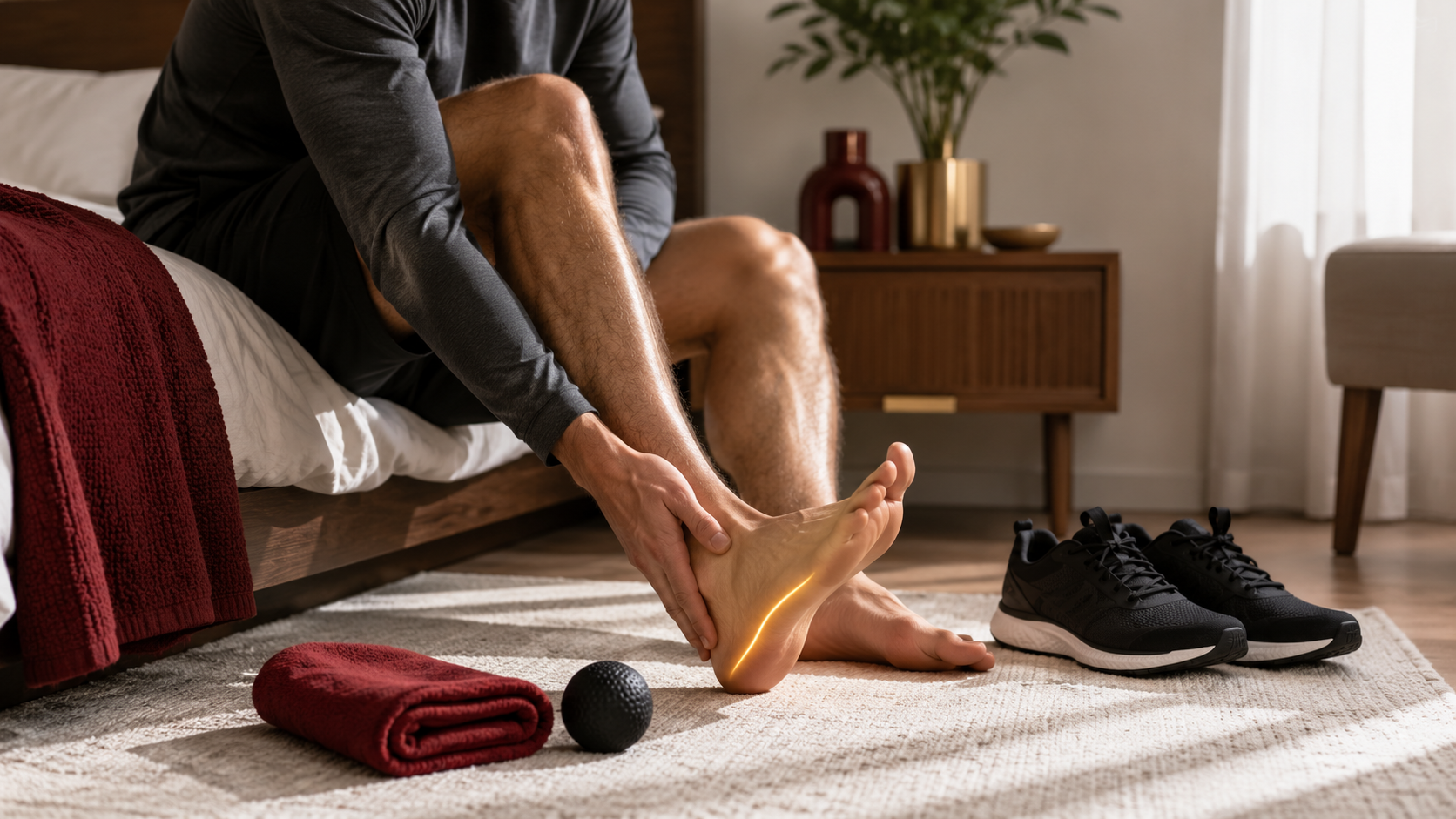
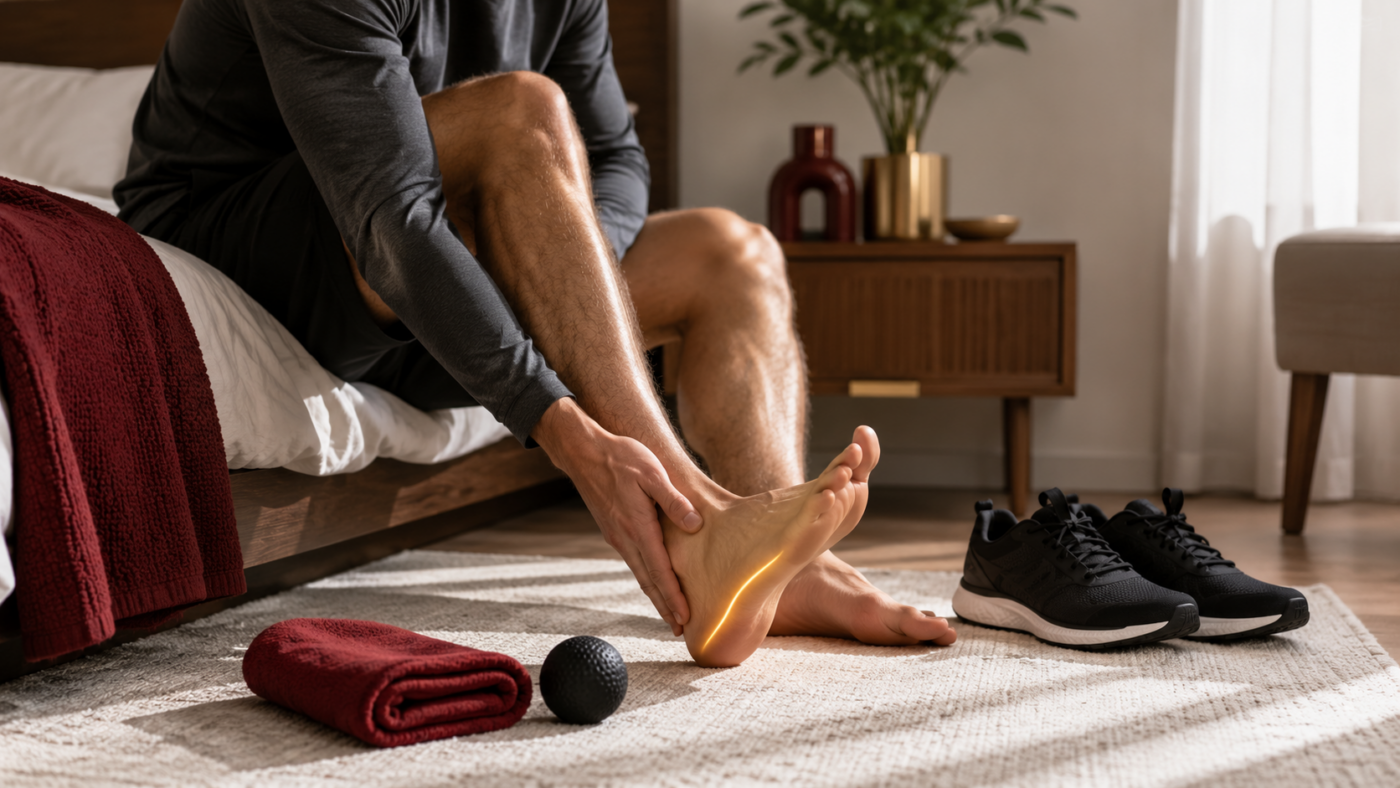
Plantar fasciitis is one of the most common causes of heel pain. It can create discomfort after activity, after rest, or with the first steps of the morning. The pain can interfere with walking, work, exercise, and everyday routines.
Learning how to heal plantar fasciitis quickly starts with understanding what is being irritated. The plantar fascia is a thick, fibrous band of tissue on the sole of the foot. It supports the arch and helps distribute pressure as you move.
When too much strain is placed on the plantar fascia — often from overuse, repetitive action, poor support, or sudden activity changes — small tears and irritation may develop. The result can be heel and arch pain that keeps returning if the same strain continues.
Quick Answer: What Helps Plantar Fasciitis Heal Faster?
The fastest practical approach is to reduce strain on the plantar fascia while supporting the foot through the day. That usually means rest from painful activities, ice, gentle stretching, massage, supportive shoes, and insoles or orthotics.
Mayo Clinic notes that most people with plantar fasciitis recover in several months with conservative treatment such as icing, stretching, and modifying or avoiding activities that cause pain. :contentReference[oaicite:1]{index=1}
Calm the Pain
Ice, short-term rest, and gentle massage may help reduce irritation after activity or during flare-ups.
Reduce Tension
Calf, Achilles, and plantar fascia stretches can reduce pull through the heel and arch.
Support Every Step
Better shoes and supportive insoles help reduce repeat strain while the foot recovers.
1. Rest the Foot Properly
Rest is one of the first steps because plantar fasciitis often develops when the tissue is overloaded. Continuing to run, jump, stand for long periods, or walk through worsening pain can keep the plantar fascia irritated.
Rest does not always mean staying completely off your feet. It means reducing the activities that clearly trigger pain while keeping gentle movement where comfortable.
How to Rest Without Overdoing It
- Temporarily reduce running, jumping, long walks, or high-impact workouts.
- Take sitting breaks during long standing days.
- Use supportive footwear at home instead of walking barefoot on hard floors.
- Switch to lower-impact movement, such as cycling or swimming, if comfortable.
- Return to activity gradually, not all at once when pain improves slightly.
2. Use Ice Packs or Frozen Bottle Rolling
Ice can be a useful short-term comfort tool when the heel feels sore after activity. It may help calm irritation and make the foot feel more manageable.
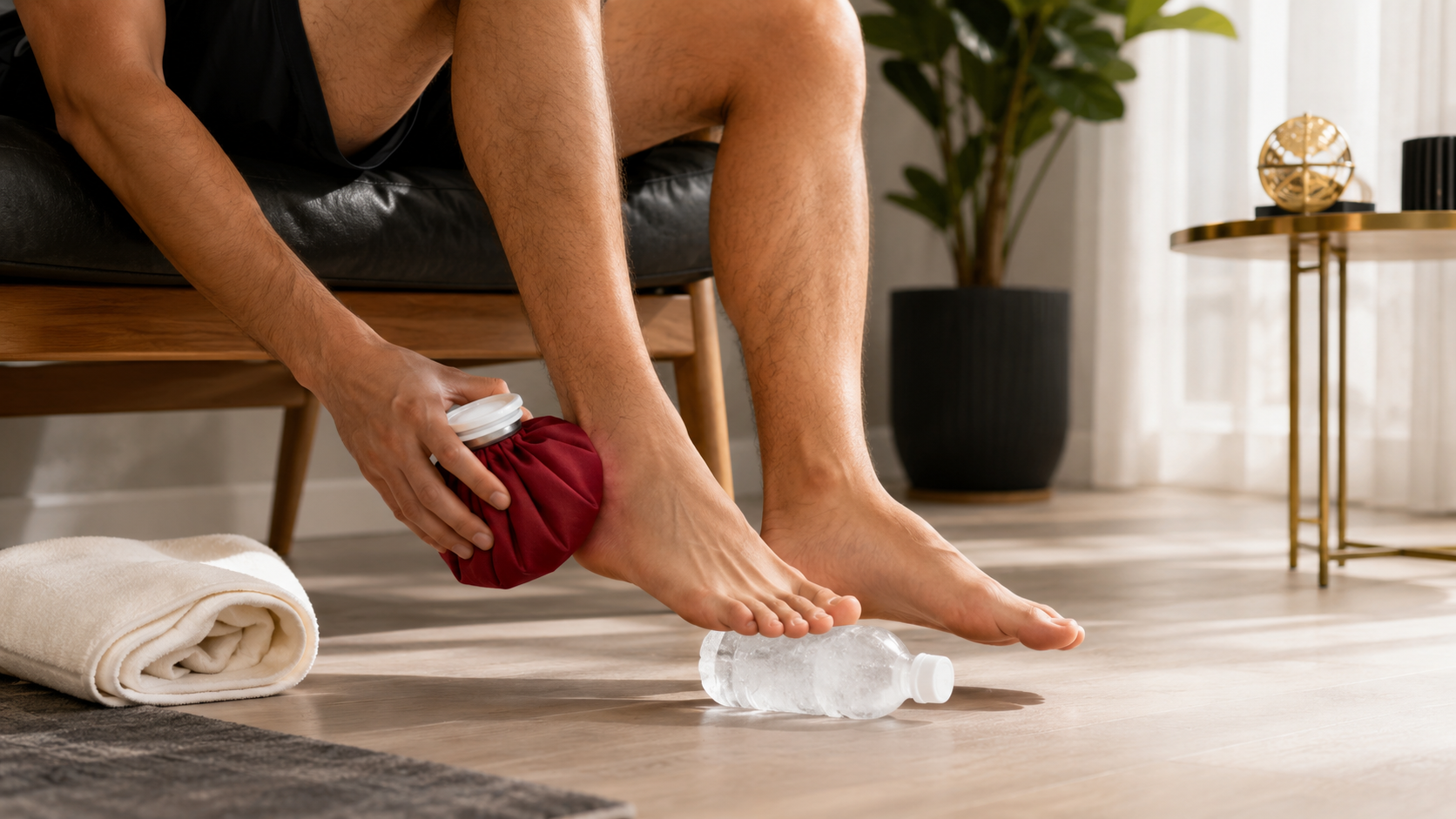
Simple Ice Routine
- Wrap an ice pack in a thin towel before applying it to the heel.
- Use ice for short sessions, around 15 minutes at a time.
- Try rolling the foot gently over a frozen water bottle while seated.
- Do not press aggressively into sharp pain.
- Stop if your skin becomes overly cold, numb, painful, or irritated.
Ice is most helpful when paired with rest, stretching, and support. It may ease symptoms, but it does not fix the underlying strain by itself.
3. Massage the Foot Gently
Gentle massage may help reduce tightness through the sole of the foot and improve short-term comfort. The source article recommends massage as one way to support recovery, especially when combined with other steps. :contentReference[oaicite:2]{index=2}
Massage Options
- Use your thumbs to gently massage the arch from heel toward the forefoot.
- Roll the foot over a soft massage ball while seated.
- Massage after a warm soak or before stretching if it feels helpful.
- Keep pressure light to moderate.
- Avoid deep pressure directly into sharp heel pain.
4. Do Plantar Fasciitis Exercises
Exercises and stretches can help reduce tension through the calf, Achilles tendon, and plantar fascia. The goal is not to stretch as hard as possible. The goal is to make the foot more tolerant of daily load.
Plantar Fascia Stretch
Sit down, cross the affected foot over the opposite knee, and gently pull the toes back toward the shin until you feel a stretch along the bottom of the foot.
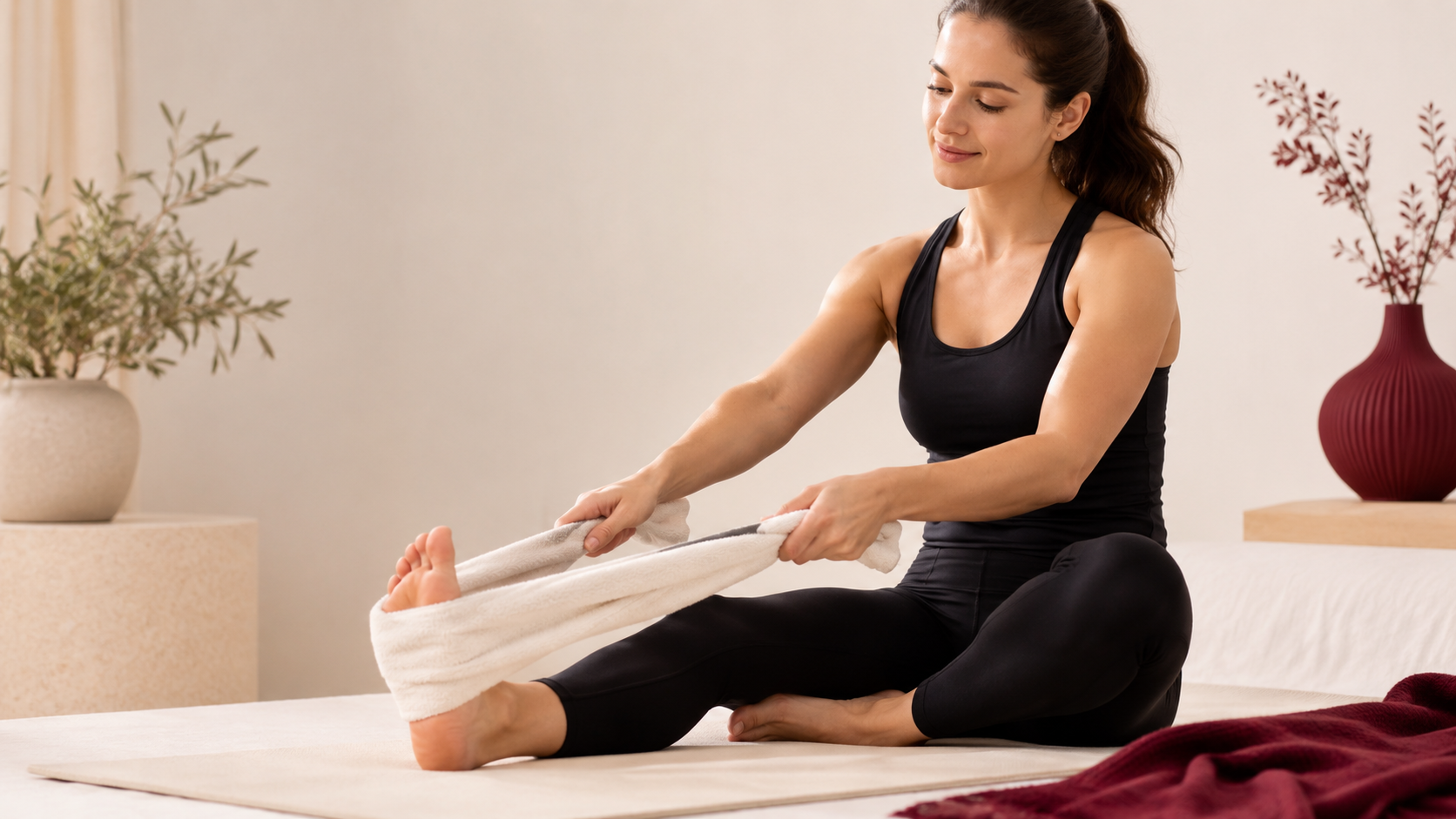
Towel Stretch
Sit with your leg extended and loop a towel around the ball of the foot. Gently pull the towel toward you to stretch the calf and arch.
Wall Calf Stretch
Stand facing a wall with the affected leg behind you, heel down and knee straight. Lean forward gently until you feel a calf stretch.
Towel Curls
Place a towel on the floor and use your toes to slowly scrunch it toward you. This can help activate small foot muscles that support the arch.
Start with a few gentle repetitions and build gradually. Sharp pain is a sign to stop.
5. Use Supportive Insoles
Insoles can help support the arch and cushion the heel inside compatible shoes. They do not cure plantar fasciitis instantly, but they may reduce the repeated strain that keeps the plantar fascia irritated during daily movement.
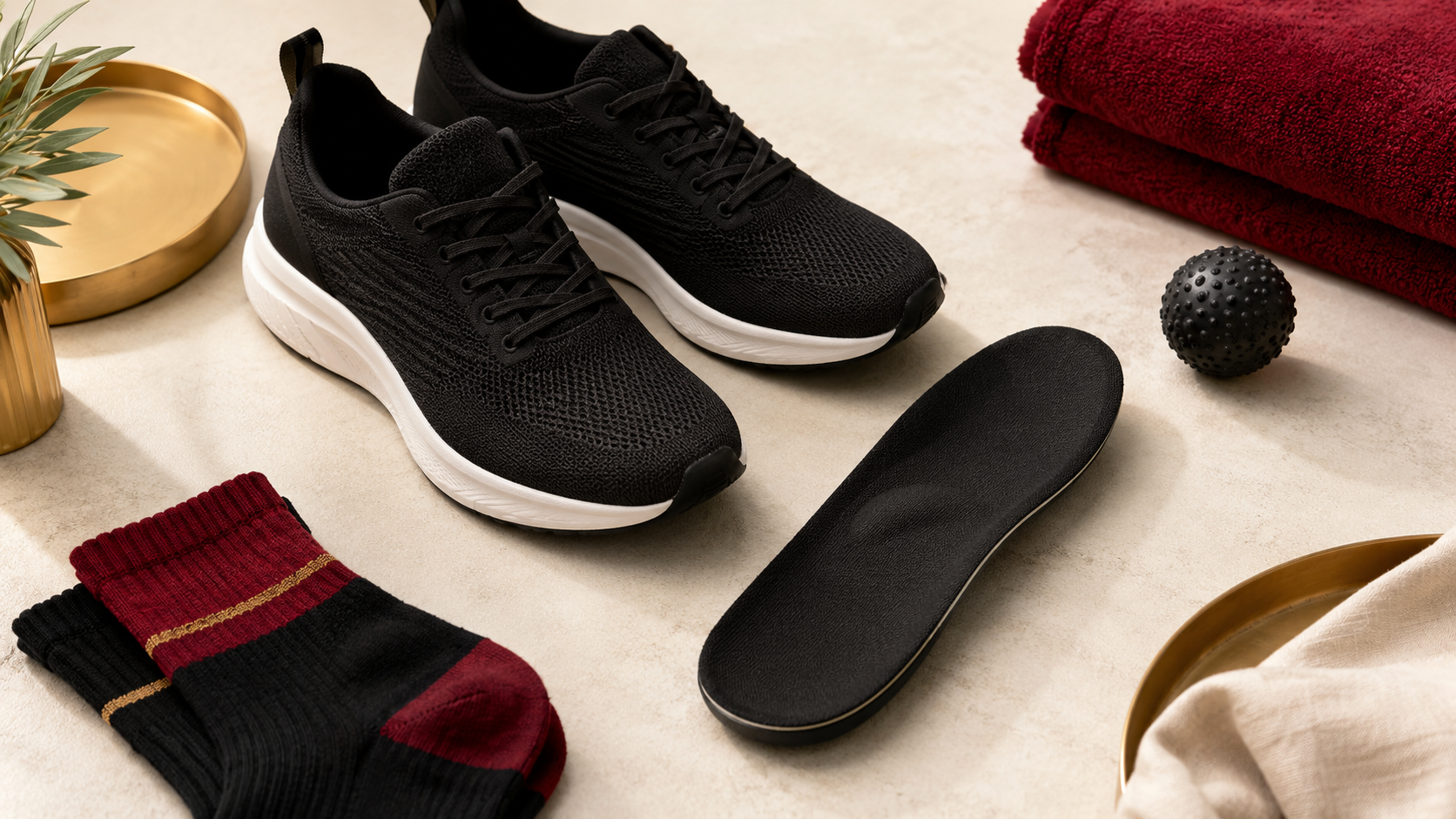
What a Good Support Insole Should Offer
- Heel cushioning: Helps soften repeated impact under the heel.
- Arch support: Helps support the foot’s natural shape.
- Pressure distribution: Helps reduce concentrated stress in one painful area.
- Stable fit: Helps the foot feel more secure inside the shoe.
- Low-profile shape: Adds support without crowding everyday shoes.
6. Wear Better Shoes
The source article notes that footwear plays an important role in plantar fasciitis recovery. If your shoes are flat, worn out, unstable, or lacking support, your heel and arch may continue absorbing unnecessary strain. :contentReference[oaicite:3]{index=3}
Better shoes do not need to be bulky or medical-looking. They should simply support the foot well enough for your daily activity.
| Shoe Feature | Why It Helps | What to Avoid |
|---|---|---|
| Heel Cushioning | Softens repeated impact during walking and standing. | Thin, hard, collapsed soles. |
| Arch Support | Reduces strain through the plantar fascia area. | Very flat shoes with no structure. |
| Stable Midsole | Helps reduce wobble and excessive movement. | Unstable or overly flexible shoes. |
| Secure Heel Fit | Helps prevent sliding and toe gripping. | Shoes that are too loose or too tight. |
| Enough Internal Space | Allows room for a supportive insole if needed. | Crowded shoes that compress the foot. |
7. Avoid Activities That Keep Triggering Pain
One of the fastest ways to slow recovery is to keep doing the same activity that caused the flare-up. Plantar fasciitis often improves when you temporarily reduce the load and then rebuild gradually.
Common Triggers to Modify
- Running or sprinting through heel pain.
- Jumping workouts or high-impact classes.
- Long barefoot standing on hard floors.
- Sudden increases in step count or walking distance.
- Wearing worn-out shoes for long standing days.
- Returning to full activity immediately after a few pain-free days.
A smarter approach is to reduce triggers for a short period, then return gradually as symptoms improve.
8. Know When to Get Professional Help
Mild plantar fasciitis may improve with home care, but persistent or unusual heel pain should not be ignored. Heel pain can also come from stress fractures, Achilles issues, nerve irritation, heel fat pad problems, arthritis, or other conditions.
A clinician can confirm whether your symptoms match plantar fasciitis and recommend the right next step, such as physical therapy, orthotics, night splints, imaging, injections, shock wave therapy, or other options if needed.
Quick Recovery Checklist
Use this simple checklist to keep your recovery plan practical and consistent.
| Step | Do This | Avoid This |
|---|---|---|
| Rest | Reduce painful activity and take standing breaks. | Pushing through sharp or worsening heel pain. |
| Ice | Use short ice sessions after activity or flare-ups. | Applying ice directly to skin for too long. |
| Massage | Use gentle pressure around the arch and sole. | Deep pressure into sharp heel pain. |
| Stretch | Stretch the calf, Achilles, and plantar fascia gently. | Bouncing or forcing painful stretches. |
| Support | Wear supportive shoes and consider insoles. | Barefoot hard-floor walking during flare-ups. |
Support Your Heel While It Recovers
Faster recovery starts with reducing daily strain. InsoleLux insoles are designed to add low-profile arch support and heel comfort inside compatible everyday shoes.
FAQ
Can plantar fasciitis heal quickly?
Mild symptoms may improve faster when you reduce strain early, use supportive shoes, stretch gently, and avoid painful activities. However, most cases still take time and do not heal overnight.
What is the fastest way to calm plantar fasciitis pain?
Short-term comfort often comes from rest from triggers, ice, gentle stretching, supportive footwear, and avoiding barefoot hard-floor walking.
Should I massage plantar fasciitis?
Gentle massage may help reduce tightness for some people. Avoid aggressive pressure directly into sharp heel pain.
Do insoles help plantar fasciitis heal faster?
Insoles do not directly cure plantar fasciitis, but supportive insoles may help reduce daily heel and arch strain inside compatible shoes, which can support recovery.
Should I keep walking with plantar fasciitis?
Gentle walking may be okay if it does not worsen symptoms. Long walks, hard surfaces, or pushing through increasing pain may slow recovery.
How long does plantar fasciitis take to heal?
Recovery varies. Many people improve over several weeks to months with conservative care, but persistent cases can take longer and may need professional guidance.
When should I see a professional?
Seek care if pain is severe, worsening, lasting more than a few weeks, affecting walking, linked with swelling or numbness, or caused by injury.
Final Take
The fastest realistic way to heal plantar fasciitis is to stop repeatedly irritating the plantar fascia while giving the foot better support.
Start with the basics: rest from painful activities, use ice for flare-ups, massage gently, stretch consistently, wear supportive shoes, and add insoles if your footwear needs better arch and heel comfort.
Quick relief is possible for some people, but lasting recovery comes from consistent strain reduction — not one overnight fix.
