

Guides
Plantar Fasciitis Relief: 7 Practical Ways to Support Heel Comfort
Jun
Plantar Fasciitis Relief: 7 Practical Ways to Support Heel Comfort
Plantar fasciitis rarely has one instant fix. The better approach is usually a practical routine: reduce strain, support the arch, improve shoe fit, and build habits that help your feet feel more comfortable day after day.
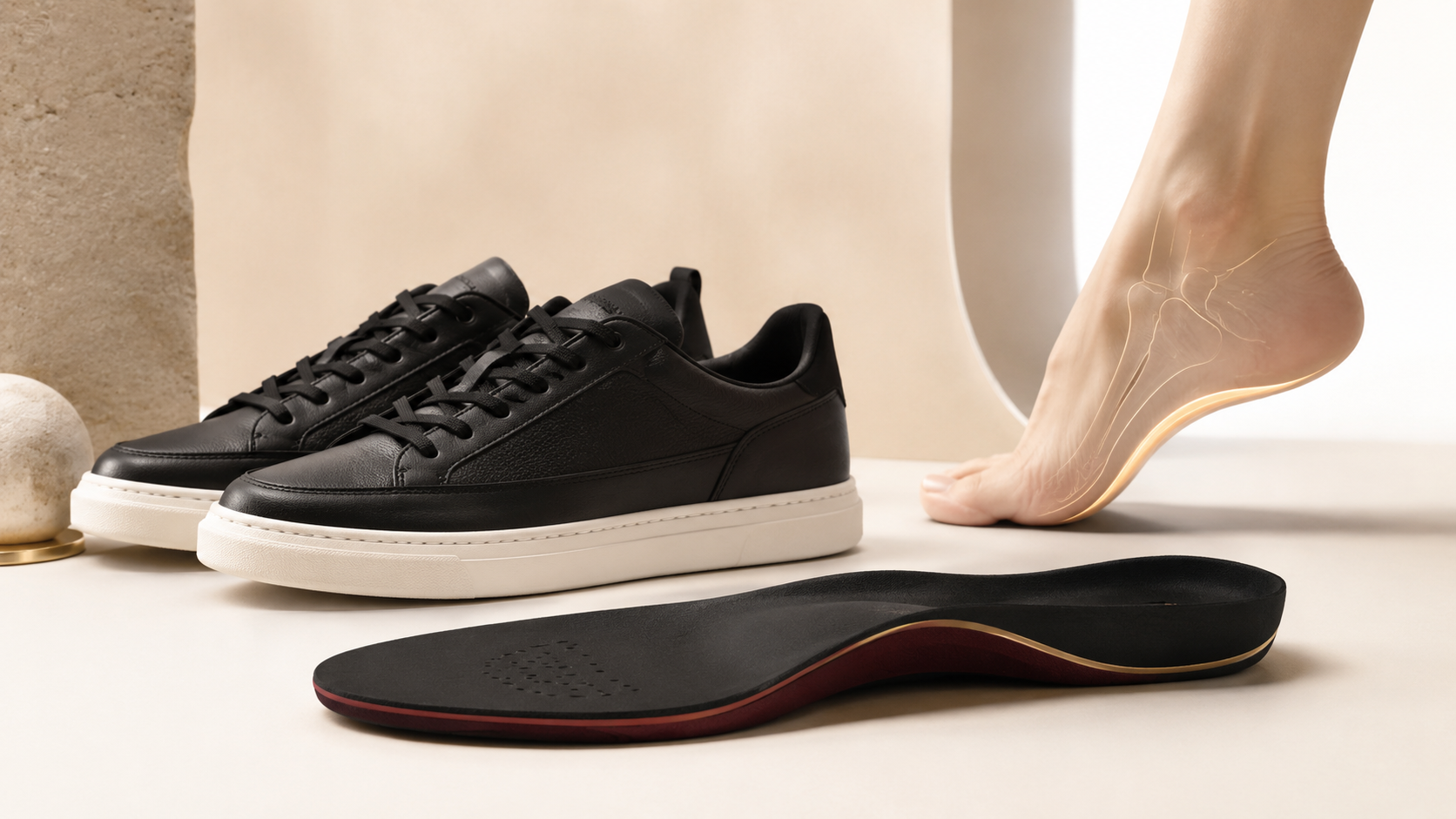
Heel pain can make the first steps of the morning feel uncomfortable, especially when the bottom of the foot feels tight near the heel or arch. Many people search for an “instant fix” for plantar fasciitis, but the reality is more balanced.
Some techniques may help you feel temporary relief quickly. But long-term comfort usually comes from a combination of stretching, better footwear, arch support, heel cushioning, activity management, and consistent foot care.
Quick Answer: Is There an Instant Fix for Plantar Fasciitis?
There is no reliable one-step cure for plantar fasciitis. Some stretches, mobility work, or supportive footwear changes may help you feel better quickly, but sustainable relief usually requires reducing repeated strain on the plantar fascia over time.
Think of plantar fasciitis relief as a system: calm the irritated area, support the arch, reduce harsh impact, improve shoe fit, and gradually strengthen the structures that support your foot.
Short-Term Comfort
Gentle stretching, rolling, supportive shoes, and heel cushioning may help reduce discomfort during daily movement.
Long-Term Support
Consistent foot care, calf mobility, arch support, and gradual activity changes can help reduce repeated strain.
What Plantar Fasciitis Feels Like
The plantar fascia is a band of tissue that runs along the bottom of the foot and helps support the arch. When it becomes irritated or overloaded, many people feel discomfort near the heel or along the arch.
A common sign is discomfort with the first steps after getting out of bed, after sitting for a long time, or after a long day of standing. It may feel better once you warm up, then return after more activity.
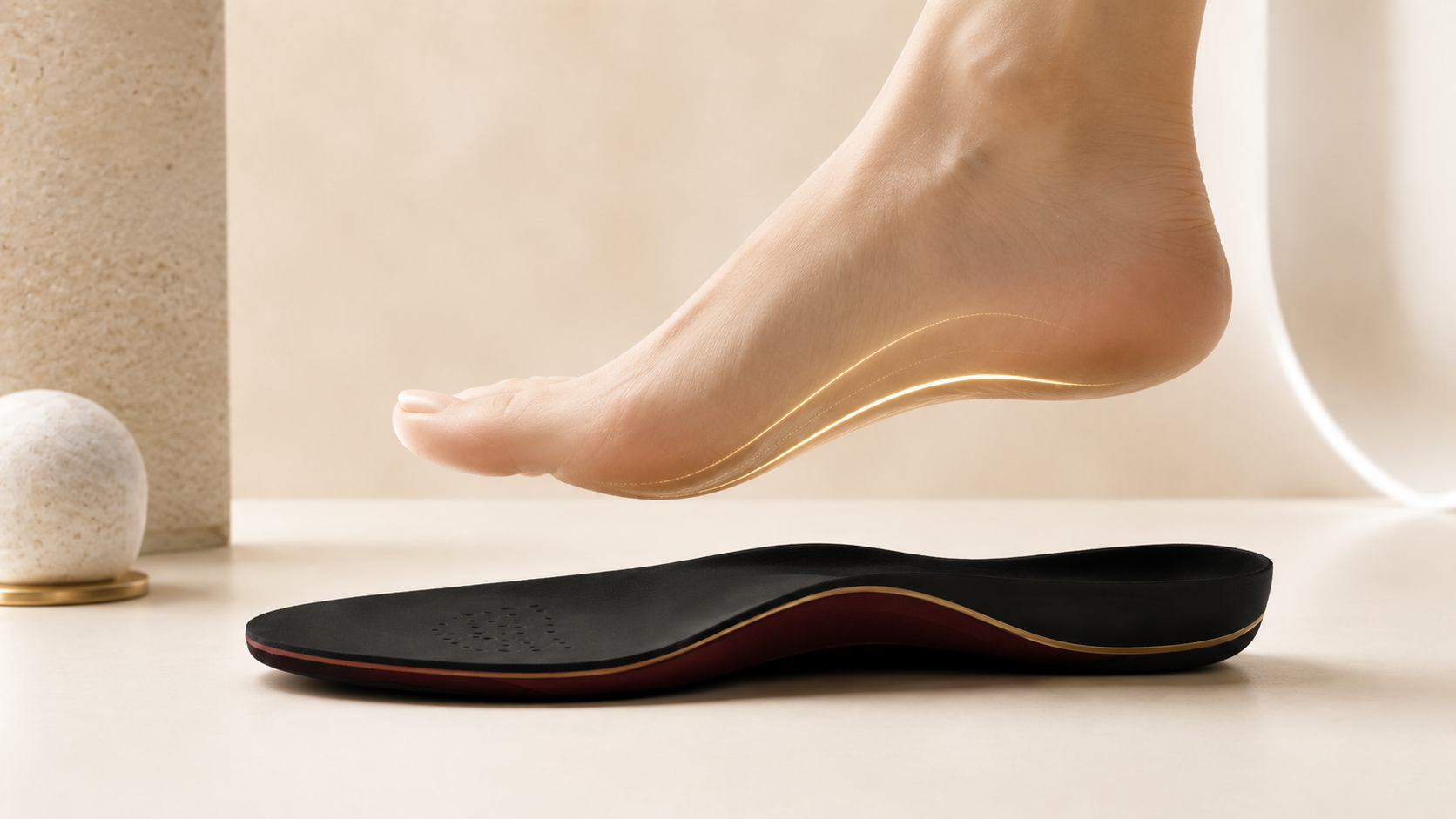
The key is not to attack the painful spot aggressively. For many people, a gentler approach works better: reduce load, stretch surrounding muscles, support the foot inside the shoe, and avoid sudden activity spikes.
Step 1: Reduce Strain First
When your heel is irritated, doing more is not always better. The first step is to reduce unnecessary strain so the area has a better chance to calm down.
Avoid Barefoot Hard-Floor Walking
Walking barefoot on hard floors can increase pressure through the heel and arch. Around the house, consider supportive slippers or shoes with cushioning.
Pause Sudden High-Impact Activity
Running, jumping, long walks, and standing for extended periods may increase irritation if your foot is already sensitive.
Check Your Most-Worn Shoes
Shoes that are worn down, too soft, too flat, or unstable can make your feet work harder during every step.
Step 2: Stretch the Calf and Foot Gently
Tight calves and limited ankle mobility can increase tension through the heel and bottom of the foot. Gentle stretching can be helpful, especially when done consistently.
Simple Stretches to Try
- Towel stretch: Sit down, loop a towel around the ball of your foot, and gently pull the toes toward you.
- Wall calf stretch: Keep the back heel down and lean forward until you feel a comfortable calf stretch.
- Plantar fascia stretch: Cross one foot over the opposite knee and gently pull the toes back until you feel a stretch along the arch.
- Toe mobility: Slowly flex and extend the toes to wake up the foot before standing.
Keep the intensity mild. A stretch should feel controlled, not sharp. If a movement increases pain, stop and adjust.
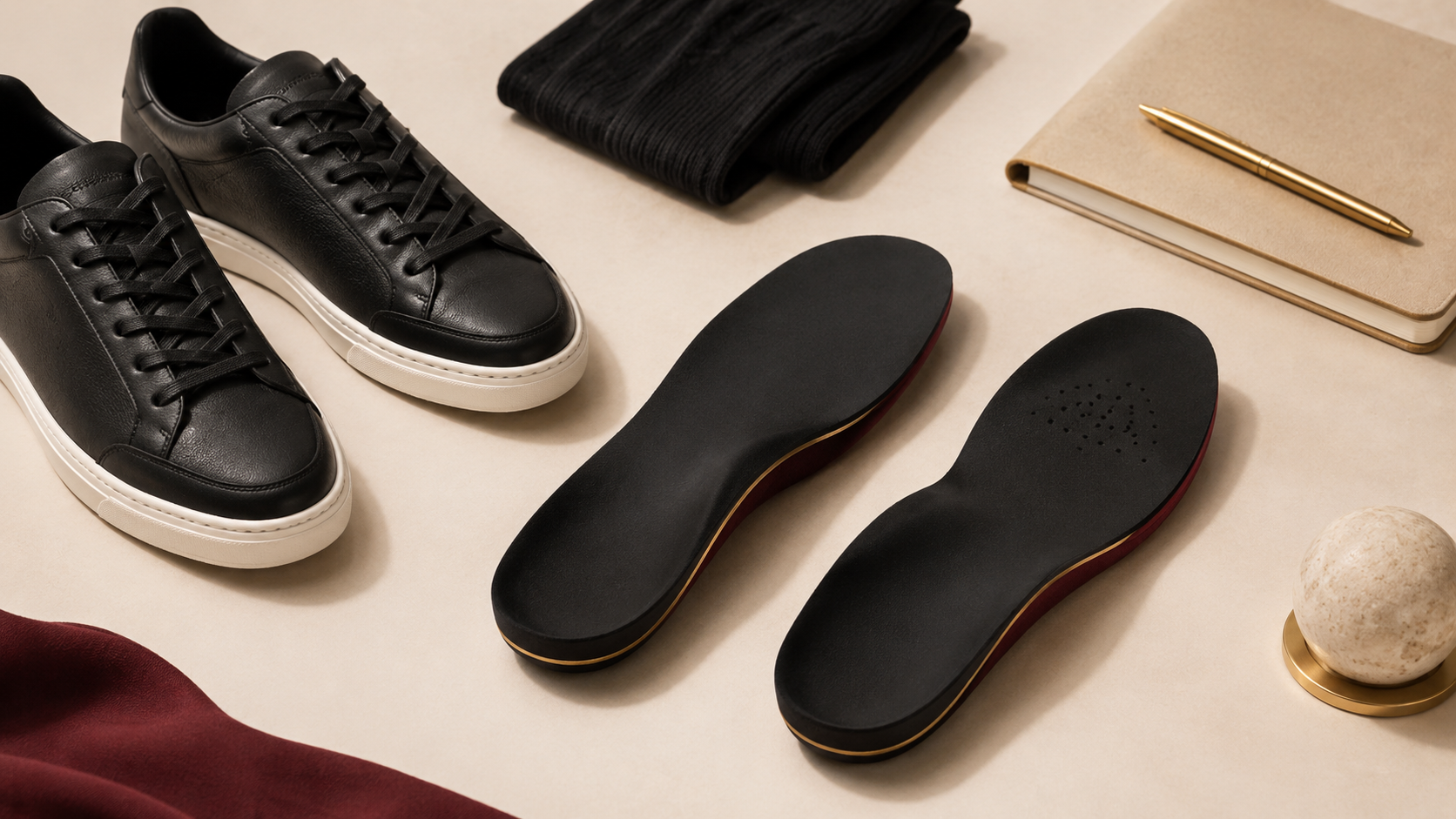
Step 3: Use Rolling or Massage Carefully
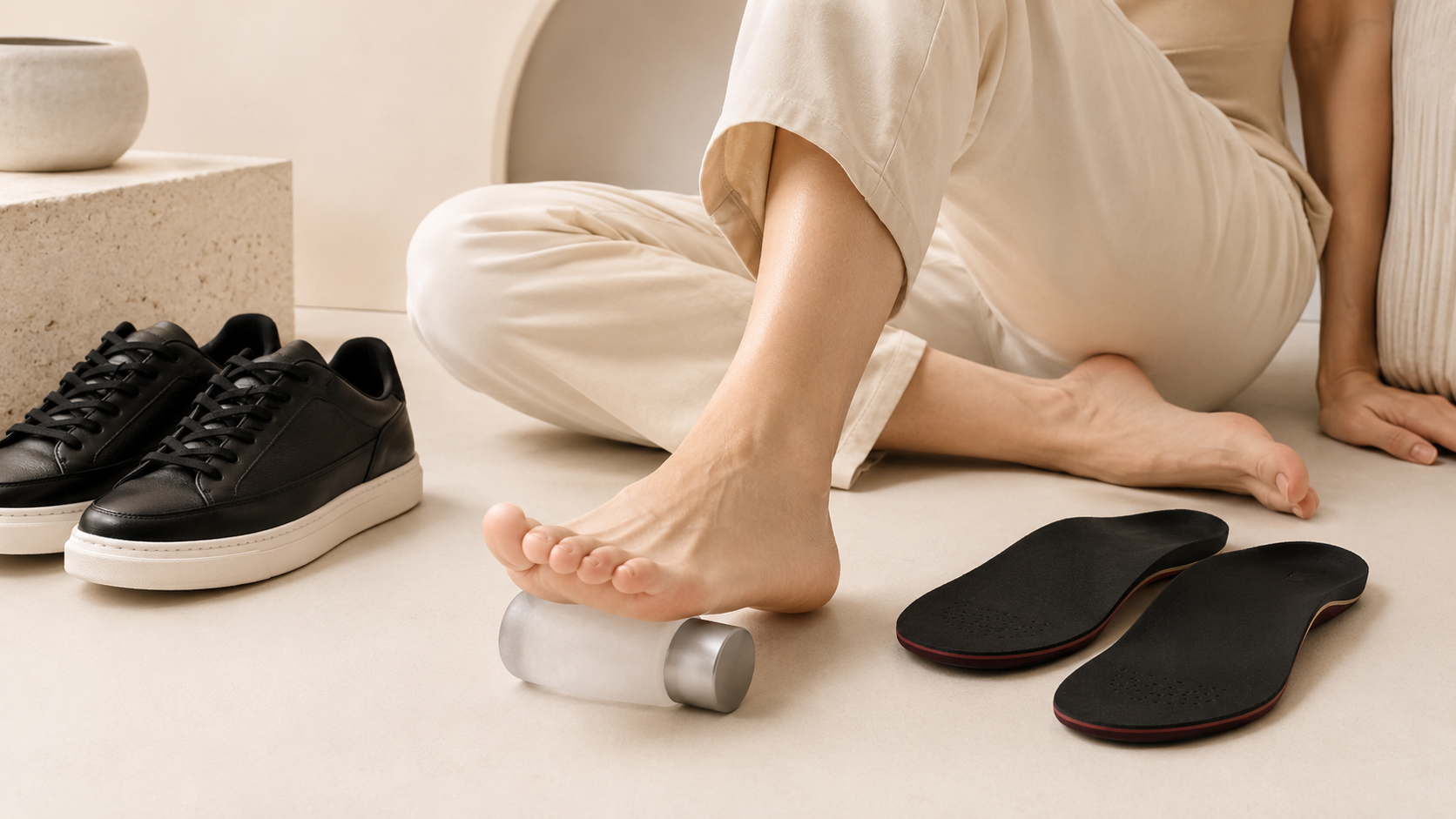
Rolling the bottom of the foot with a small ball or bottle may help some people feel temporary relief. The key is pressure control.
More pressure does not always mean better results. If the tissue feels irritated, aggressive massage can make the area more sensitive. Keep it gentle and short.
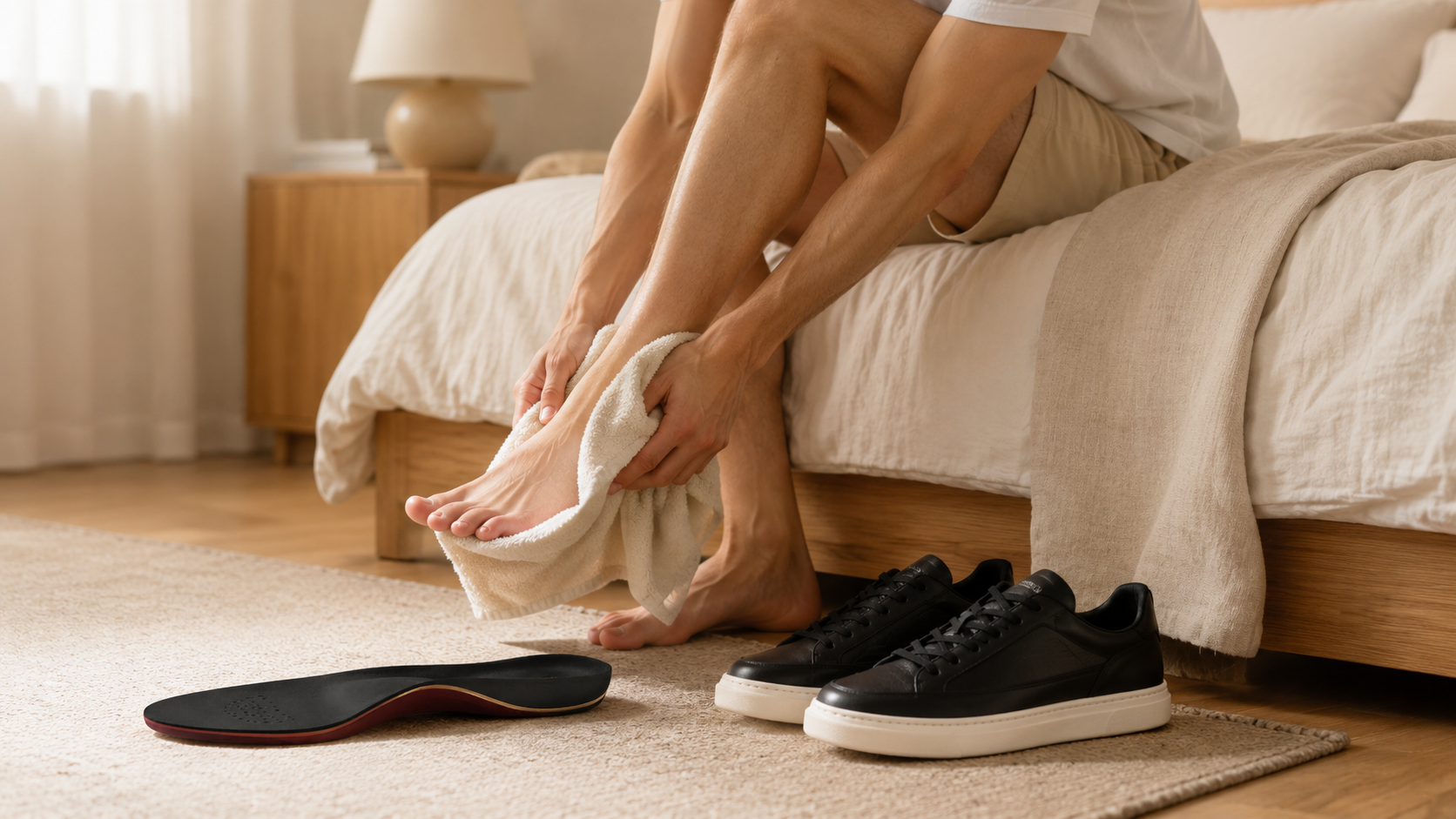
How to Roll Safely
- Sit down so you can control pressure easily.
- Roll slowly under the arch and heel area for one to two minutes.
- Use light to moderate pressure only.
- Avoid forcing the ball directly into a sharp pain point.
- Stop if symptoms become more intense afterward.
Step 4: Choose Supportive Shoes
Footwear matters. A shoe with poor support can allow the foot to collapse inward, slide around, or absorb impact poorly. Over time, that may increase stress through the heel and arch.
For everyday wear, look for shoes that feel stable but not restrictive. The best shoe is one that supports your foot while still giving your toes enough room to sit naturally.
What to Look For
| Feature | Why It Helps | What to Avoid |
|---|---|---|
| Secure Heel | Helps reduce sliding and improves stability. | Loose heel fit or worn-out heel counters. |
| Stable Midsole | Supports smoother weight transfer through each step. | Very soft shoes that collapse inward easily. |
| Enough Cushioning | Helps reduce harsh impact under the heel. | Thin, flat, unsupportive soles for long standing days. |
| Removable Insole | Makes it easier to add arch support without crowding the shoe. | Shoes that become too tight when an insole is added. |
Step 5: Add Arch Support and Heel Cushioning
Supportive insoles can help distribute pressure more evenly inside the shoe and reduce the feeling that your arch or heel is taking all the load.
This does not mean insoles are a cure. It means they can be a practical support tool, especially for long standing days, daily walking, commuting, or shoes that need better underfoot structure.
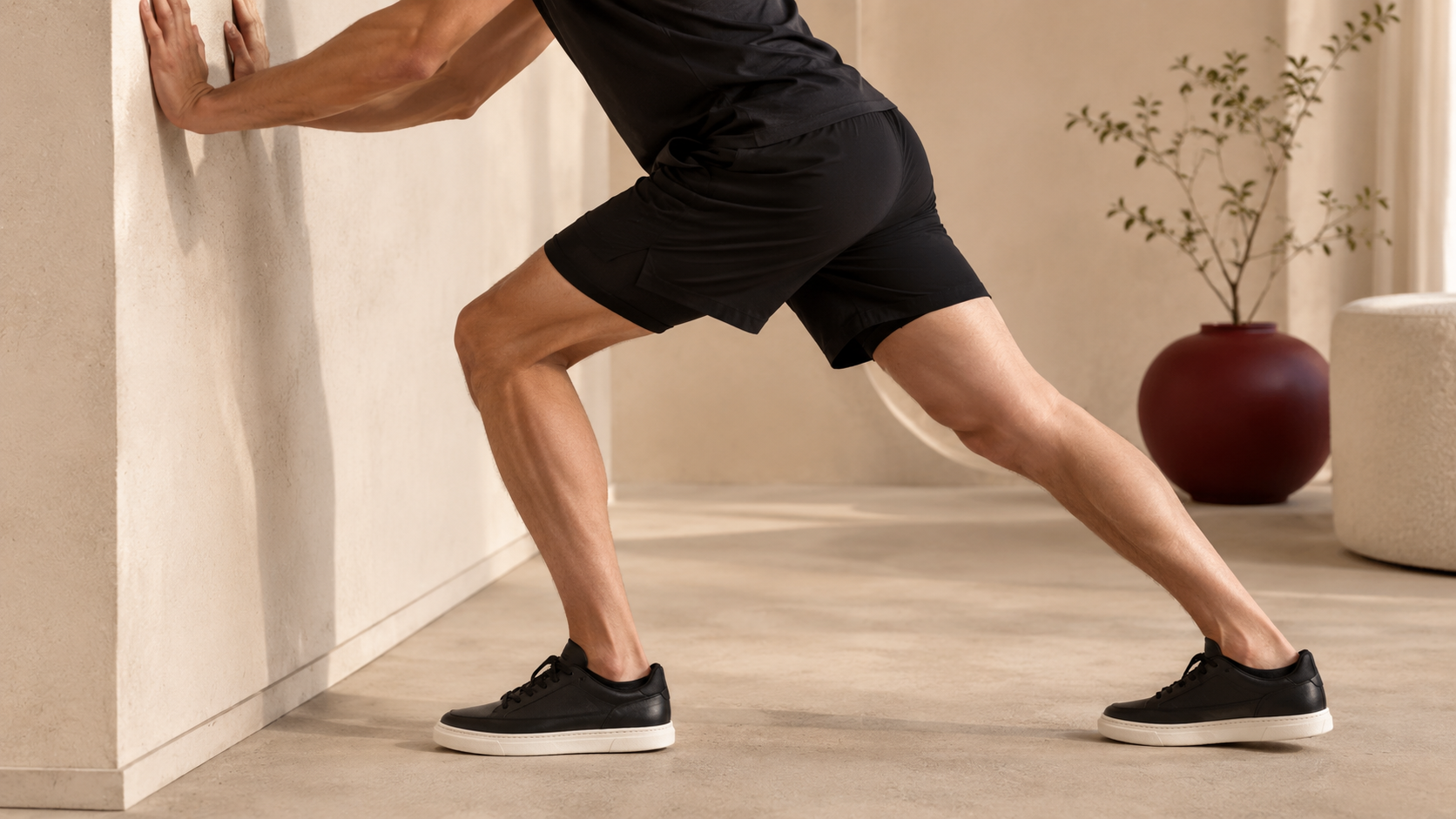
Good Insole Features for Heel Comfort
- Arch support: Helps support the foot’s natural shape inside the shoe.
- Heel cushioning: Helps soften impact under the heel.
- Stable base: Helps reduce excessive foot movement inside the shoe.
- Low-profile fit: Helps the insole work inside everyday shoes without crowding the toe box.
- Trim-to-fit design: Makes it easier to match the insole to your shoe shape.
Step 6: Adjust Activity Gradually
Plantar fascia irritation is often linked to load. That means sudden changes in activity can matter — more steps, longer standing shifts, new shoes, harder floors, or a sudden increase in running.
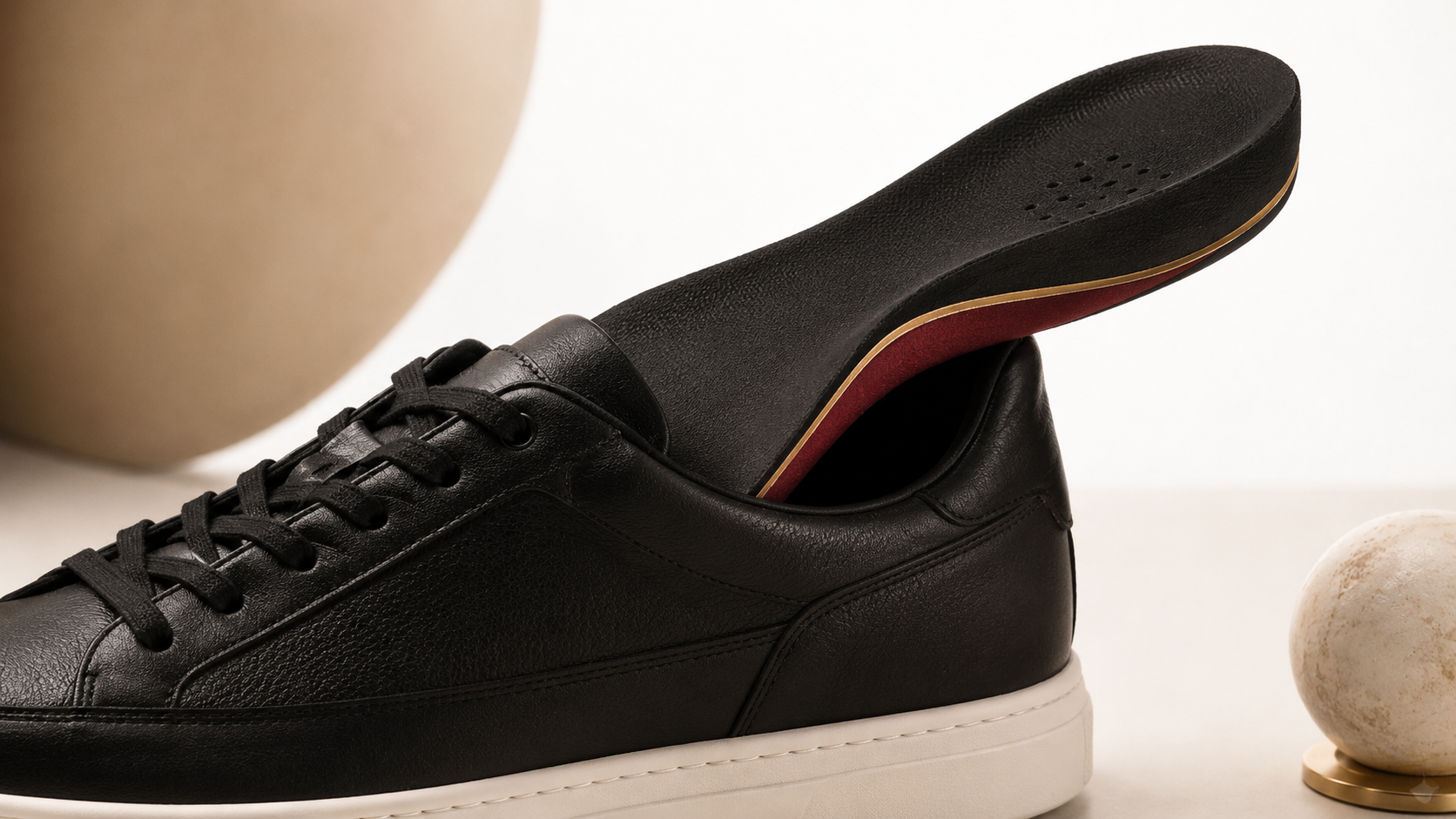
Practical Activity Tips
- Increase walking or running volume gradually.
- Rotate shoes instead of wearing one worn-out pair every day.
- Take short sitting breaks during long standing days.
- Use supportive shoes on hard floors.
- Avoid testing your heel repeatedly to “see if it still hurts.”
Progress should feel steady, not forced. If your symptoms flare after an activity change, reduce the load and build back more slowly.
Step 7: Build a Simple Daily Routine
The best plantar fasciitis relief routine is the one you can actually follow. You do not need a complicated plan. A few consistent habits can make a meaningful difference over time.
| Time | Simple Habit | Why It Helps |
|---|---|---|
| Morning | Gentle towel stretch before standing. | Helps ease the first steps of the day. |
| During the Day | Wear supportive shoes or insoles. | Helps reduce repeated strain during walking and standing. |
| After Activity | Light rolling or gentle mobility work. | Helps the foot settle after load. |
| Evening | Calf stretch and shoe check for the next day. | Supports better comfort and consistency. |
What About Diet, Supplements, or “Instant Relief” Advice?
You may see advice online claiming that plantar fasciitis can be fixed quickly with a specific stretch, supplement, diet, or anti-inflammatory protocol. Some lifestyle factors may influence overall recovery, but heel pain is usually not solved by one isolated trick.
Be careful with extreme supplement dosages, rigid diet claims, or advice that dismisses basic support, footwear, and gradual loading. For most people, the safest starting point is practical: better shoes, gentle stretching, activity management, and support where the foot needs it.
Support Your Heel Comfort Inside Everyday Shoes
If your heels or arches feel tired during long days, supportive insoles can help improve comfort inside compatible shoes. InsoleLux is designed for a clean, low-profile fit with everyday support and a premium feel.
FAQ
Can plantar fasciitis go away on its own?
Some cases improve with conservative care such as rest from irritating activity, stretching, supportive footwear, and better load management. If symptoms persist or worsen, it is best to get professional guidance.
Are insoles good for plantar fasciitis?
Supportive insoles can help improve comfort by supporting the arch and cushioning the heel inside compatible shoes. They are best used as part of a broader plan that includes footwear, stretching, and activity adjustments.
Should I stretch the bottom of my foot?
Gentle plantar fascia stretching may help some people, but it should not be aggressive. If direct pressure or stretching increases discomfort, focus on gentler calf stretching and speak with a professional if needed.
Why does plantar fasciitis hurt more in the morning?
The foot can feel tight after resting overnight. The first steps may suddenly load the heel and arch, which is why a gentle morning stretch can help some people ease into movement.
What shoes should I avoid with heel pain?
Avoid shoes that are very flat, unsupportive, unstable, overly soft, too narrow, or heavily worn down. A secure heel, stable base, and enough cushioning are usually better for daily comfort.
When should I see a doctor for heel pain?
Seek professional advice if the pain is severe, sharp, worsening, linked with swelling or numbness, caused by injury, or not improving with basic care.
Final Take
Plantar fasciitis relief is rarely about one instant fix. It is usually about reducing repeated strain and giving your feet the right mix of support, mobility, cushioning, and gradual activity.
Start with simple steps: avoid hard-floor barefoot walking, stretch gently, check your shoes, add arch support if needed, and adjust activity gradually. Over time, those small habits can make daily movement feel more comfortable.
For everyday heel and arch support, a premium low-profile insole can be a smart addition to the shoes you already wear.
