

Guides
Plantar Fasciitis Symptoms, Causes & Risk Factors
Jun
Plantar Fasciitis Symptoms, Causes & Risk Factors
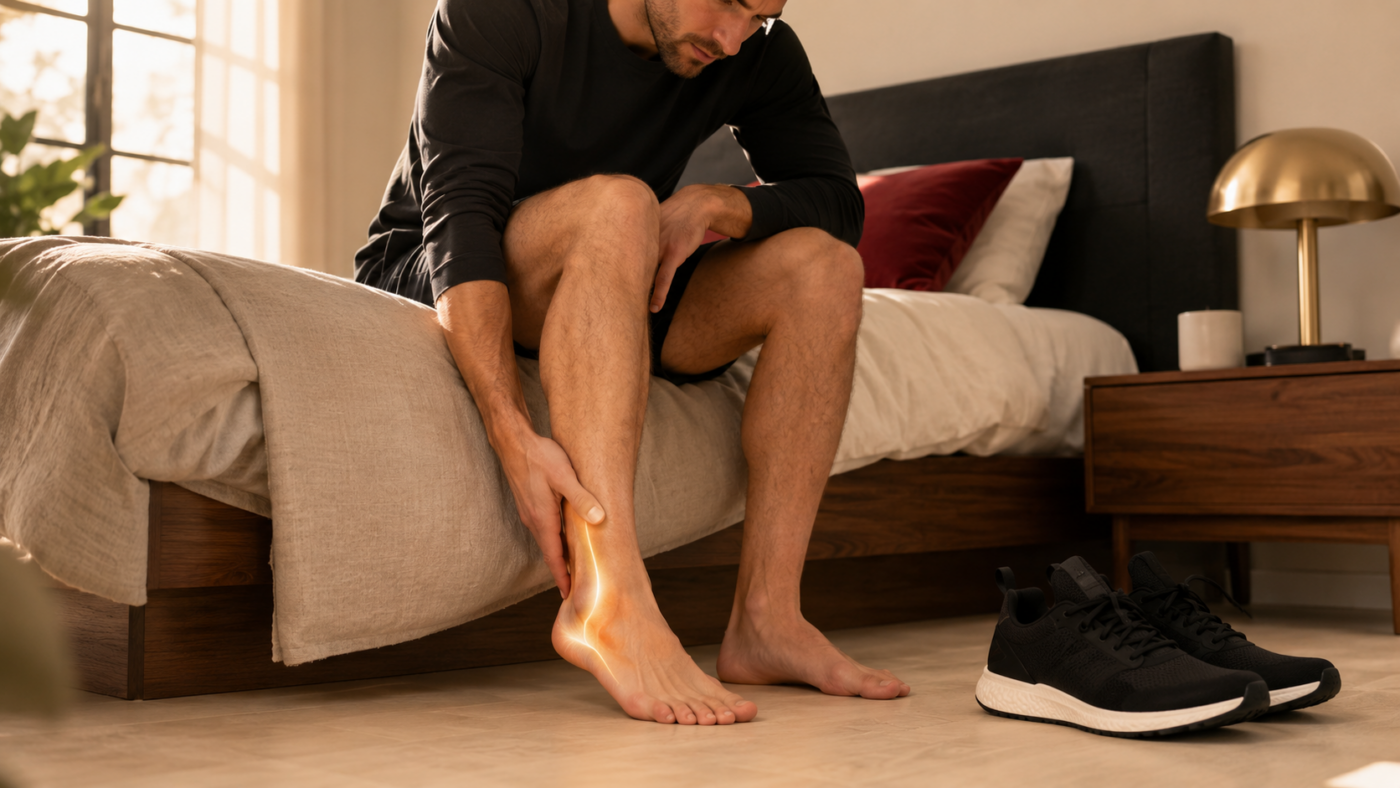
Plantar fasciitis can make the heel and arch feel sharp, tight, or deeply uncomfortable. Understanding the symptoms, causes, and risk factors can help you respond earlier and support your feet more effectively.
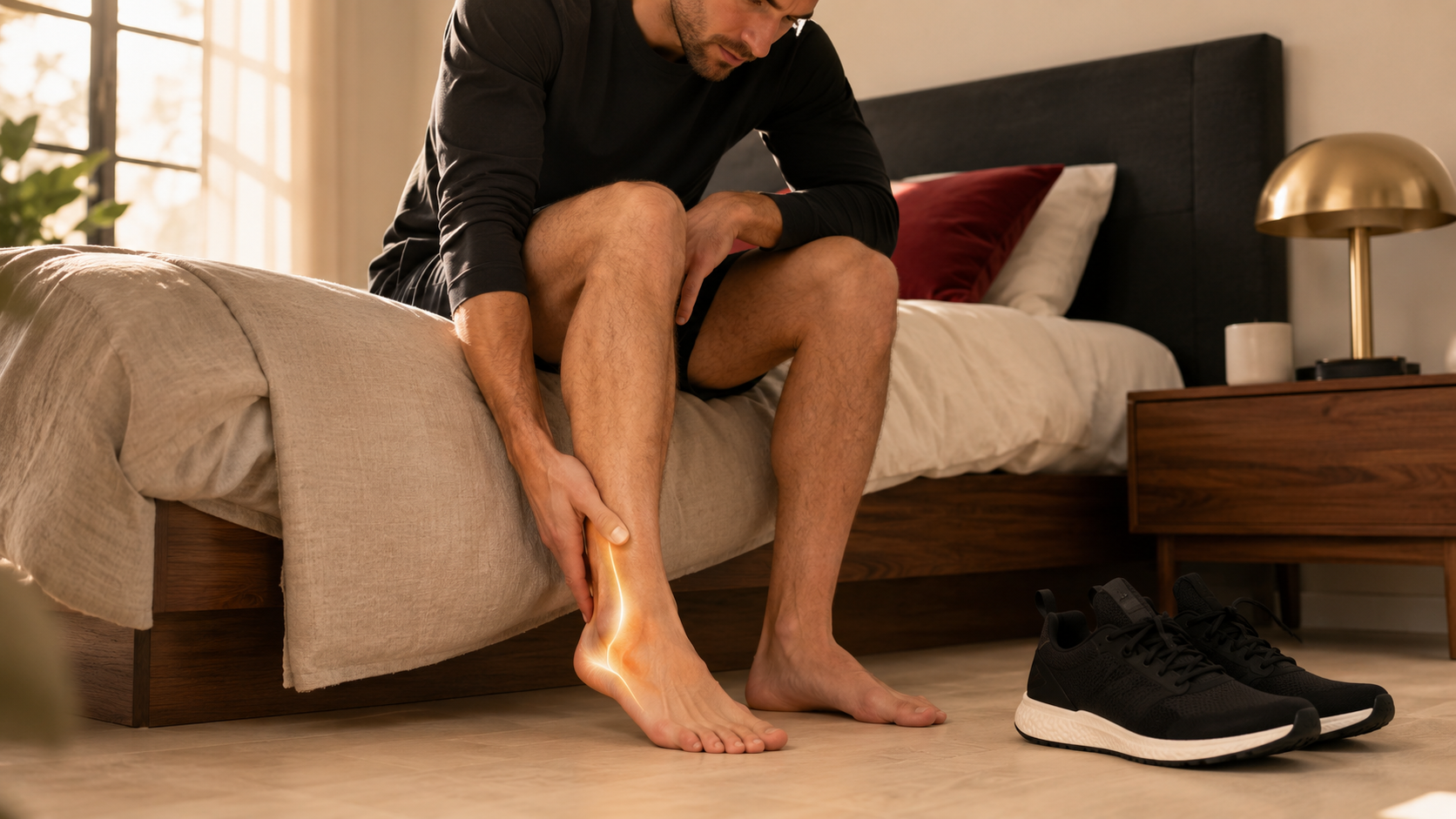
Pain from plantar fasciitis can affect the heel and arch of the foot. At best, it can feel irritating. At worst, it can make everyday activities such as walking, standing, working, or exercising much harder than usual.
The more you understand the symptoms, causes, and risk factors, the easier it becomes to notice warning signs early, reduce avoidable strain, and choose better support for daily movement.
Quick Answer: What Are the Main Symptoms, Causes, and Risks?
Plantar fasciitis commonly causes pain along the bottom of the foot, especially around the inner heel and arch. It is often worse after waking up or after resting, and may feel more noticeable on hard floors or without supportive shoes.
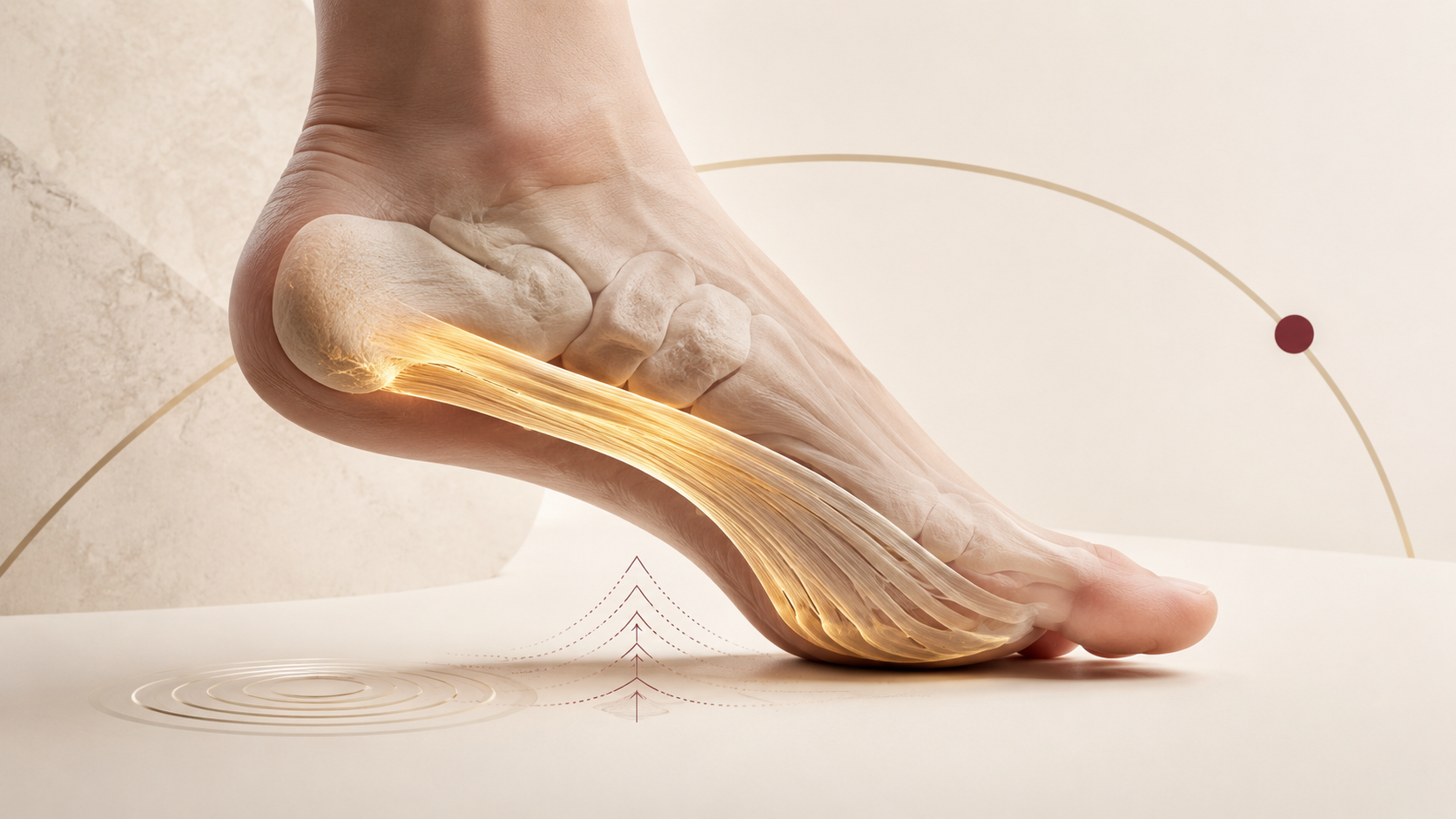
It is often linked with repeated strain on the plantar fascia, the tissue that runs along the bottom of the foot from the heel bone toward the toes. Risk factors include unsupportive footwear, worn-out shoes, hard floors, sudden activity increases, weight gain, tight calves, foot shape, and age.
Heel & Arch Pain
Pain is often felt at the bottom of the foot, around the inside of the heel and arch.
Strain Over Time
Repeated load can create small tissue irritation or microtrauma in the plantar fascia.
Support Matters
Shoes, fit, cushioning, arch support, activity load, and hard surfaces can all affect comfort.
Symptoms of Plantar Fasciitis
A defining symptom of plantar fasciitis is pain on the bottom of the foot, often around the inside part of the heel and arch. The feeling can vary from sharp and stinging to dull, aching, or tight.
Common Symptoms
- Pain after waking up: The first steps in the morning may feel sharp, stiff, or uncomfortable.
- Pain after resting: Sitting or being off your feet can make the first few steps afterward feel painful.
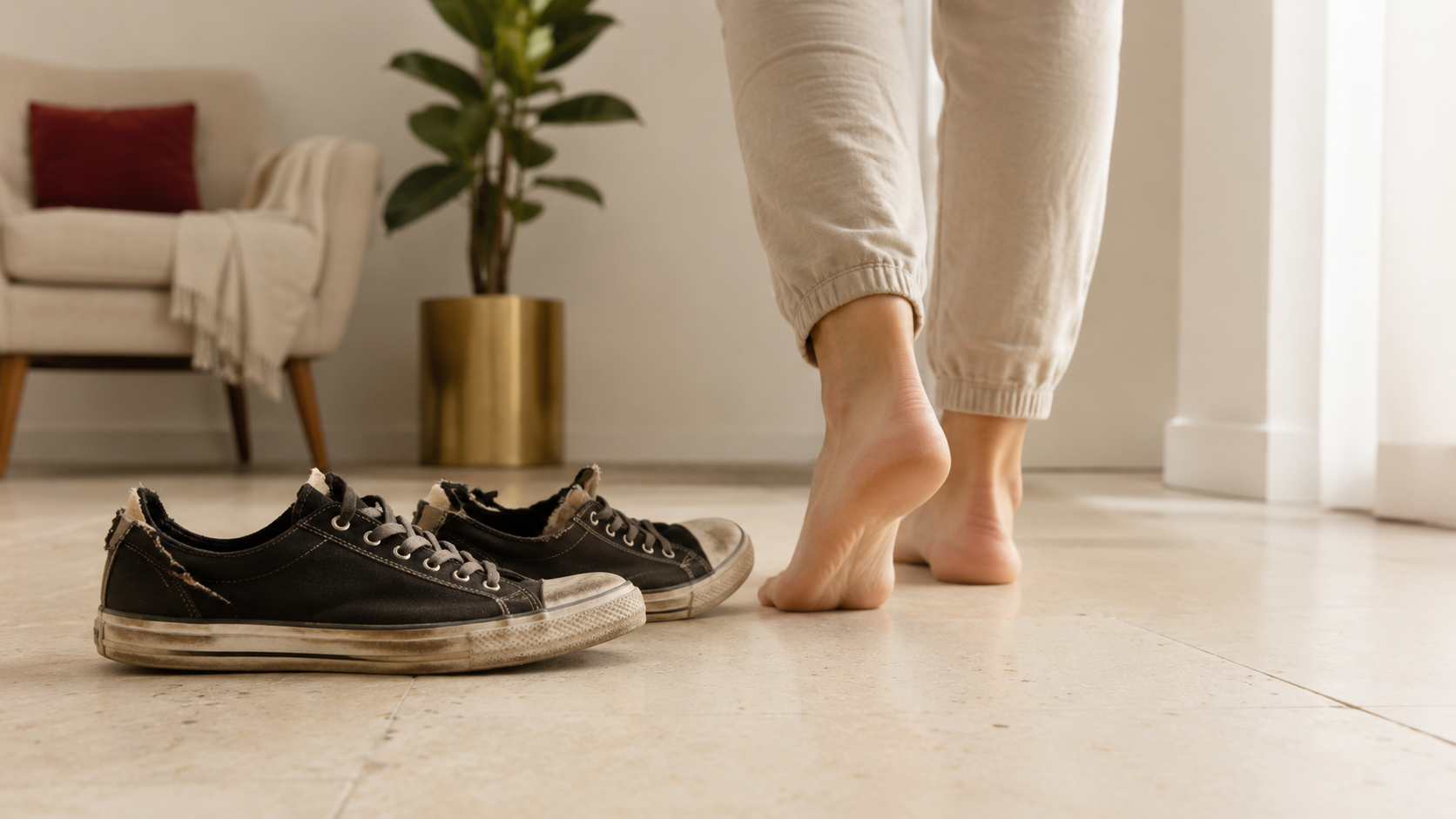
- More pain without shoes: Hard floors and barefoot walking may feel worse than walking in supportive shoes.
- Heel or arch tenderness: The bottom of the heel or arch may feel sore when pressure is applied.
- Changed walking pattern: Some people walk on tiptoes, sideways, or shift weight away from the heel to avoid pressure.
Changing the way you walk to avoid heel pressure may feel helpful in the moment, but it can place extra strain on other parts of the foot, ankle, knee, or leg. If pain changes your walking pattern, it is worth taking seriously.
What Causes Plantar Fasciitis?
There is not always one clear reason why plantar fasciitis happens. It is commonly linked with strain on the plantar fascia from activity, load, footwear, or changes in how much stress the foot is handling.
The plantar fascia can experience small microscopic tears or irritation when it is repeatedly overloaded. This may lead to pain, swelling, and a reduced ability to walk or stand comfortably.
In some cases, the issue may be less about active inflammation and more about tissue changes over time. This is sometimes described as plantar fasciosis, where the tissue becomes less healthy or less resilient. In real life, irritation and tissue degeneration can overlap.
How Strain Builds Up
Repeated Load
Walking, standing, running, or hard-surface activity repeatedly loads the heel and arch.
Microtrauma
Small stress to the plantar fascia may build up faster than the tissue can recover.
Pain and Limitation
The area becomes more sensitive, making first steps, long standing, or hard-floor walking more uncomfortable.
In rare or more serious situations, sudden mechanical overload, such as a hard landing, may cause a sharper injury to the fascia. Sudden severe pain should be evaluated by a professional.
Risk Factors of Plantar Fasciitis You Can Control
Some risk factors can be reduced with better footwear choices, gradual activity changes, and daily support habits.
| Risk Factor | Why It Matters | What to Do |
|---|---|---|
| Type of Footwear | Unsupportive shoes can strain the bottom of the foot, especially during long walking or standing. | Choose shoes that match the activity and provide stable support. |
| Shoe Size and Fit | Shoes that are too tight can squash the toes; shoes that are too loose can make the toes grip for stability. | Use shoes with secure heel fit, enough toe room, and stable midfoot support. |
| Old or Worn-Out Shoes | Worn heels and collapsed cushioning can put the foot at an imbalanced angle. | Replace shoes when the heel, outsole, or midsole loses structure. |
| Hard Floor Surfaces | Hard floors offer little cushioning, increasing pressure under the heel. | Use supportive footwear for long standing days or hard indoor floors. |
| Sudden Activity Increase | More exercise, a new sport, or a more physical job can strain the foot before it adapts. | Increase activity gradually and let symptoms guide your pace. |
| Weight Gain | More load through the heel can increase stress on the plantar fascia and reduce comfort. | Focus on supportive footwear, gradual activity, and professional guidance when needed. |
| Reduced Dorsiflexion | Limited ability to lift the foot upward can increase strain through the fascia during walking. | Gentle calf and hamstring mobility may help improve movement comfort. |
| Leg Injury | An injury may change how you walk and shift extra stress to the plantar fascia. | Address compensation patterns instead of walking through pain. |
Risk Factors You Cannot Fully Control
Some risk factors are part of your body structure, age, or injury history. You may not be able to remove them completely, but you can often manage how much strain they create.
Foot Arch
Both low arches and high arches can affect how pressure moves through the foot. Low arches may make it harder for some people to relieve plantar fascia strain, while high arches may place extra pressure through certain parts of the foot.
Age
As we get older, the natural cushioning under the heel can become less resilient. This may reduce shock absorption and make the heel more sensitive to hard floors, long standing, or worn-out shoes.
Body Mechanics
Some people naturally place more load through the heel, arch, or inside of the foot. This does not mean pain is guaranteed, but it does make footwear, mobility, and support more important.
Diagnosing Plantar Fasciitis
If heel or arch pain lasts more than a few days, changes how you walk, or keeps returning, it should not be ignored. A foot specialist or healthcare professional can help confirm whether the symptoms match plantar fasciitis or another condition.
During an appointment, they may examine your foot and ask when the pain appears, whether it is worse in the morning, whether it follows a rest period, what shoes you wear, and whether activity changes triggered it.
What Diagnosis May Include
- A discussion of your symptoms and activity history.
- Checking tenderness around the heel and arch.
- Looking at foot posture, arch shape, calf tightness, and walking pattern.
- Reviewing footwear and recent changes in exercise or standing time.
- X-ray or ultrasound if another cause needs to be ruled out or symptoms are not improving.
Prevention and Daily Support
Plantar fasciitis cannot always be avoided, especially when foot shape, age, or injury history play a role. But many daily risk factors can be reduced with better habits.
Practical Prevention Habits
- Wear shoes that fit well and match your daily activity.
- Replace shoes when the heel or sole becomes worn down.
- Avoid long periods barefoot on hard floors if your heel is sensitive.
- Increase exercise or step count gradually.
- Stretch calves and feet gently if tightness is a pattern for you.
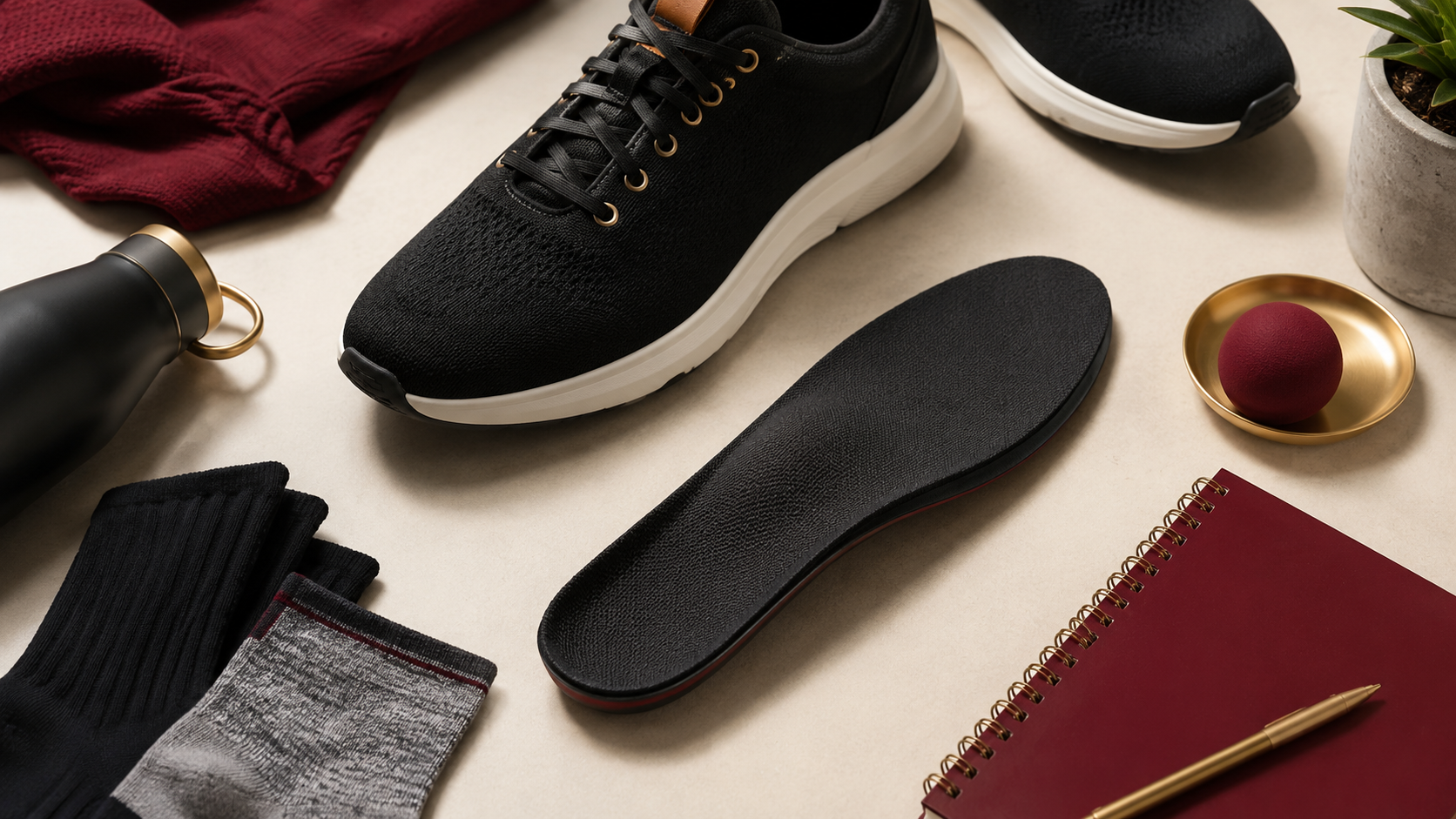
- Use supportive insoles if your shoes need more arch or heel comfort.
- Do not ignore a limp or altered walking pattern.
Support Your Heel and Arch Before Small Symptoms Become Bigger
If your feet feel tired, unsupported, or sensitive during long walking or standing days, InsoleLux insoles can help improve comfort inside compatible shoes with a clean, low-profile fit.
FAQ
What is the main symptom of plantar fasciitis?
The main symptom is pain along the bottom of the foot, usually around the heel and arch. It is often worse with the first steps after waking or after resting.
Why does plantar fasciitis hurt more after rest?
After rest, the foot suddenly takes body weight again. The arch lowers and the plantar fascia stretches, which can make irritated tissue feel painful during the first steps.
Can bad shoes cause plantar fasciitis?
Unsupportive, poorly fitted, or worn-out shoes can increase strain through the bottom of the foot. They may contribute to plantar fascia irritation, especially during long standing or walking.
Are hard floors a risk factor?
Yes. Standing or walking for long periods on hard floors can increase pressure under the heel because the surface provides little cushioning.
Can tight calves increase the risk?
Tight calves or reduced dorsiflexion can change how the foot moves and may increase strain on the plantar fascia during walking.
Do insoles help prevent plantar fasciitis?
Insoles cannot guarantee prevention, but supportive insoles may help improve arch and heel comfort inside compatible shoes, especially during long standing or walking days.
When should I see a professional?
Seek advice if pain is severe, worsening, changes how you walk, does not improve with basic care, or is linked with swelling, numbness, injury, or night/rest pain.
Final Take
Plantar fasciitis commonly causes pain at the bottom of the heel and arch, especially after waking, after rest, or when walking without supportive shoes on hard surfaces.
It often develops when the plantar fascia is strained by repeated load, poor footwear, worn-out shoes, hard floors, activity changes, reduced mobility, weight changes, age, or foot mechanics.
The best first step is awareness: notice the symptoms early, reduce avoidable risk factors, choose better footwear, and support your feet before small discomfort becomes more limiting.

Pingback: Top 7 Tips for Choosing Plantar Fasciitis Insoles | InsoleLux