

Guides
Top 7 Tips for Choosing Plantar Fasciitis Insoles
Jun
Top 7 Tips for Choosing Plantar Fasciitis Insoles
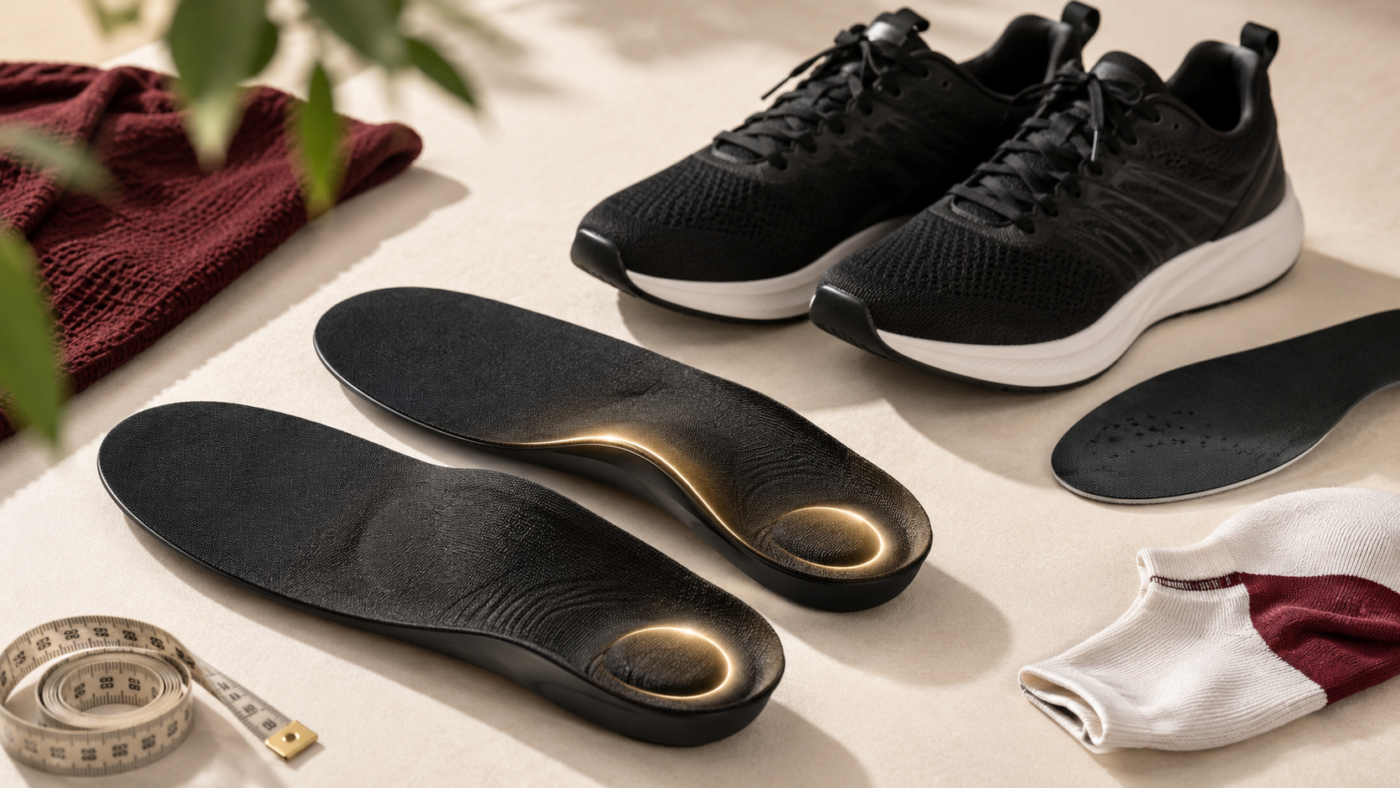
The right plantar fasciitis insoles should support your arch, cushion your heel, fit your shoes properly, and feel stable without forcing your foot into the wrong position.
Plantar fasciitis is one of the most common causes of heel pain. It involves irritation of the plantar fascia, the tissue that helps support the arch of the foot and absorbs pressure during walking.
Supportive insoles can help by improving pressure distribution, adding heel cushioning, and giving the arch a more stable base inside your shoes. But choosing plantar fasciitis insoles is not as simple as buying the firmest, thickest, or most expensive pair.
A good insole should match your foot, your shoe, your comfort level, and your daily activity. The wrong insole can feel bulky, over-supportive, unstable, or uncomfortable — especially if it does not fit your footwear properly.
Quick Answer: What Makes a Good Plantar Fasciitis Insole?
A good plantar fasciitis insole should offer stable arch support, heel cushioning, a secure heel cup, and a fit that works inside your everyday shoes. It should feel supportive without creating pressure, crowding the toes, or forcing the arch too high.
Supportive, Not Harsh
The arch should feel supported, but not painfully pushed upward or overcorrected.
Stable Heel Area
A supportive heel cup can help center the heel and cushion repeated impact.
Fits the Shoe
Even a well-designed insole can feel wrong if it crowds the shoe or changes the fit too much.
7 Tips at a Glance
Use this quick overview before buying plantar fasciitis insoles. Each point is explained in more detail below.
| Tip | What to Check | Why It Matters |
|---|---|---|
| 1. Find what works for your feet | Arch height, insole length, support level, foot shape. | Feet are different; one-size-fits-all support can feel wrong. |
| 2. Avoid overly flexible insoles | Arch and heel stability. | Too much bend can allow the arch to keep collapsing. |
| 3. Consider heel cups | Heel cushioning and heel containment. | A supportive heel cup may reduce impact and improve heel comfort. |
| 4. Choose shoes with toe room | Toe box width and internal shoe space. | Your toes and forefoot need room after the insole is inserted. |
| 5. Match insoles with shoes | Full-length vs half-length, trim fit, removable factory insole. | Fit problems can create pressure, slipping, or crowding. |
| 6. Do not rely only on insoles | Stretching, footwear, gradual activity, professional care. | Insoles are support tools, not the entire recovery plan. |
| 7. Do not judge only by price | Structure, comfort, material, fit, return policy. | Expensive does not always mean better for your feet. |
1. Find Out What Works for Your Feet
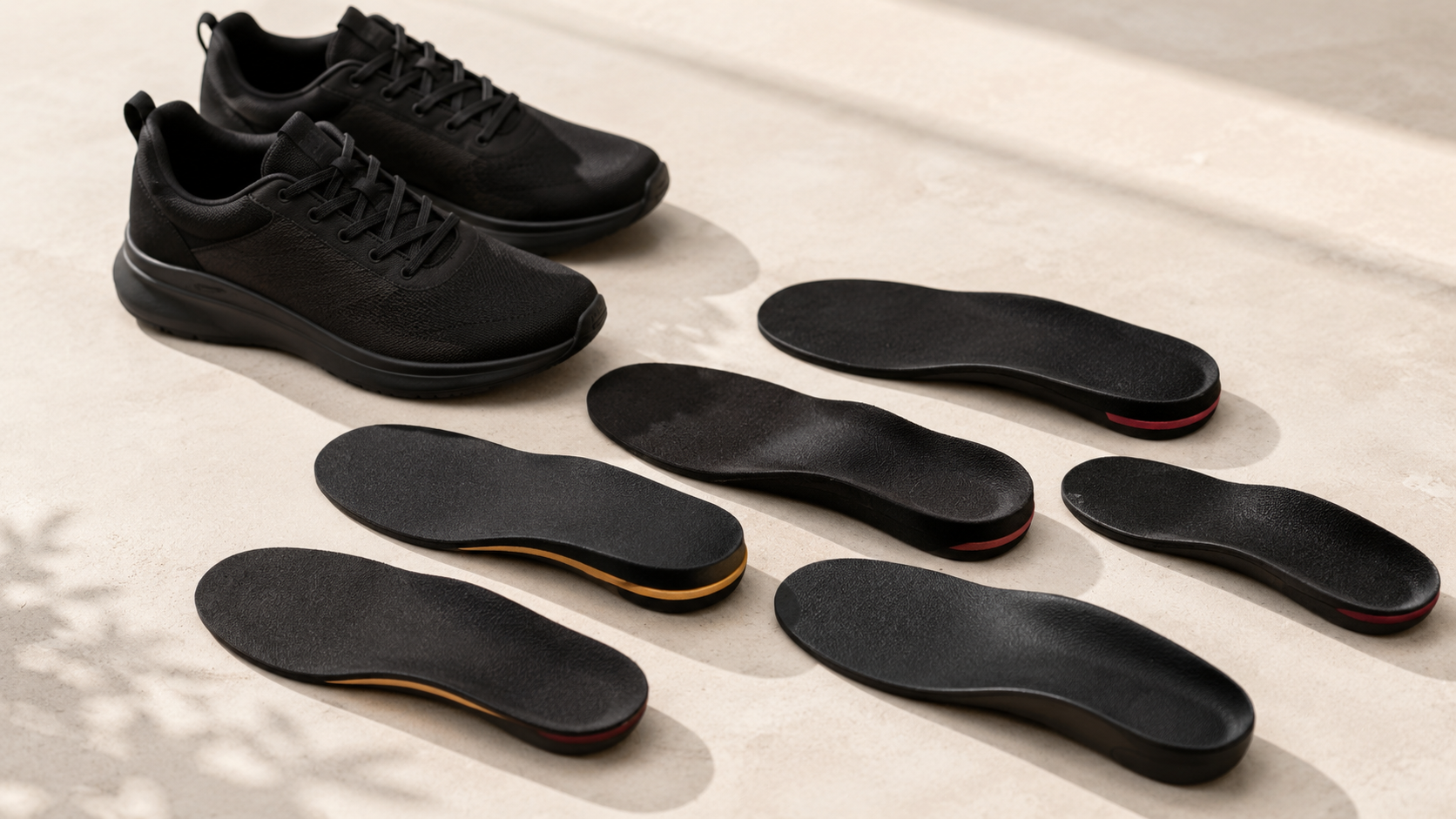
Everyone’s feet are different. Plantar fasciitis insoles come in different arch heights, support levels, lengths, heel shapes, and materials. Some are designed for low arches, some for higher arches, and some for general everyday comfort.
The best insole is not automatically the highest arch or the firmest structure. Too much arch support can feel intrusive and may create new pressure points. Too little support may not help reduce daily strain.
What to Check
- Your arch type: low, neutral, or high.
- Where your pain is strongest: heel, arch, or both.
- How much space your shoes have inside.
- Whether you prefer full-length insoles, half inserts, or heel cups.
- Whether the insole feels supportive without creating sharp pressure.
2. Avoid Highly Flexible Insoles
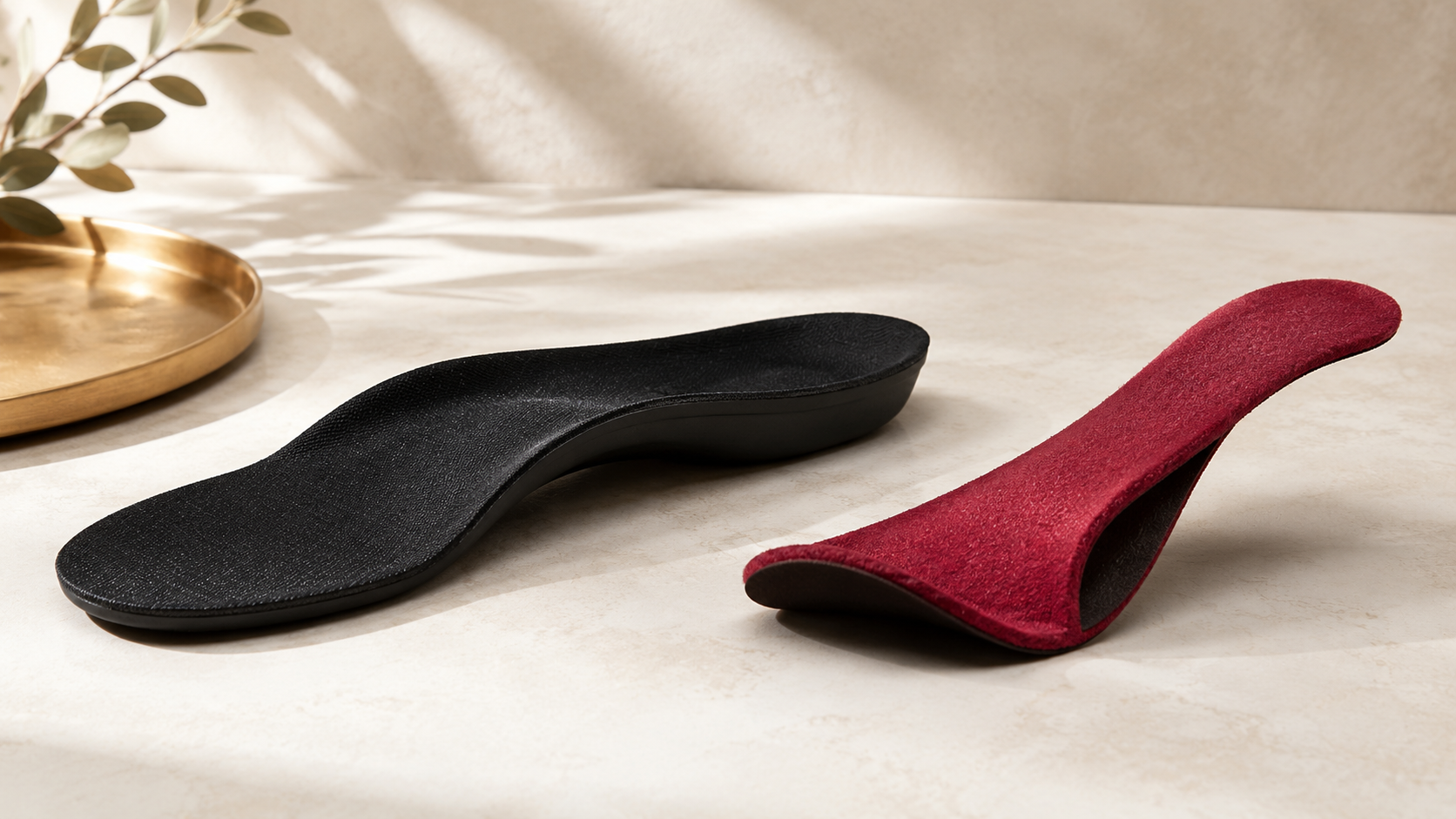
Insoles that bend too easily may feel soft at first, but they may not provide enough structure through the arch and heel. For plantar fasciitis, support and stability often matter as much as cushioning.
The goal is not to lock the foot in place. Your toes and forefoot still need natural movement. But the arch area should not collapse completely with every step.
Look For
- A supportive arch shape that keeps its form under pressure.
- A heel area that feels stable instead of flimsy.
- Materials that cushion without flattening immediately.
- Enough forefoot flexibility for natural toe movement.
- A structure that matches your activity level and shoe type.
3. Consider Insoles With Shock-Absorbing Heel Cups
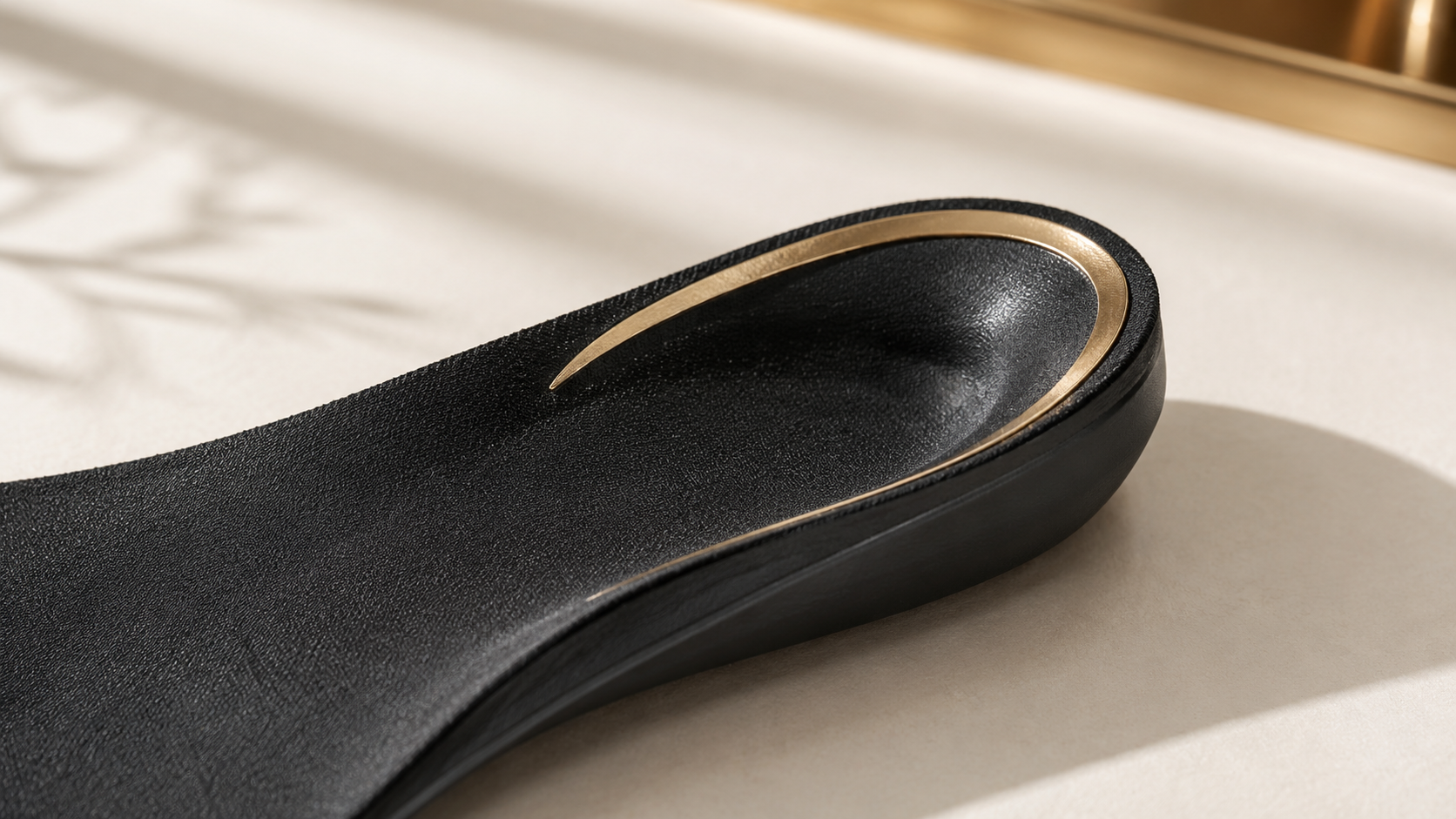
Heel comfort matters because plantar fasciitis often creates pain near the bottom of the heel. A supportive heel cup can help cradle the heel, improve comfort, and reduce the harsh feeling of repeated impact.
Heel cups can help support and cushion the heel, but they do not restructure bones or permanently fix plantar fasciitis by themselves. That distinction is important.
What a Heel Cup Can Do
- Help center the heel inside the shoe.
- Add cushioning under the rearfoot.
- Help reduce direct impact on hard surfaces.
- Improve the feeling of stability during walking.
- Work with arch support to reduce daily strain.
4. Wear Footwear With Wide Toe Boxes
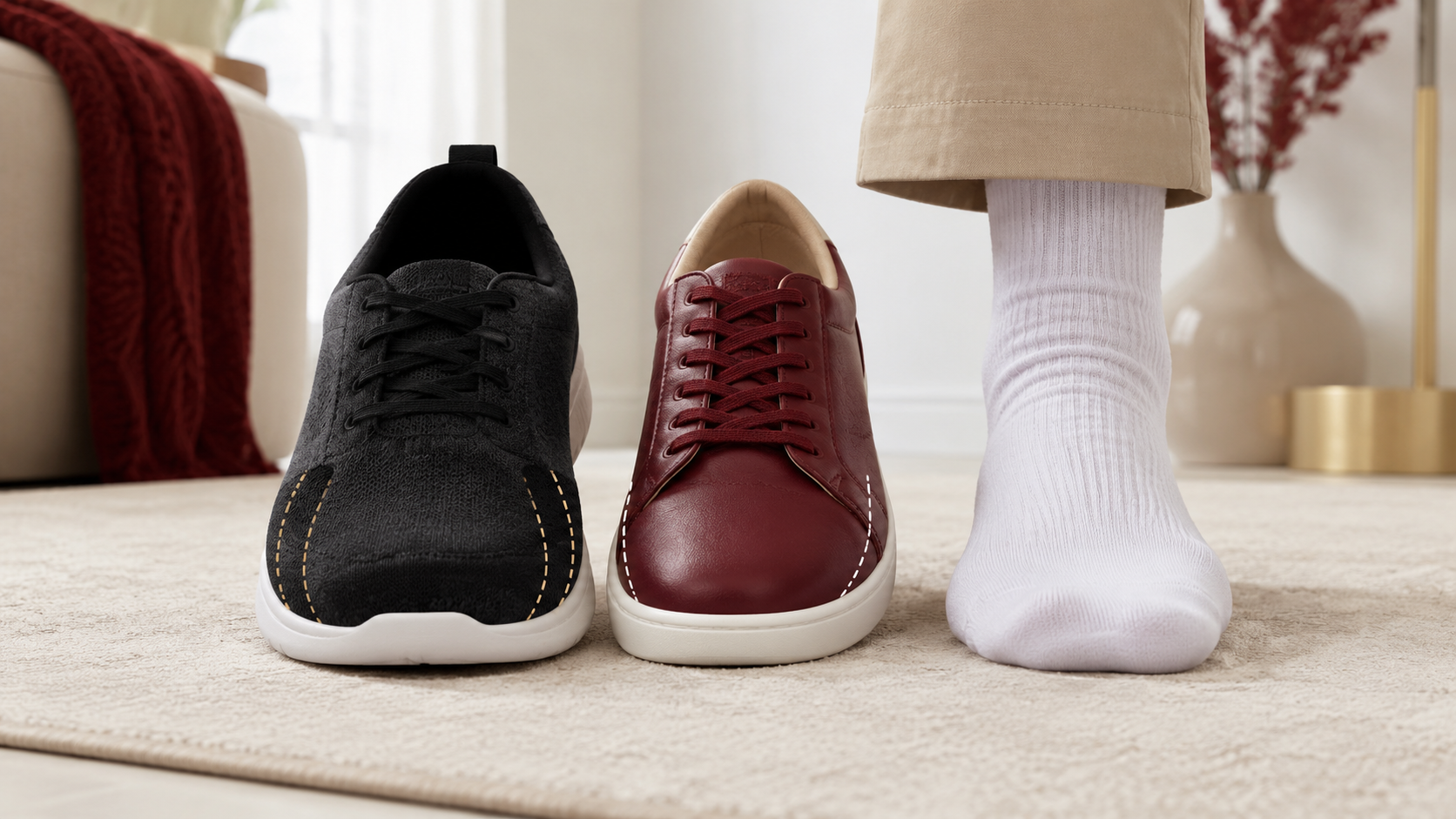
Your shoes matter as much as the insole. If the toe box is too narrow, adding an insole can crowd the foot, restrict toe movement, and create pressure in the forefoot.
A wider toe box gives the toes and transverse arch more space to move naturally as you step. This is especially important if you are using full-length insoles that take up more internal shoe volume.
Signs Your Shoe May Be Too Narrow
- Your toes feel squeezed after inserting the insole.
- The shoe feels tighter across the forefoot.
- Your toes rub, curl, or grip inside the shoe.
- The insole lifts your foot too high inside the shoe.
- You feel new pressure on the top or sides of the foot.
When possible, pair supportive insoles with shoes that have enough width, depth, and internal volume.
5. Match the Insoles With the Shoes
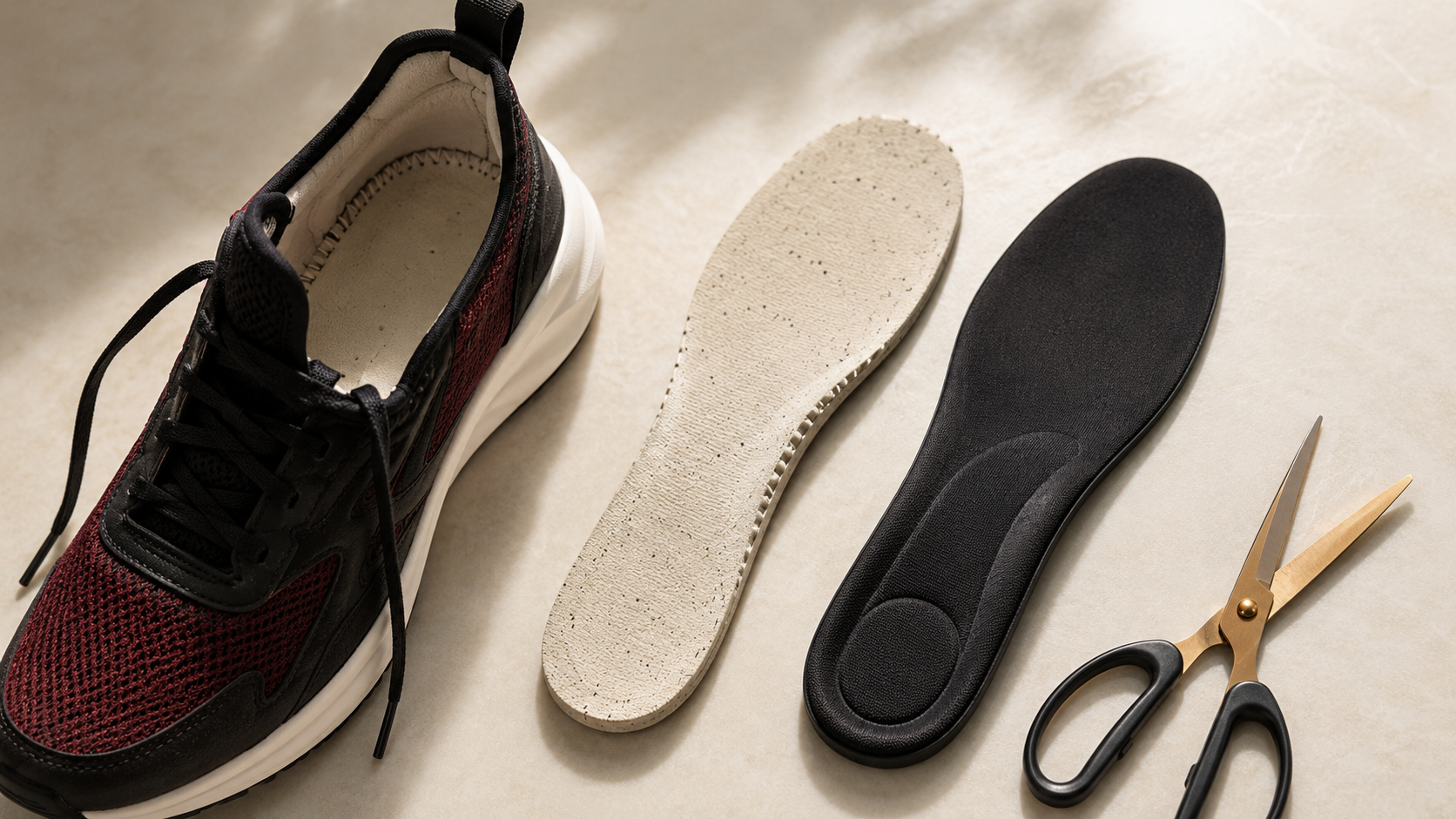
Whether you choose full-length insoles, half-length inserts, heel cups, or other orthotic-style supports, the product needs to fit the shoes you actually plan to wear.
In many shoes, it is best to remove the original factory insole before inserting a new full-length support insole. If the original insole cannot be removed, the shoe may feel too tight after adding another layer.
Fit Checklist
- Remove the factory insole if the shoe allows it.
- Make sure the replacement insole sits flat inside the shoe.
- Trim gradually if the insole is designed to be trimmed.
- Check that the heel does not slip out of the shoe.
- Check that the toes still have enough room.
- Walk indoors first before wearing them all day.
6. Do Not Rely Only on Plantar Fasciitis Orthotics or Insoles
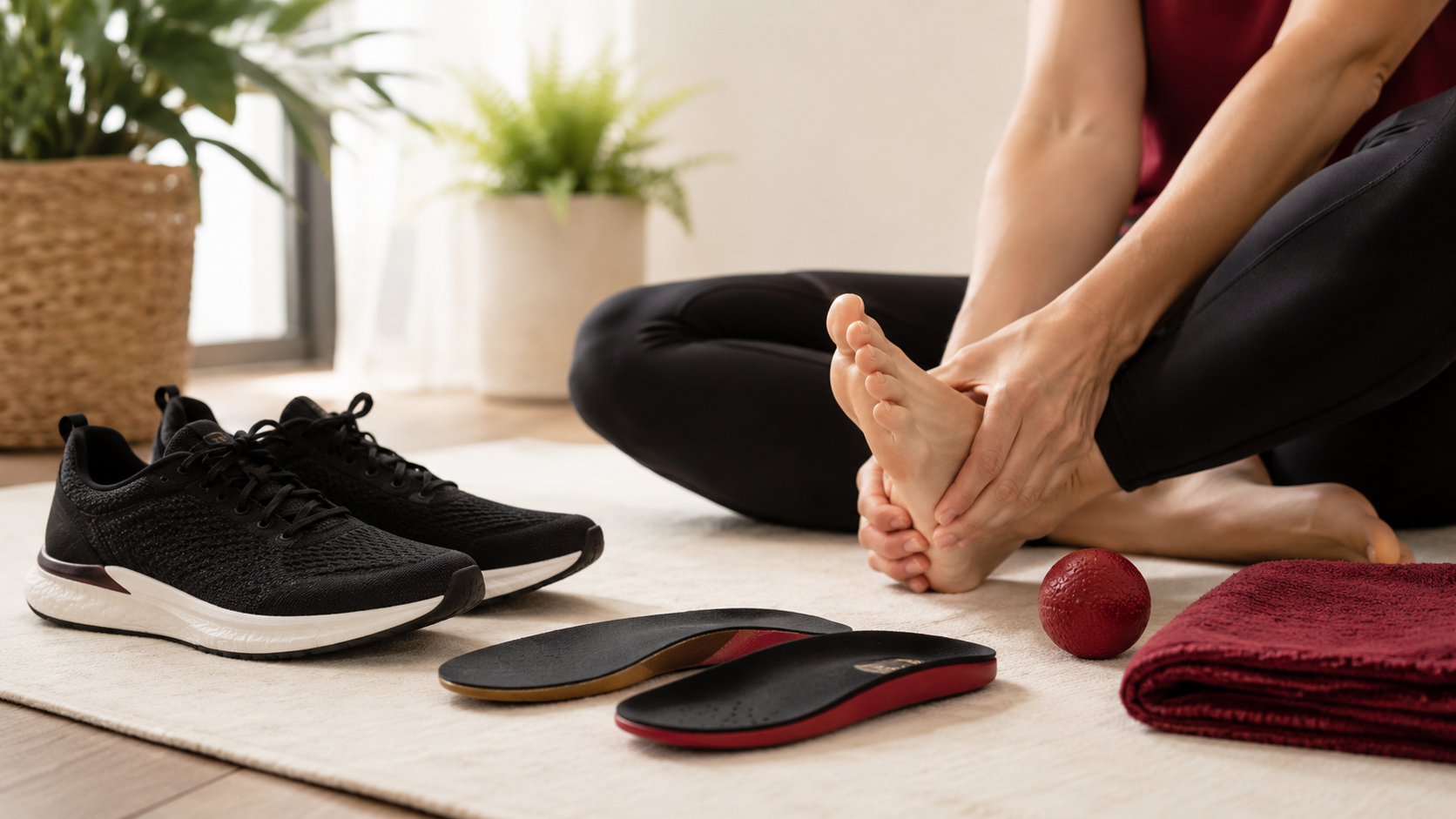
Insoles can be useful when your feet feel painful, weak, or unsupported. But they should not be your only strategy. Plantar fasciitis usually responds best to a broader plan that includes footwear changes, stretching, activity adjustment, and professional advice when needed.
As symptoms improve, some people may need less support over time. Others may continue using supportive insoles for long standing days, work shoes, or high-impact activity. The right approach depends on your foot, symptoms, and guidance from a qualified professional.
Combine Insoles With
- Gentle calf and plantar fascia stretching.
- Supportive shoes with enough heel cushioning.
- Reduced barefoot walking on hard floors.
- Gradual return to activity after flare-ups.
- Professional diagnosis if symptoms persist or worsen.
7. Effectiveness Is Not Based on Price
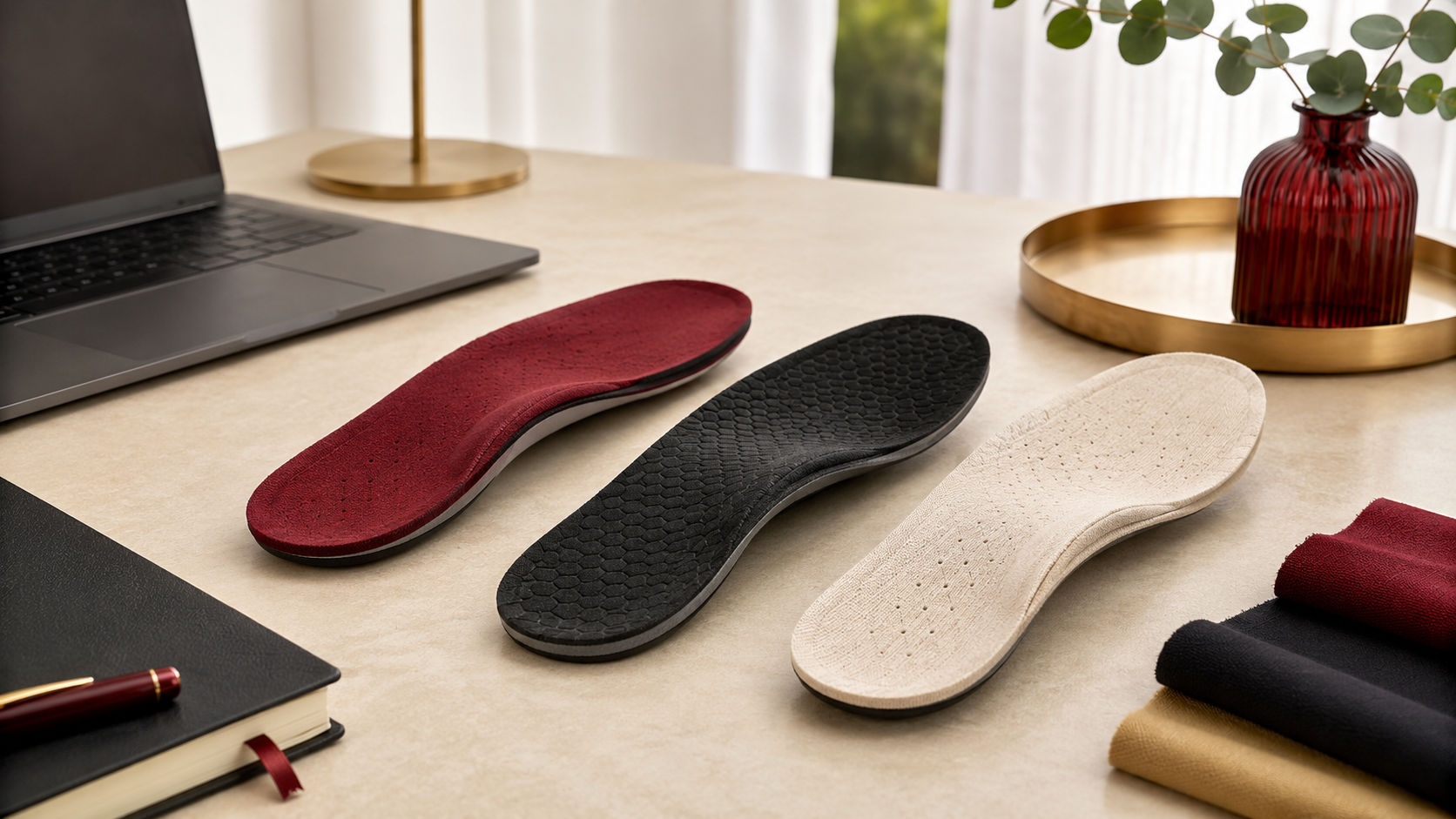
A higher price does not automatically mean a better plantar fasciitis insole for your foot. The right choice depends on comfort, structure, fit, durability, shoe compatibility, and how the support feels during real walking.
If you are buying online, make a practical decision based on product photos, insole shape, arch height, heel cup design, thickness, trim options, materials, and return policy.
Value Checklist
- Does the arch shape match your foot?
- Does the heel area offer enough cushioning?
- Will the insole fit your shoes without crowding?
- Is the material supportive without collapsing?
- Can the insole be trimmed if needed?
- Does the product information show clear angles and thickness?
- Is there a reasonable return or exchange option?
Other Support Options for Plantar Fasciitis
Insoles are one of the most common support options, but they are not the only choice. Depending on your symptoms, shoes, activity, and professional advice, other supports may also be useful.
| Support Option | Best For | Limitations |
|---|---|---|
| Full-Length Insoles | Arch support, heel cushioning, full-foot pressure distribution. | Need enough shoe space and may require trimming. |
| Half Inserts | Targeted arch or heel support with less shoe crowding. | May shift if not fitted securely. |
| Heel Cups or Heel Pads | Heel cushioning and impact reduction. | Usually offer little or no arch support. |
| Night Splints or Braces | Keeping the foot in a stretched position during rest or sleep. | Can feel bulky and may not be suitable for everyone. |
| Compression Socks | Light compression and comfort for some users. | May not provide enough structural arch support for plantar fasciitis. |
| Supportive Shoes | Daily walking, standing, and activity support. | Can be expensive and still may need an insole for better fit. |
How InsoleLux Fits Into Your Comfort Plan
InsoleLux insoles are designed for people who want low-profile support that fits everyday shoes while adding heel comfort and arch support. They are best used as part of a complete foot comfort plan — not as a standalone cure.
Consider InsoleLux If You Want
- Low-profile support for everyday shoes.
- Heel cushioning for daily walking and standing.
- Arch support that feels stable but not overly bulky.
- Trim-friendly fit guidance for compatible shoes.
- A practical balance of comfort, structure, and premium design.
For fit help, see our Fit & Trim Guide and Size Guide.
Related Guides
These guides can help you understand plantar fasciitis symptoms, daily support, and recovery habits more clearly:
Find Support That Fits Your Shoes and Your Day
Plantar fasciitis insoles should feel stable, comfortable, and compatible with your everyday footwear. InsoleLux insoles are designed to add low-profile arch support and heel cushioning inside compatible shoes.
FAQ
What type of insole is best for plantar fasciitis?
Many people look for insoles with stable arch support, heel cushioning, and a secure heel cup. The best option depends on your foot shape, shoe fit, pain pattern, and comfort level.
Should plantar fasciitis insoles be firm or soft?
They should usually offer structure through the arch and heel, but not feel painfully rigid. Very soft insoles may feel comfortable at first but may not provide enough support.
Do heel cups help plantar fasciitis?
Heel cups may help cushion the heel and reduce impact. However, they usually do not provide full arch support by themselves, so some people prefer full-length insoles.
Should I remove the original shoe insole?
If your shoe has a removable factory insole and you are using a full-length replacement insole, removing the original insole usually improves fit and prevents crowding.
Can insoles make plantar fasciitis worse?
An insole that is too high, too rigid, too soft, too thick, or poorly fitted can create discomfort or new pressure points. Stop using an insole if it causes sharp pain.
Are expensive plantar fasciitis insoles always better?
No. Price alone does not determine effectiveness. Fit, comfort, structure, heel cushioning, arch support, and shoe compatibility matter more.
Should I rely on insoles all the time?
Insoles can be helpful during painful or high-load periods, but they work best alongside stretching, supportive footwear, activity changes, and professional care when needed.
When should I see a professional?
Seek professional advice if heel pain is severe, worsening, caused by injury, lasting more than a few weeks, affecting walking, or linked with numbness, tingling, swelling, or pain at rest.
Final Take
Choosing plantar fasciitis insoles is not about finding the stiffest, softest, or most expensive pair. It is about finding the right balance of arch support, heel cushioning, shoe fit, stability, and everyday comfort.
Start with your foot shape, your shoes, and your real symptoms. Avoid overly flexible supports, make sure the heel cup feels stable, leave enough toe room, and do not rely on insoles as your only comfort strategy.
A well-fitted supportive insole can be a practical part of a plantar fasciitis comfort plan — especially when paired with supportive shoes, gentle stretching, and smart activity habits.
