

Guides
10 Most Likely Causes of Heel Pain
Jun
10 Most Likely Causes of Heel Pain
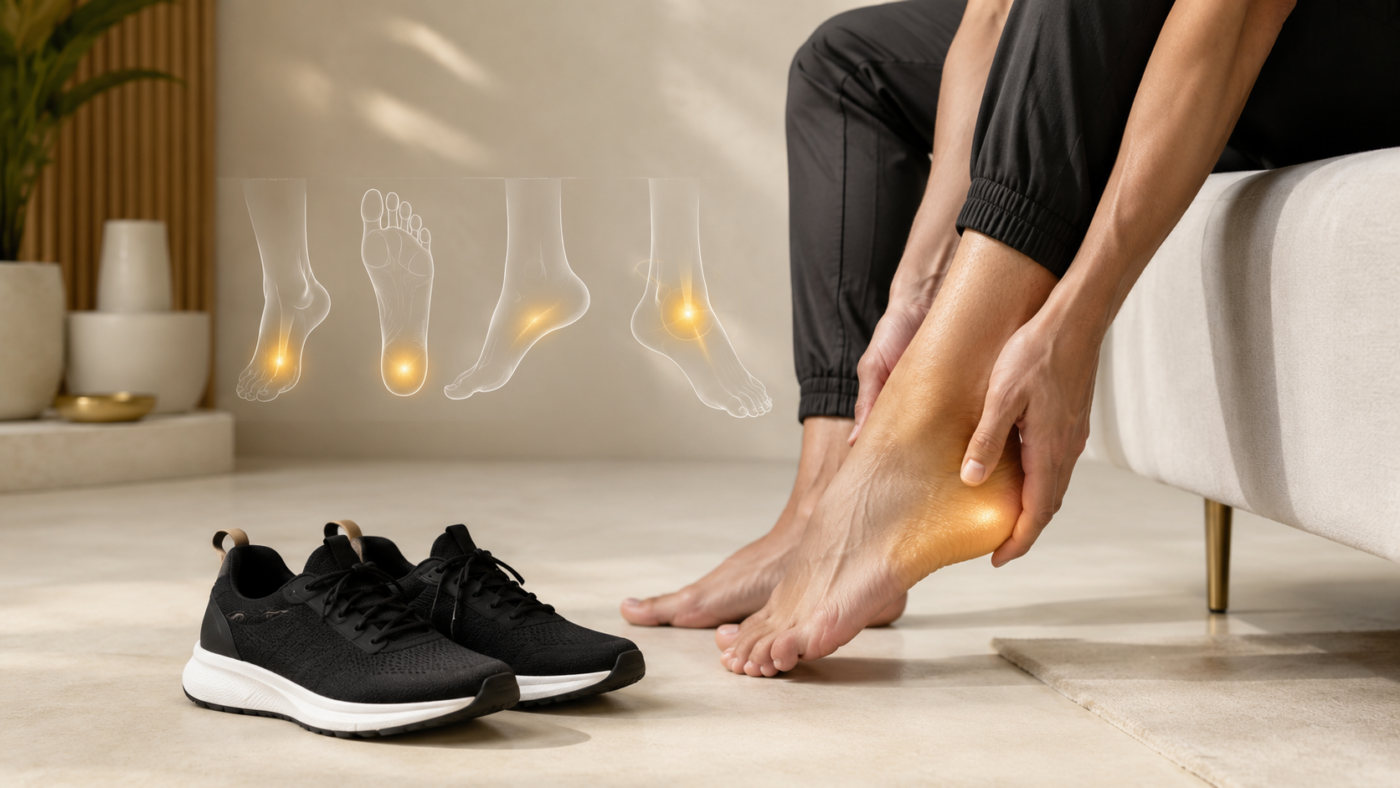
Heel pain can come from many different conditions — from plantar fasciitis and Achilles tendonitis to heel fractures, nerve compression, fat pad changes, and arthritis. Understanding the likely cause is the first step toward choosing the right support.
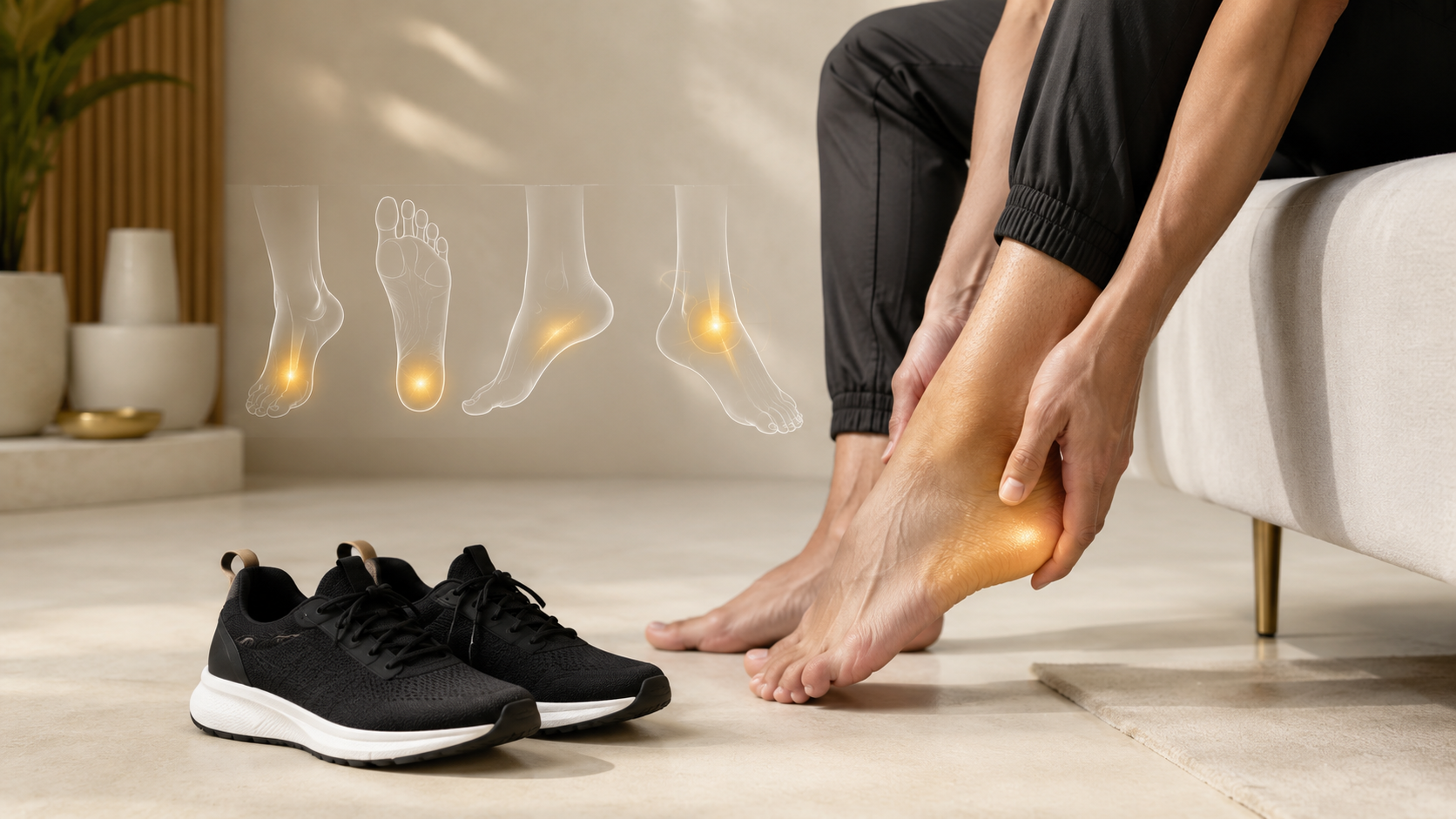
The heel bone, also called the calcaneus, is the largest bone in the foot and one of the first areas to meet the ground when you walk. Because of that, heel pain can quickly affect simple daily movement — walking, standing, working, exercising, and even getting out of bed.
Some heel pain comes from overuse and repeated strain. Some comes from tendon irritation, nerve compression, bone injury, inflammation, or joint-related conditions. The right treatment depends on the underlying cause, not just the location of the pain.
What Is Heel Pain?
Heel pain is one of the most common forms of foot pain in adults. It may affect one foot or both feet, and it can appear under the heel, behind the heel, around the ankle, or along the arch.
The sole of the foot contains important structures such as the plantar fascia and the small muscles that support the arch and help flex the toes. Many common heel pain conditions affect these tissues, the Achilles tendon, the heel bone, the fat pad under the heel, or nearby nerves.
Location Matters
Pain under the heel, behind the heel, or around the inner ankle can point toward different causes.
Pattern Matters
First-step pain, walking pain, night pain, swelling, or tingling can all suggest different conditions.
Diagnosis Matters
The wrong cause can lead to the wrong treatment, especially with fractures, nerve pain, or inflammatory conditions.
10 Causes of Heel Pain at a Glance
Heel pain is not one single condition. The table below gives a quick overview of 10 likely causes, where the pain may appear, and what clues may help you describe symptoms more clearly.
| Cause | Typical Pain Area | Common Clues |
|---|---|---|
| Plantar Fasciitis | Bottom of heel and arch | First-step pain after rest, tenderness under the heel. |
| Achilles Tendonitis | Back of heel and lower calf | Stiffness, swelling, pain with activity or tendon loading. |
| Bone Spurs | Under or behind heel | Sharp or aching pain, sometimes a visible or imaging-confirmed bony growth. |
| Heel Fractures | Heel bone | Pain with pressure, swelling, injury history, altered walking. |
| Bursitis | Back of heel near Achilles | Tenderness, swelling, warmth, pain walking or standing on tiptoes. |
| Os Trigonum Syndrome | Back of ankle or heel | Deep dull pain, often in athletes or dancers, worse with pointing the foot downward. |
| Tarsal Tunnel Syndrome | Inner ankle, heel, sometimes calf | Pain with numbness, tingling, pins and needles, often worse at night. |
| Sever’s Disease | Back or bottom of child’s heel | Activity-related heel pain during growth years, often in active children. |
| Fat Pad Atrophy | Directly under heel | Persistent ache, worse with walking or standing on hard surfaces. |
| Rheumatoid Arthritis | Foot joints, heel, forefoot | Inflammation, warmth, soreness, joint-related pain, possible bursitis contribution. |
1. Plantar Fasciitis
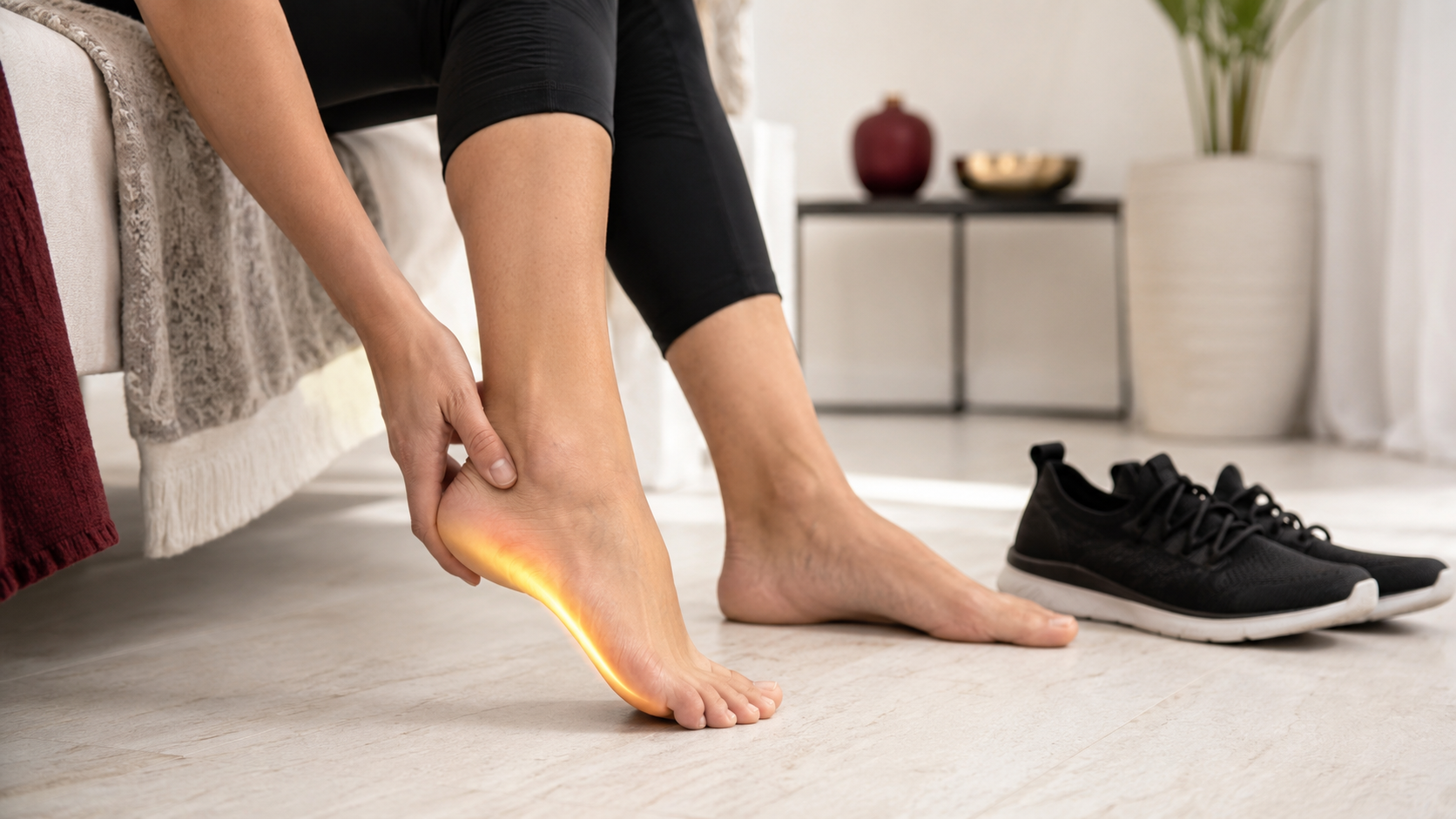
Plantar fasciitis is one of the most common causes of pain under the heel. It involves irritation of the plantar fascia, the thick band of connective tissue that supports the arch and runs along the bottom of the foot.
It can develop after overuse, long periods on your feet, muscle weakness or tightness, altered foot mechanics, or increased load through the feet.
Common Signs
- Pain underneath the heel or along the arch.
- Sharp first-step pain after sleep or rest.
- Tenderness in one specific spot under the heel.
- Pain that may feel worse on stairs or hard floors.
- Discomfort that improves slightly after warming up, then returns later.
Conservative support often includes rest from trigger activity, gentle stretching, supportive footwear, orthotic-style insoles, and professional guidance when symptoms persist.
2. Achilles Tendonitis
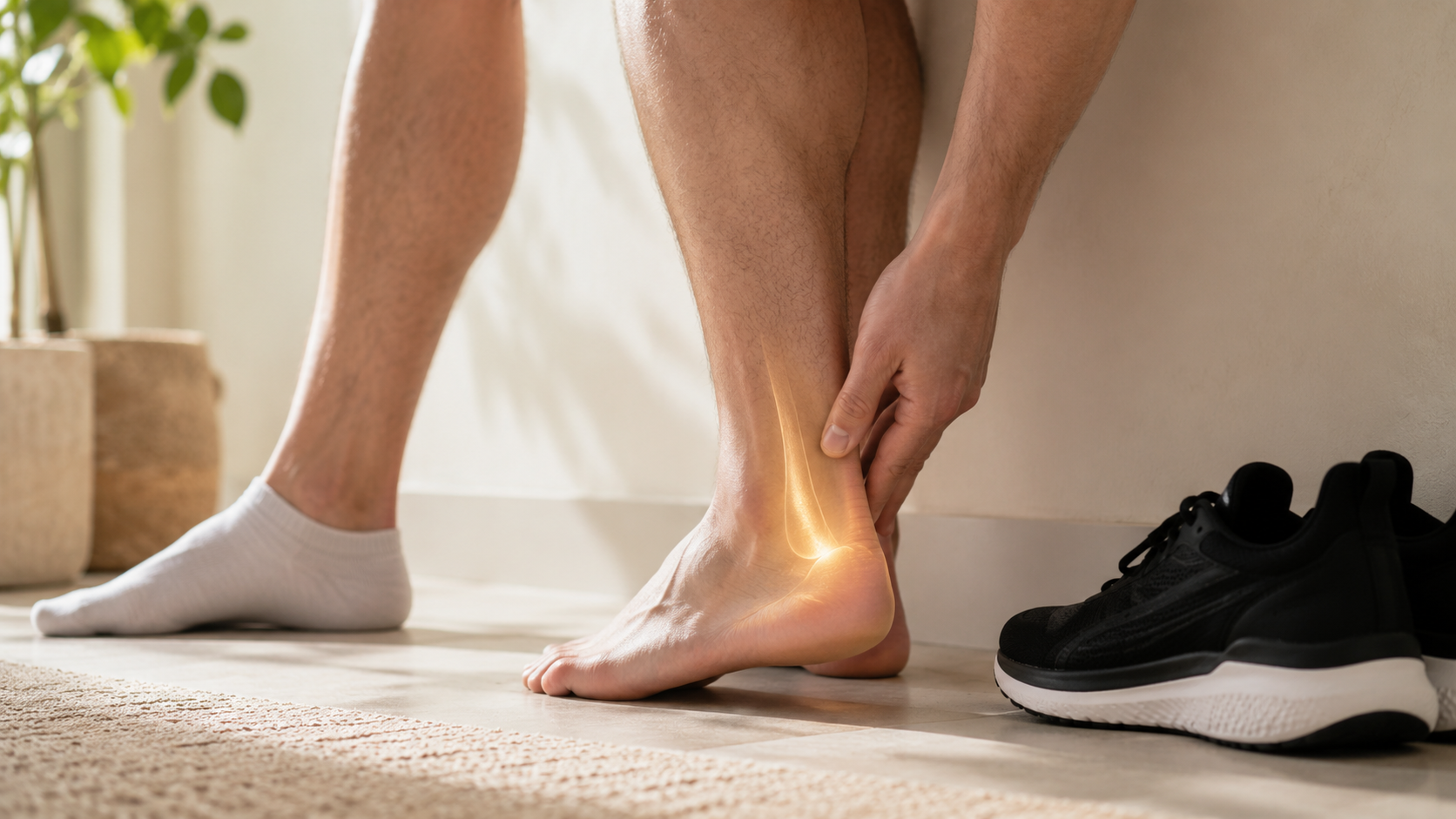
Achilles tendonitis is a common cause of pain at the back of the heel. It involves irritation or inflammation of the Achilles tendon, which connects the calf muscles to the heel bone.
It can be linked with repetitive strain, calf weakness or tightness, changes in foot mechanics, or friction from nearby bony changes.
Common Signs
- Pain at the back of the heel.
- Stiffness in the ankle or calf.
- Swelling around the back of the heel or above the ankle.
- Pain that worsens with running, climbing stairs, or pushing off.
- Tenderness along the Achilles tendon.
Management may include rest, calf-focused exercises, supportive shoes, orthotic-style insoles, and medical guidance for pain or inflammation.
3. Bone Spurs
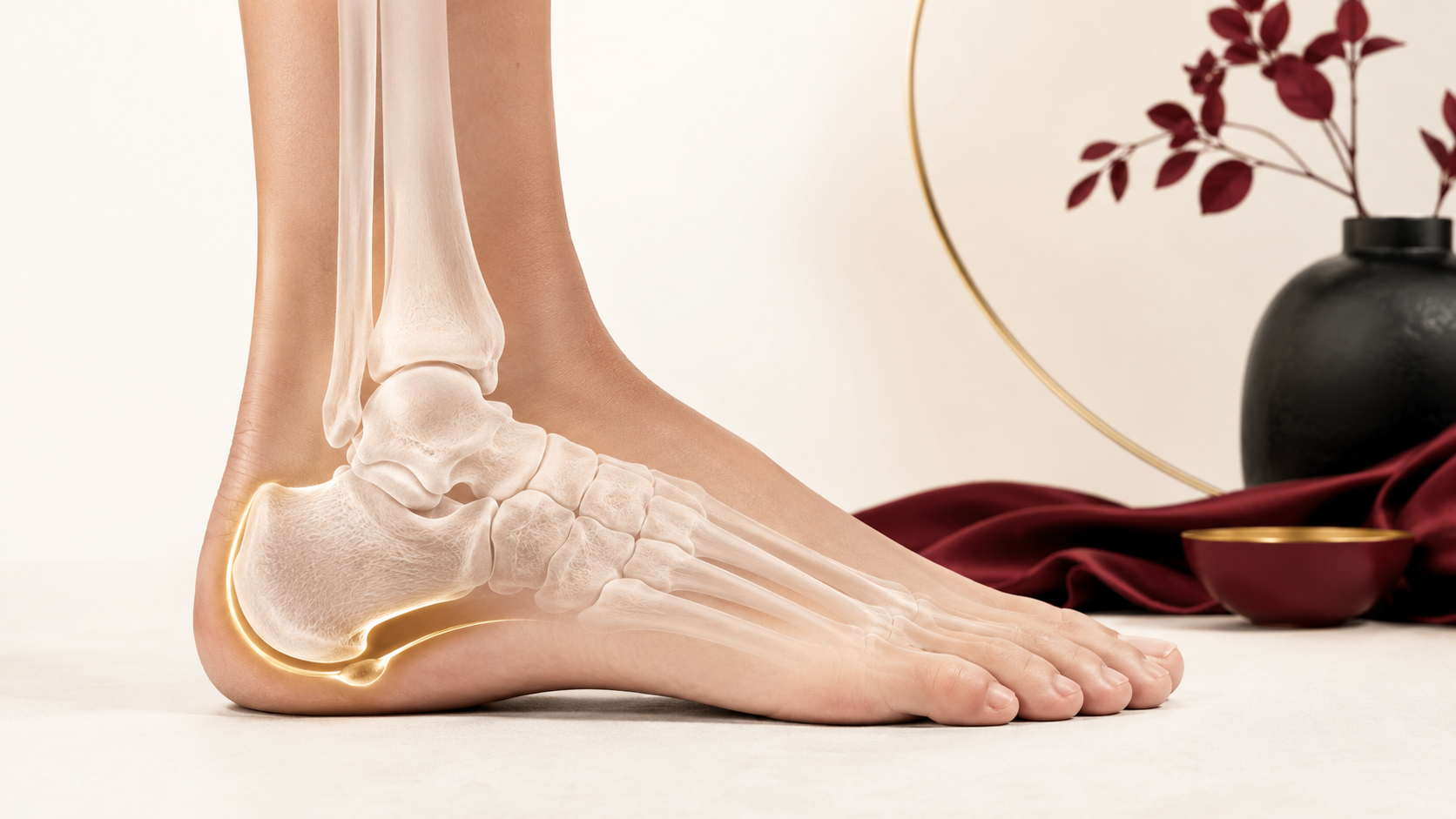
Heel bone spurs, also called calcaneal bone spurs, are bony growths that can occur under or behind the heel bone. They are often associated with repeated strain, sports, running, muscle weakness, or abnormal heel position.
A heel spur does not always cause pain directly. Some people have heel spurs without symptoms, while others may feel sharp or aching pain depending on surrounding tissue irritation.
Common Signs
- A sharp feeling, as if standing on something hard.
- Dull aching pain after standing or walking.
- Tenderness under or behind the heel.
- Possible visible or imaging-confirmed bony lump.
- Symptoms that overlap with plantar fasciitis or Achilles irritation.
4. Heel Fractures
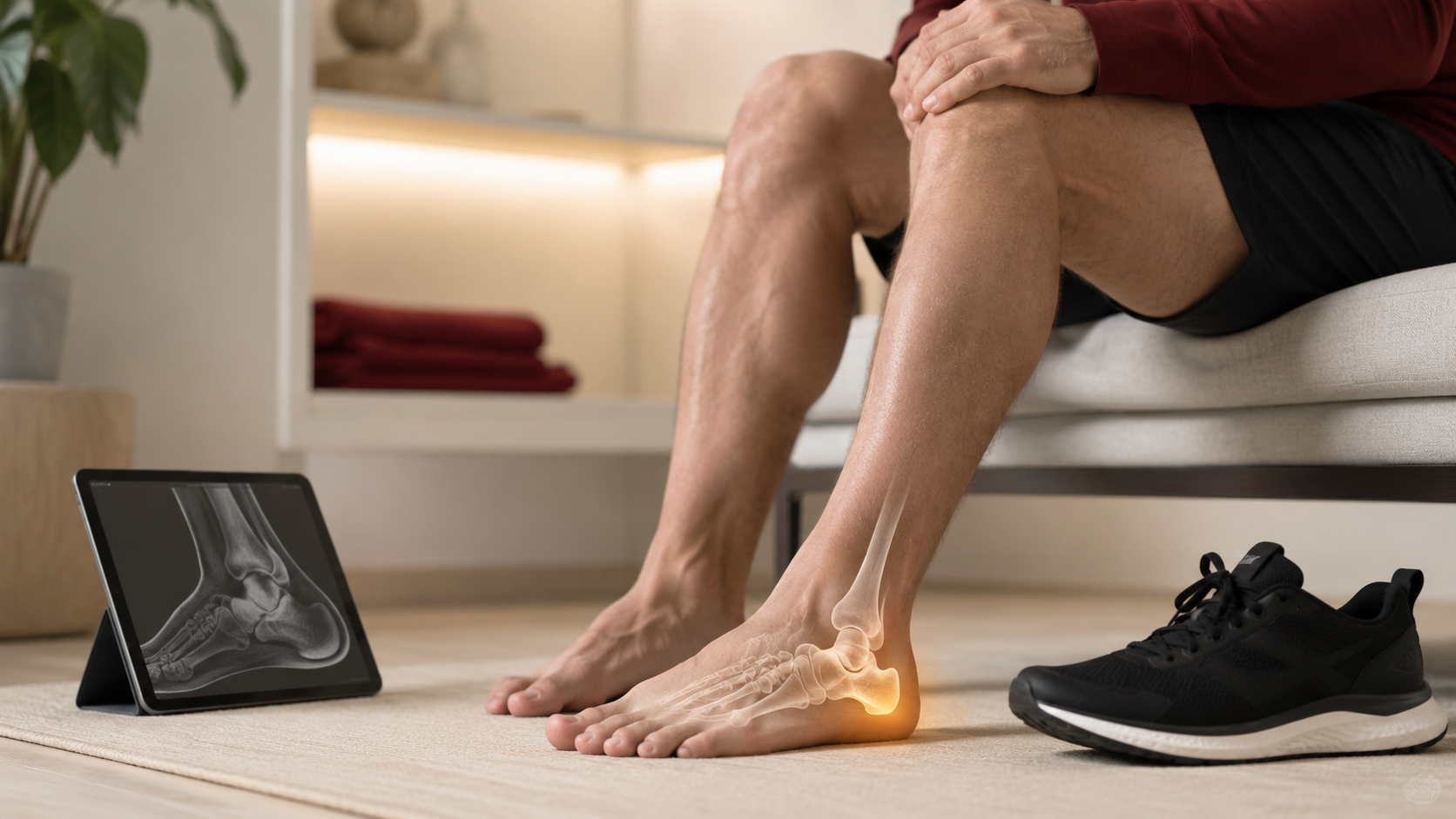
A heel fracture means a break in the heel bone. It may happen from a fall from height, landing feet-first, a hard impact, or repeated overload such as excessive running or jumping that leads to a stress fracture.
Heel fractures are more serious than routine soreness and should be assessed quickly, especially when pain follows trauma or makes it hard to bear weight.
Common Signs
- Deep heel pain that worsens with pressure or weight-bearing.
- Swelling around the heel.
- Bruising or visible irritation after injury.
- Difficulty walking normally.
- Pain that does not improve with simple rest.
5. Bursitis
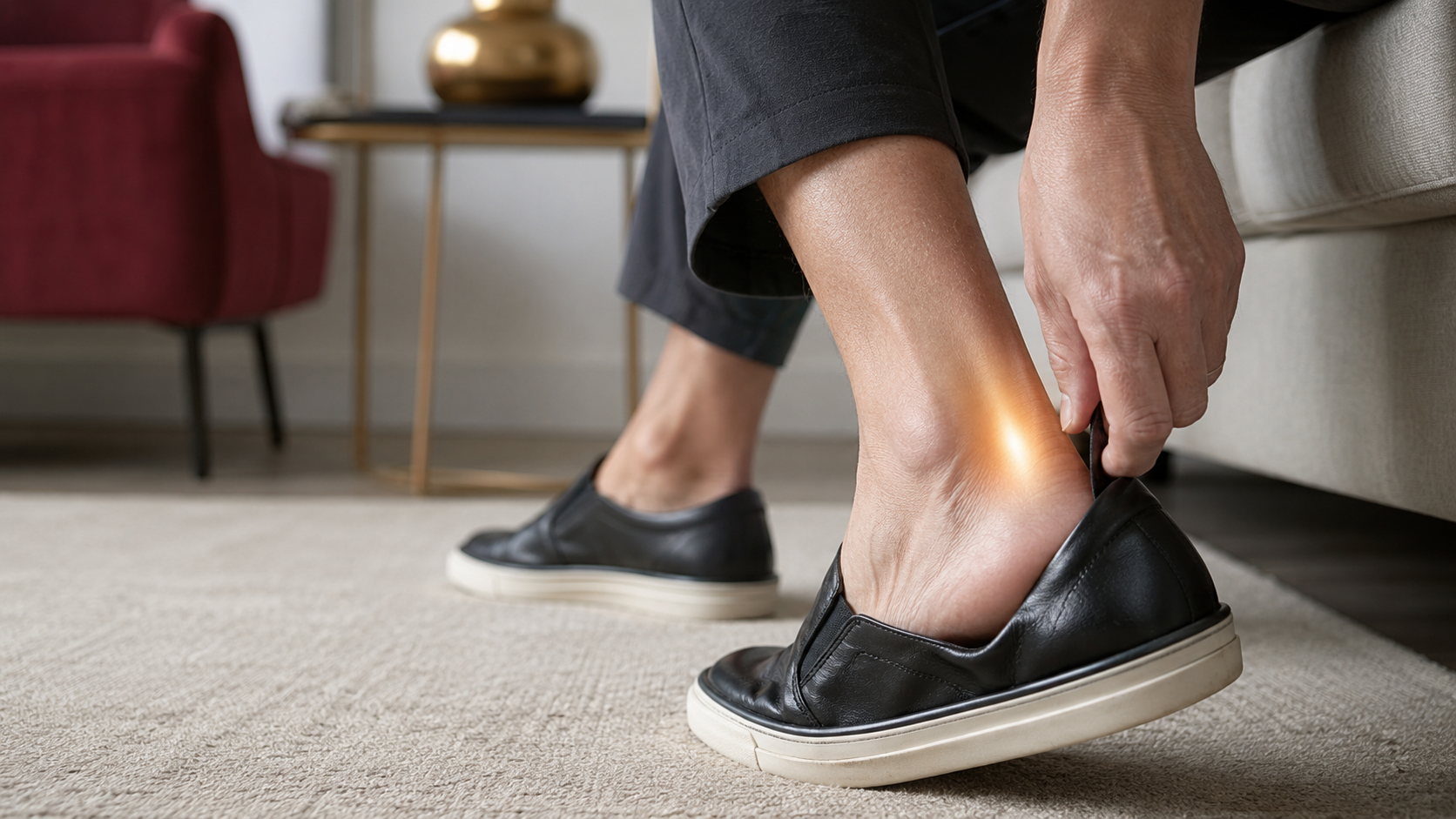
Bursitis around the heel often refers to retrocalcaneal bursitis, inflammation of the small fluid-filled sac between the heel bone and the Achilles tendon.
It can be caused by repetitive friction, muscle tightness or weakness, footwear irritation, or a sudden increase in activity level.
Common Signs
- Pain at the back of the heel.
- Pain when walking, running, or standing on tiptoes.
- Tenderness to touch.
- Swelling, warmth, or redness around the back of the heel.
- Discomfort from shoe pressure around the heel counter.
Treatment often focuses on reducing friction and load, using rest and ice when appropriate, improving calf flexibility, and getting professional advice if symptoms persist.
6. Os Trigonum Syndrome
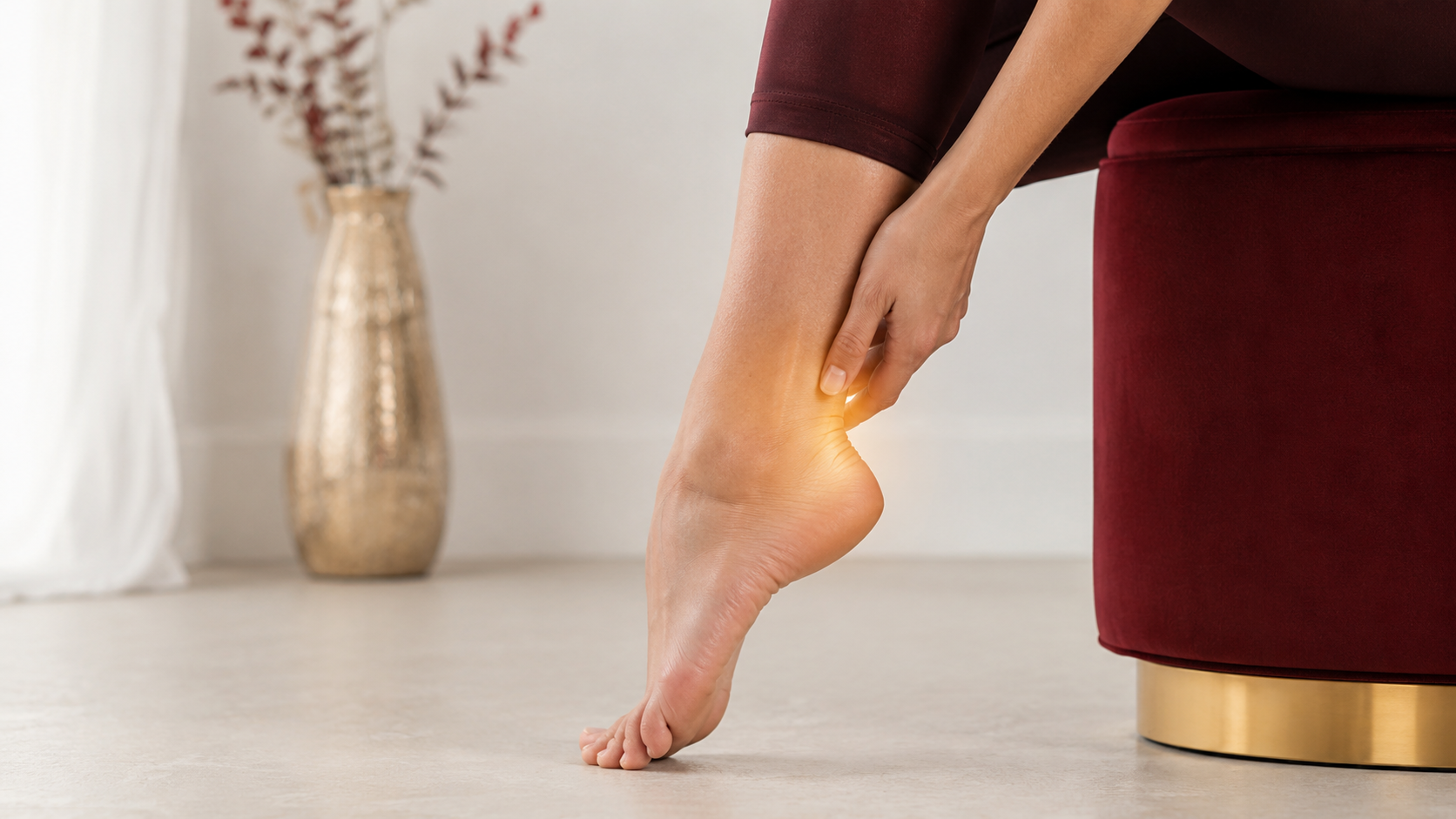
Os trigonum syndrome involves irritation at the back of the ankle, often related to a small extra bone becoming pinched or irritated during repeated downward pointing of the foot.
It is more commonly discussed in athletes, ballet dancers, and people who repeatedly load the ankle in a pointed position.
Common Signs
- Deep, dull pain at the back of the ankle or heel.
- Pain that may ease with rest.
- Discomfort when pointing the foot downward.
- Symptoms after ankle injury or repetitive sport movements.
- Reduced comfort during dancing, kicking, jumping, or push-off movement.
Care may include rest, ice, activity modification, professional assessment, and in more severe cases, clinician-guided injections or surgical discussion.
7. Tarsal Tunnel Syndrome
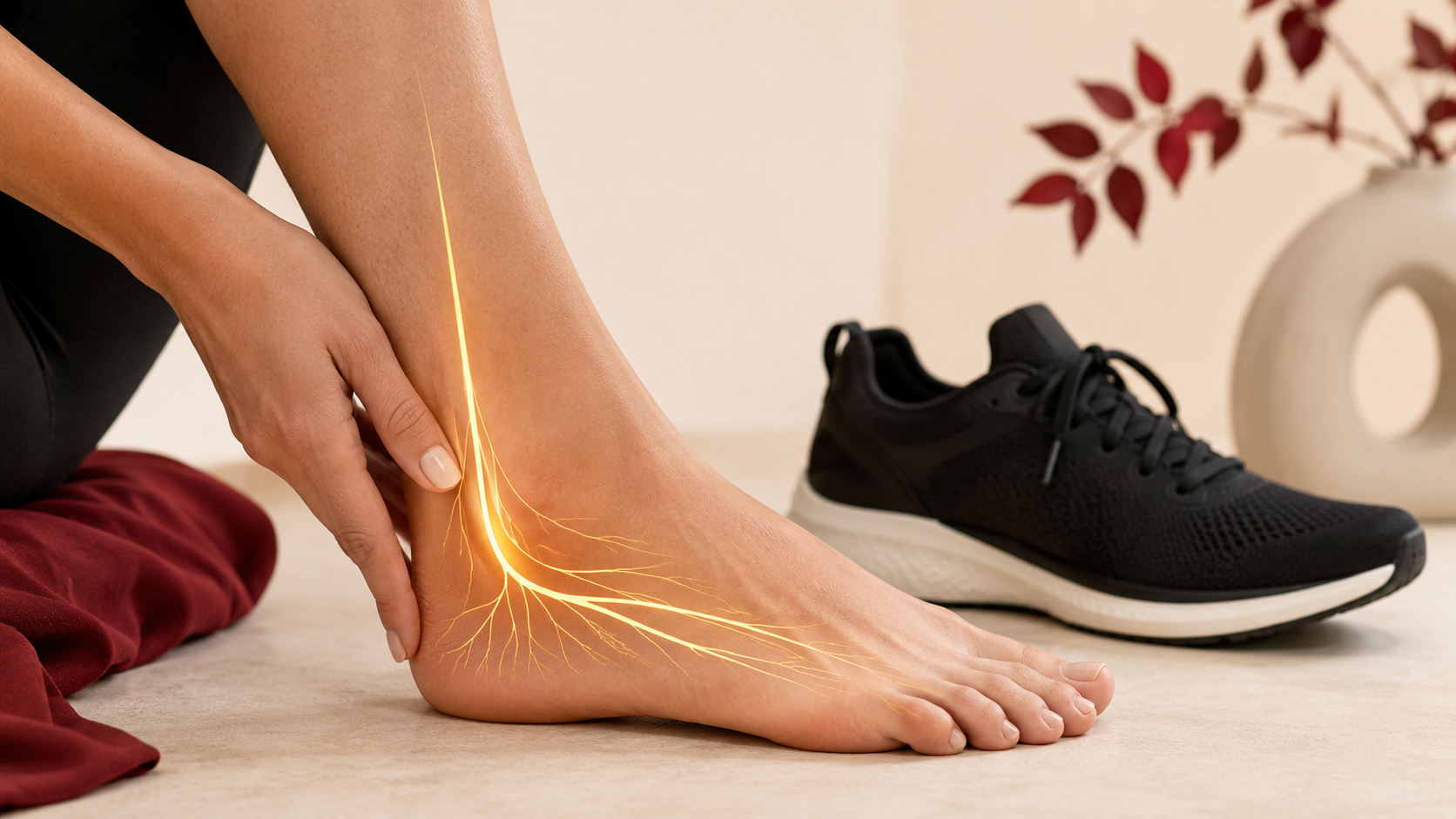
Tarsal tunnel syndrome happens when the tibial nerve becomes compressed as it passes through the tarsal tunnel on the inner side of the ankle.
Compression may be related to swelling, cysts, arthritis, masses, or reduced space in the tunnel. Because it involves a nerve, the symptoms can feel different from typical tissue strain.
Common Signs
- Pain around the inner ankle, heel, or arch.
- Pain spreading toward the calf.
- Numbness, tingling, burning, or pins and needles.
- Symptoms that may feel worse at night.
- Discomfort that does not match a simple plantar fasciitis pattern.
8. Sever’s Disease

Sever’s disease is a common cause of heel pain in children and adolescents, especially during growth spurts and sports participation. It involves irritation around the growth plate of the heel.
It may be triggered by growth, long standing, overuse, or strenuous activity. Because it affects growing children, it should be handled differently from adult plantar fasciitis.
Common Signs
- Pain at the back or bottom of the heel.
- Symptoms that worsen with activity.
- Heel inflammation or tenderness.
- Pain when walking, running, or playing sports.
- Sometimes symptoms in both feet.
Rest, activity modification, stretching, supportive footwear, and professional guidance can help manage symptoms safely.
9. Fat Pad Atrophy
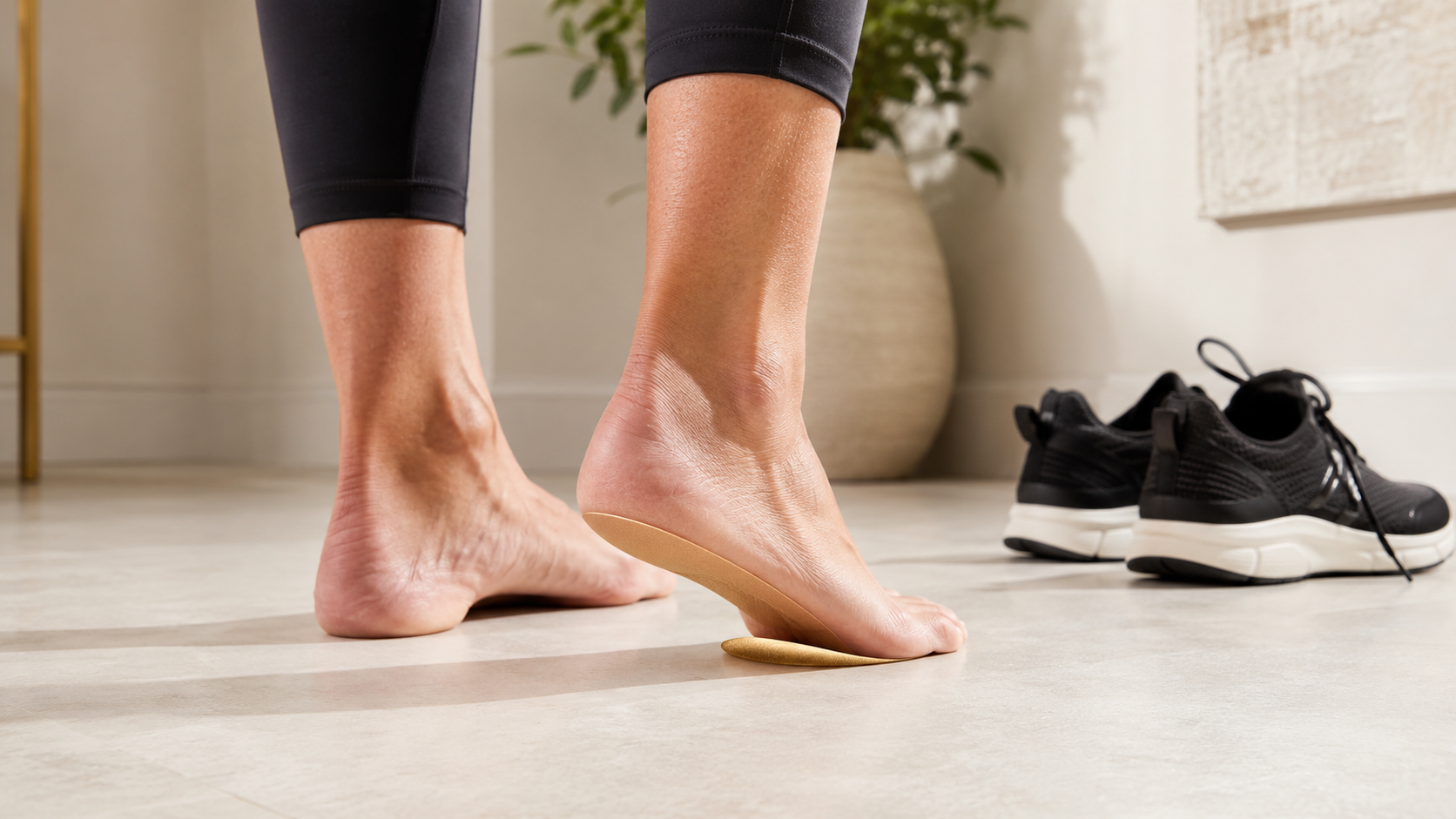
The heel fat pad is the natural cushioning layer beneath the heel bone. Fat pad atrophy happens when this cushioning becomes thinner or less protective over time.
It may be linked with excessive strain, aging, long-term pressure, and years of wearing high heels or footwear that concentrates pressure under the heel and forefoot.
Common Signs
- Persistent aching under the heel.
- Pain that worsens with long standing or walking.
- More discomfort on hard floors.
- A sensation like walking on a small rock or hard spot.
- Possible calluses in areas of increased pressure.
Cushioning, pressure distribution, supportive orthotics, low-impact activity, and proper footwear can help reduce strain on the heel.
10. Rheumatoid Arthritis
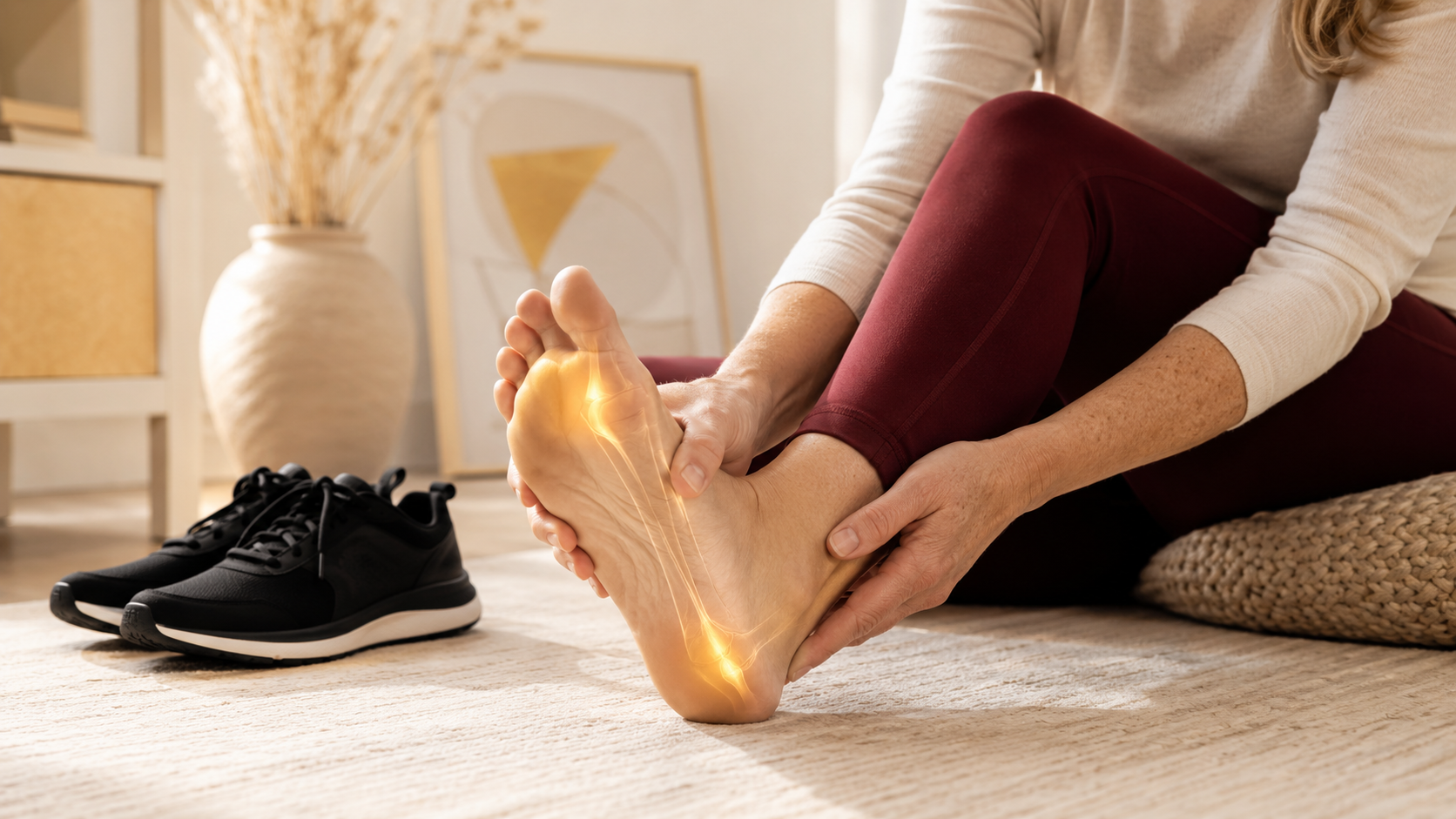
Rheumatoid arthritis is an inflammatory joint condition that can affect the feet. It may cause pain, swelling, warmth, and soreness in the foot joints, and it can also contribute to related problems such as bursitis.
Unlike simple overuse pain, rheumatoid arthritis is a systemic inflammatory condition and should be managed with medical guidance.
Common Signs
- Sore, inflamed, or warm-feeling areas of the feet.
- Pain around joints, including the forefoot, heel, or ankle area.
- Swelling or stiffness that may affect both feet.
- Symptoms that do not behave like ordinary overuse pain.
- Possible contribution to bursitis or pressure-related foot pain.
Supportive footwear and pressure-reducing insoles may help comfort, but rheumatoid arthritis requires appropriate medical care and ongoing management.
Shoes, Insoles, and Daily Support
Many causes of heel pain are made worse by repeated strain, poor cushioning, hard floors, worn-out shoes, or lack of arch and heel support. Supportive footwear cannot diagnose the cause, but it can reduce unnecessary pressure during everyday walking and standing.
What to Look For in Supportive Footwear
- Heel cushioning: Helps soften repeated impact under the heel.
- Arch support: Helps support the foot’s natural shape and reduce excess strain.
- Stable midsole: Helps reduce wobble and uncontrolled movement.
- Secure fit: Helps prevent sliding, friction, and toe gripping.
- Low-profile insole fit: Adds support without overcrowding compatible everyday shoes.
When to See a Professional
Heel pain can make people change the way they walk to avoid pressure. Over time, that compensation may place extra strain on the knees, hips, back, or opposite foot.
A podiatrist or qualified clinician can assess the location of pain, your walking pattern, footwear, injury history, activity level, and whether imaging or additional tests are needed.
Heel Pain Comparison Checklist
This checklist is not a diagnosis, but it can help you describe your symptoms more clearly before speaking with a professional.
| If Your Pain Feels Like This | Possible Causes to Consider | Next Step |
|---|---|---|
| Sharp pain under the heel with first steps after rest | Plantar fasciitis, heel spur-related irritation | Supportive shoes, stretching, insoles, and professional care if persistent. |
| Pain at the back of the heel with calf stiffness | Achilles tendonitis, bursitis, bone spur irritation | Reduce tendon load and get guidance if swelling or warmth is present. |
| Deep heel pain after impact or overload | Heel fracture, stress fracture, deep bruise | Stop impact activity and seek medical evaluation. |
| Burning, tingling, numbness, or pain spreading upward | Tarsal tunnel syndrome or nerve-related pain | Professional evaluation is recommended. |
| Persistent ache directly under the heel on hard floors | Fat pad atrophy, heel bruise, footwear strain | Improve cushioning and pressure distribution; get checked if persistent. |
| Warm, swollen, joint-related foot pain | Rheumatoid arthritis or inflammatory conditions | Medical care is important for proper management. |
Related Guides
These guides can help you explore specific heel pain patterns and conservative support options:
Give Your Heel Better Everyday Support
Heel pain can have many causes, but daily support still matters. InsoleLux insoles are designed to add low-profile heel cushioning and arch support inside compatible everyday shoes.
FAQ
What is the most common cause of heel pain?
Plantar fasciitis is one of the most common causes of pain under the heel, especially when pain is worse with the first steps after rest.
Can heel pain come from the Achilles tendon?
Yes. Achilles tendonitis can cause pain at the back of the heel, often with calf stiffness, swelling, or discomfort during activity.
Are heel spurs always painful?
No. Some people have heel spurs without pain. When pain is present, surrounding tissue irritation often plays an important role.
When is heel pain urgent?
Heel pain should be checked quickly if it follows injury, causes swelling or bruising, makes weight-bearing difficult, is severe, or feels like deep bone pain.
Can children get heel pain?
Yes. Sever’s disease is a common cause of heel pain in growing, active children and adolescents. It should be assessed and managed differently from adult heel pain.
Can nerve compression cause heel pain?
Yes. Tarsal tunnel syndrome can cause heel or ankle pain with numbness, tingling, burning, or pins and needles.
Do insoles help heel pain?
Supportive insoles may help improve heel cushioning, arch support, and pressure distribution inside compatible shoes. They do not diagnose or cure heel pain, but they can support daily comfort.
When should I see a podiatrist?
See a podiatrist or clinician if heel pain lasts more than a few weeks, worsens, affects walking, follows injury, includes swelling, numbness, tingling, warmth, night pain, or pain at rest.
Final Take
Heel pain is not one single condition. It may come from plantar fasciitis, Achilles tendonitis, bone spurs, fractures, bursitis, os trigonum syndrome, tarsal tunnel syndrome, Sever’s disease, fat pad atrophy, rheumatoid arthritis, or another cause.
The best first step is to notice the pattern: where the pain is, when it happens, whether it includes swelling or nerve symptoms, and whether it changes how you walk.
Supportive footwear and insoles can help reduce everyday heel strain, but persistent or severe heel pain deserves a professional diagnosis so you can choose the right treatment path.

Pingback: 5 Best Methods to Relieve Heel Pain | InsoleLux