

Guides
Why Do I Have Heel Pain in the Morning?

Jun
Why Do I Have Heel Pain in the Morning?
Heel pain with your first steps out of bed is often linked with plantar fasciitis. The good news: simple morning habits, better support, and smarter footwear can help reduce daily strain.

Waking up with heel pain can feel confusing. You may have rested all night, but the moment your foot touches the floor, the bottom of the heel feels sharp, stiff, or sore.
One of the most common explanations is plantar fasciitis. The plantar fascia is a strong band of tissue that runs along the bottom of the foot from the heel toward the toes. When it becomes tight, overstretched, or irritated, the first steps of the morning can feel especially painful.
Quick Answer: Why Does My Heel Hurt When I Wake Up?
Heel pain in the morning is often caused by plantar fasciitis. During sleep or rest, the plantar fascia and calf area can become tight. When you stand up, the tissue suddenly stretches under body weight, which can create sharp pain at the bottom of the heel.
The pain may ease after you walk for a few minutes because the tissue warms up and becomes less stiff. However, it may return later after long standing, walking, or another period of rest.
First-Step Pain
Pain is often strongest with the first steps after getting out of bed or after sitting for a long time.
Tight Tissue
The plantar fascia and calf can feel tighter after rest, making the heel more sensitive when loaded.
Support Helps
Stretching, avoiding barefoot hard floors, and using supportive shoes or insoles may help reduce strain.
Why Heel Pain Is Worse in the Morning
Morning heel pain usually happens because the foot goes from a rested, shortened position to full weight-bearing very quickly. The first step suddenly loads the heel, arch, and plantar fascia.
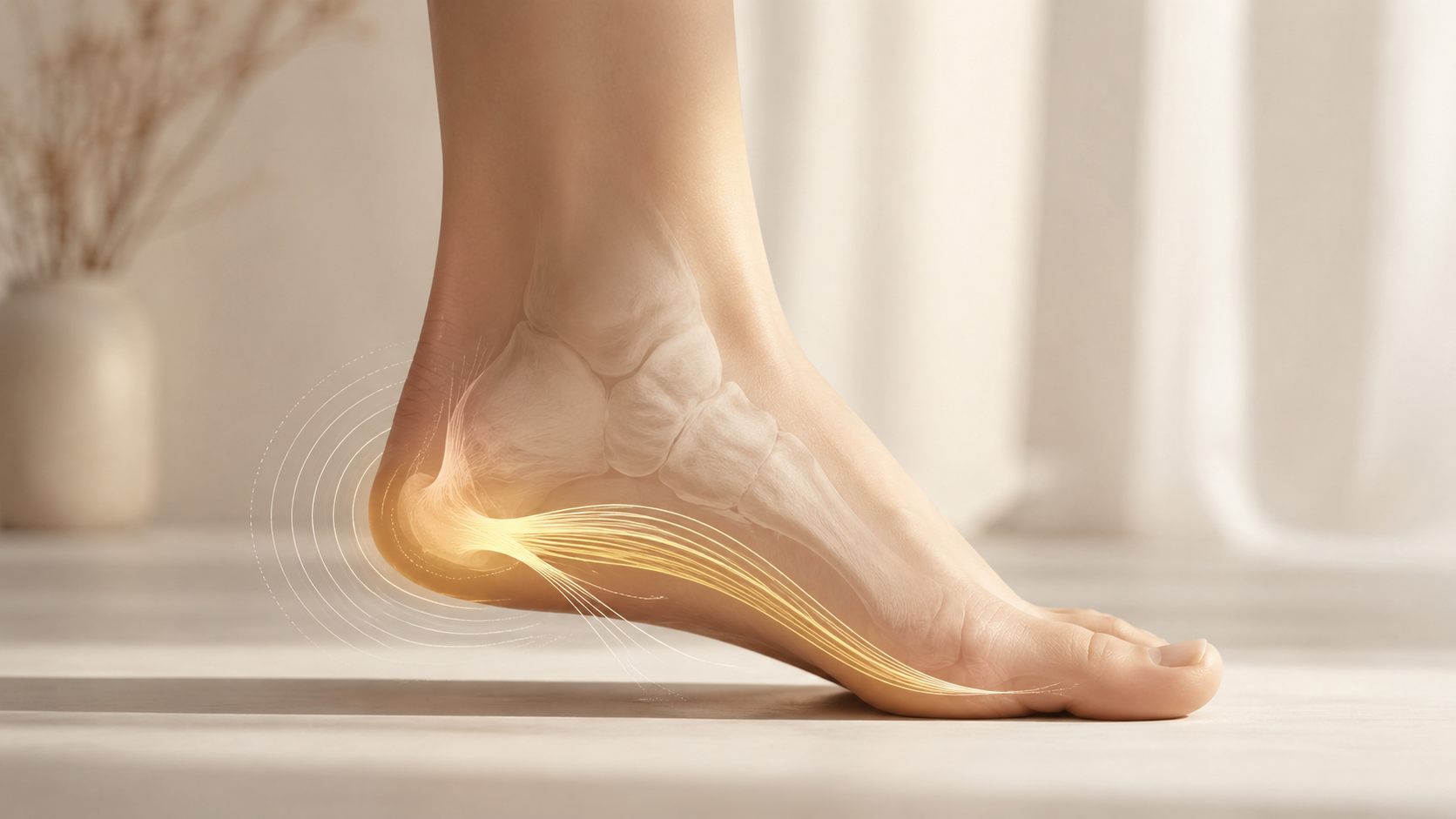
What May Be Happening
- The plantar fascia tightens while you sleep or rest.
- The foot suddenly stretches when you stand up.
- Body weight loads the heel and arch immediately.
- Irritated tissue reacts with sharp, stabbing, or pulling pain.
- After a few minutes of movement, the area may feel warmer and less stiff.
This pattern is why people often say the first few steps are the worst, even if the pain improves later in the morning.
Plantar Fasciitis and Morning Heel Pain
Plantar fasciitis is a common foot condition involving irritation of the plantar fascia. This band of tissue supports the arch and helps absorb pressure as you walk.
When the plantar fascia is overstretched, tight, or repeatedly strained, it can become sore. Morning pain is one of the classic signs because the tissue is suddenly loaded after hours of rest.
Common Plantar Fasciitis Signs
- Pain at the bottom of the heel.
- Sharp pain with the first steps in the morning.
- Pain after sitting or resting, then standing again.
- Heel or arch tenderness.
- Pain that may ease with movement, then return after long standing or walking.
- More discomfort when walking barefoot on hard floors.
Other Possible Causes of Morning Heel Pain
Plantar fasciitis is common, but not every case of morning heel pain is the same. Several conditions can create pain around the heel, especially if symptoms do not follow the typical first-step pattern.
| Possible Cause | How It May Feel | Why It Matters |
|---|---|---|
| Plantar Fasciitis | Sharp pain at the bottom of the heel with first steps after rest. | Often improves with conservative care, stretching, and support. |
| Heel Spur | May be painless or associated with heel tenderness and plantar fascia irritation. | A spur does not always cause pain directly. |
| Achilles Tendon Irritation | Pain or stiffness at the back of the heel or lower calf. | May need different stretches and load management. |
| Heel Fat Pad Irritation | Bruised or deep soreness under the heel, often worse on hard surfaces. | Cushioning and pressure reduction may be especially important. |
| Stress Fracture | Deep heel pain that worsens with weight-bearing and may not ease after warming up. | Needs medical evaluation and should not be treated like simple soreness. |
| Nerve Irritation | Burning, tingling, numbness, or radiating pain. | Should be assessed if neurological symptoms are present. |
What to Do Before Your First Steps
A simple morning routine can make the first few steps less harsh. The goal is to gently wake up the plantar fascia, calf, and ankle before putting full body weight through the heel.

Move Your Ankles First
Before standing, slowly point and flex your feet a few times. Add gentle ankle circles to reduce stiffness.
Stretch the Plantar Fascia
Cross the affected foot over the opposite knee and gently pull the toes back toward the shin until you feel a mild stretch along the bottom of the foot.
Try a Towel Stretch
Loop a towel around the ball of the foot and gently pull toward you to stretch the calf and arch before stepping down.
Put on Supportive Footwear
Avoid stepping directly onto hard floors barefoot. Use supportive house shoes, sneakers, or shoes with supportive insoles.
Daily Support and Footwear Tips
Morning heel pain often improves when you reduce strain throughout the whole day — not just in the morning. The plantar fascia can stay irritated if your shoes are flat, worn out, unstable, or lacking support.

Helpful Daily Habits
- Wear supportive shoes soon after getting out of bed.
- Avoid long barefoot walking on hard floors.
- Replace shoes when the heel or midsole becomes worn down.
- Stretch calves and feet gently, especially before bed and before standing in the morning.
- Reduce running, jumping, or long standing during flare-ups.
- Use ice or gentle rolling after activity if the heel feels irritated.
- Consider supportive insoles if your everyday shoes need more heel cushioning or arch support.
When to Seek Professional Care
Mild morning heel pain may improve with stretching, support, footwear changes, and reduced strain. But some symptoms should be checked rather than ignored.
A clinician can help confirm whether the pain is plantar fasciitis or another condition, and may recommend physical therapy, orthotics, imaging, night splints, injections, or other care when appropriate.
Make Your First Steps Feel More Supported
Morning heel pain often starts with tight tissue and unsupported first steps. InsoleLux insoles are designed to add low-profile arch support and heel comfort inside compatible everyday shoes.
FAQ
Why does my heel hurt first thing in the morning?
Morning heel pain is often linked with plantar fasciitis. After rest, the plantar fascia can feel tight, and the first steps suddenly load the heel and arch.
Why does heel pain improve after walking?
Movement can warm up the tissue and reduce stiffness, so pain may ease after a few minutes. However, it may return later after long standing, walking, or rest.
Is morning heel pain always plantar fasciitis?
No. Plantar fasciitis is common, but heel pain can also come from heel spurs, Achilles issues, fat pad irritation, stress fractures, nerve irritation, or other conditions.
What should I do before getting out of bed?
Try gentle ankle movement, a plantar fascia stretch, or a towel stretch before standing. Then step into supportive shoes instead of walking barefoot on hard floors.
Do insoles help morning heel pain?
Supportive insoles may help improve heel and arch comfort inside compatible shoes, especially if your current shoes are flat, worn out, or lacking support.
When should I see a doctor or podiatrist?
Seek care if pain is severe, worsening, lasting more than a few weeks, affecting walking, linked with injury, swelling, bruising, numbness, tingling, or pain at rest or night.
Final Take
Heel pain in the morning is often a sign that the plantar fascia is tight, irritated, and sensitive when first loaded after rest.
Start with simple steps: stretch before standing, avoid barefoot hard floors, wear supportive shoes, reduce irritating activity, and use heel and arch support when your footwear needs it.
If morning heel pain keeps returning or becomes harder to walk through, get professional guidance so you are treating the right cause — not just guessing.

Pingback: 10 Most Likely Causes of Heel Pain | InsoleLux
Pingback: Top 7 Tips for Choosing Plantar Fasciitis Insoles | InsoleLux