

Guides
10 Best Plantar Fasciitis Exercises for Heel & Arch Comfort
Jun
10 Best Plantar Fasciitis Exercises for Heel & Arch Comfort
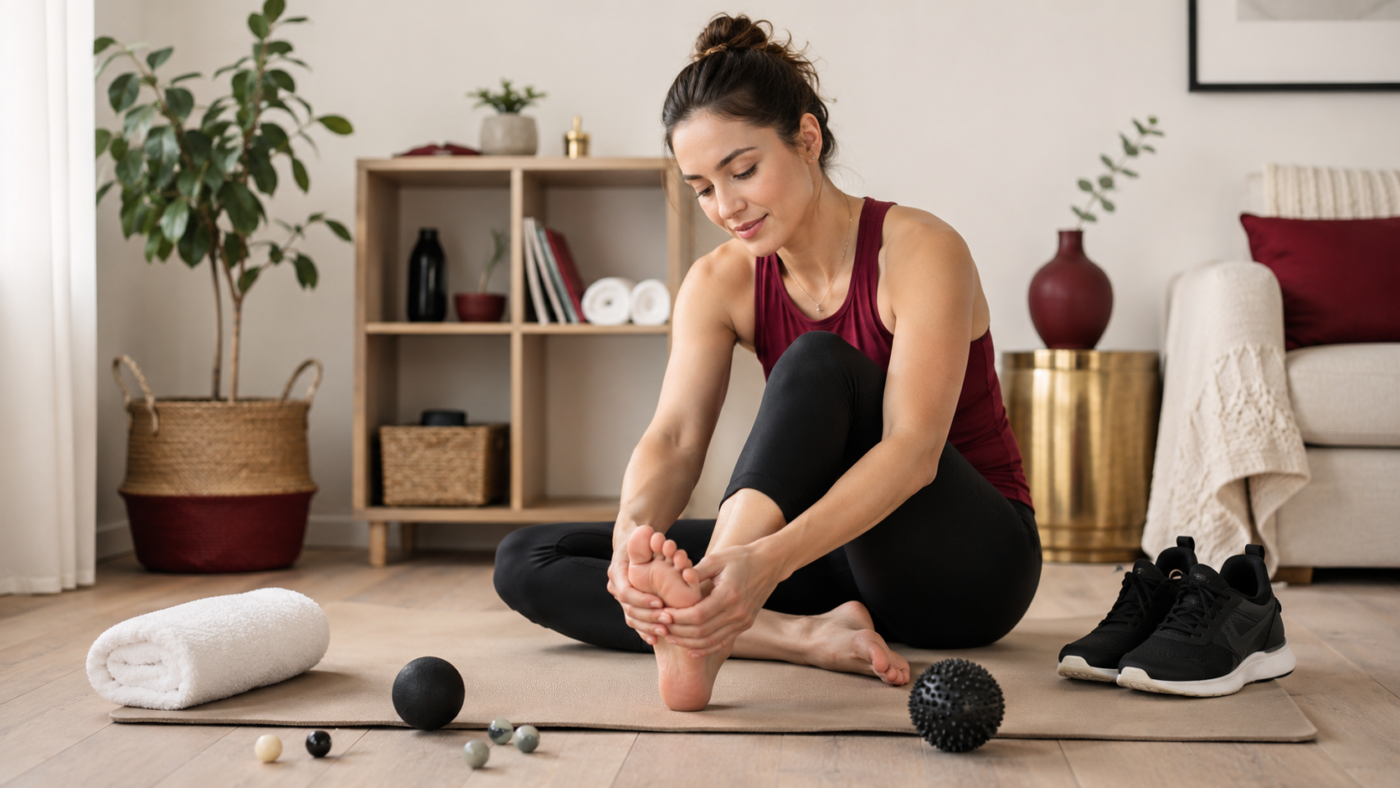
Simple plantar fasciitis exercises can help stretch tight tissue, strengthen the arch, improve calf support, and make daily movement feel more controlled.
Plantar fasciitis is a common cause of heel pain. It often creates a sharp, stabbing, or tight feeling under the foot near the heel, especially with the first steps after rest or after long periods of inactivity.
Plantar fasciitis exercises are not just about stretching the heel. A useful routine should also train the toes, arch, ankle, calf, and balance system because all of these affect how pressure moves through the bottom of the foot.
The 10 exercises below are grouped to help you build a more complete routine: toe control, arch strength, calf support, balance, stretching, and gentle rolling. Start slowly, stay consistent, and avoid pushing into sharp pain.
What Is Plantar Fasciitis?
Plantar fasciitis happens when the tissue running from the heel along the sole of the foot becomes irritated over time. This tissue, called the plantar fascia, helps support the arch and absorb pressure as you walk.
Many people notice pain most with their first steps of the day or after a long period of rest. Some people experience symptoms in both feet at the same time.
The exact cause is not always clear, but common risk factors include repeated tension where the plantar fascia attaches near the heel, long standing, exercise overload, tight calves, weight or load changes, and unsupportive footwear.
Stretch Tight Tissue
Calf, arch, and plantar fascia stretches can help reduce tension through the heel-to-arch area.
Strengthen Support
Foot and calf strengthening can help the arch and ankle feel more controlled during movement.
Stay Consistent
A moderate daily routine usually works better than doing too much at once and flaring symptoms.
The 10 Exercises at a Glance
The best plantar fasciitis exercise routine usually combines two goals: stretching tight tissue and strengthening the muscles that support the arch, ankle, and calf.
| Exercise Group | Exercises | Main Purpose |
|---|---|---|
| Toe & Arch Control | Towel scrunch, marble pick-ups, arch lifts | Strengthens small foot muscles that help support the arch. |
| Calf & Ankle Strength | Heel raises, stair heel raises, tip-toe walking | Builds calf strength and improves control through the ankle and foot. |
| Balance & Stability | Single-leg standing | Improves foot and ankle control during standing and walking. |
| Stretching & Release | Towel stretch, toe stretch, foot roller | Helps reduce tension through the calf, arch, and plantar fascia. |
1. Towel Scrunch
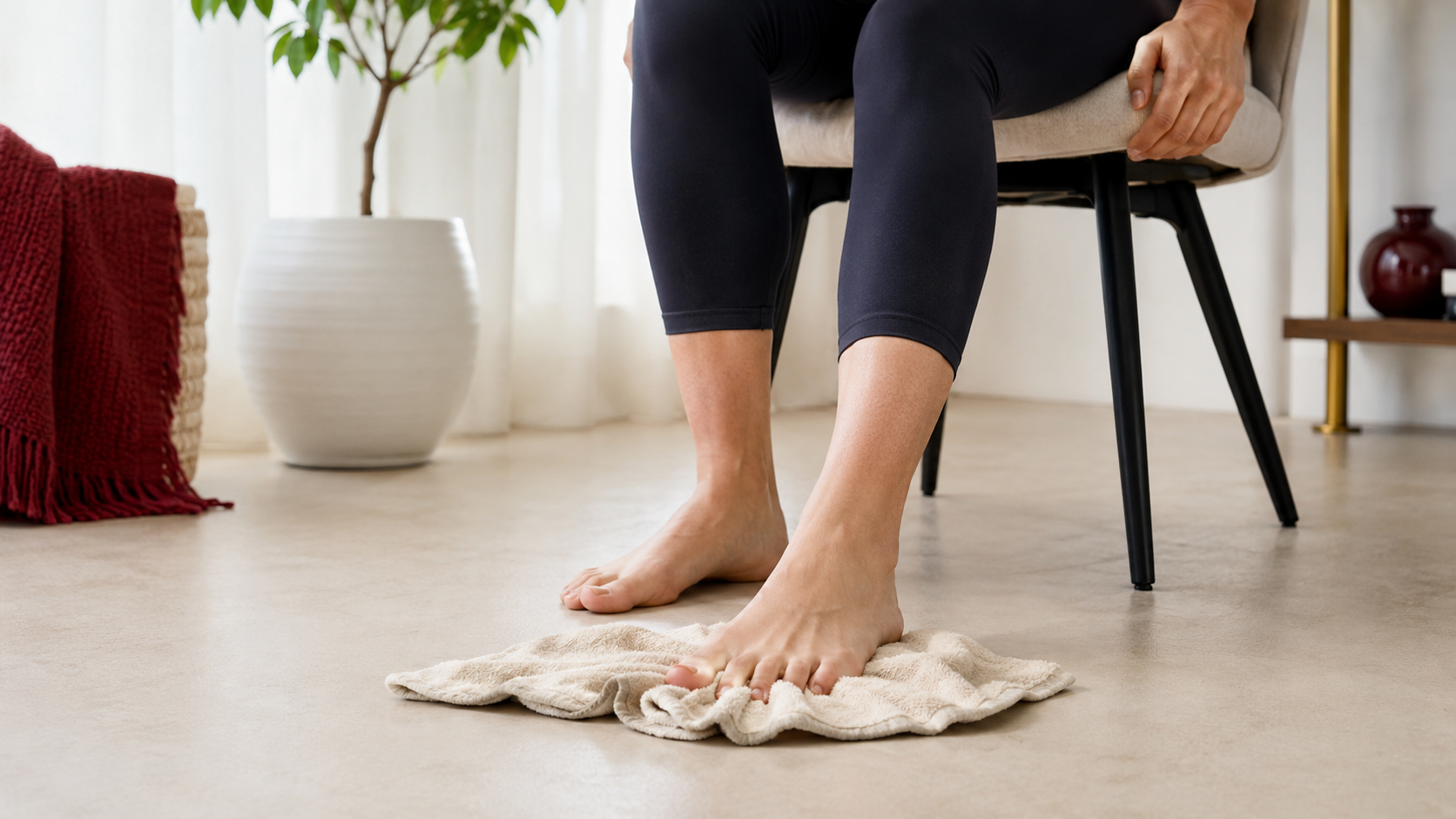
The towel scrunch is one of the easiest plantar fasciitis exercises because you can stay seated the whole time. It works the small muscles under the foot that help support the arch.
How to Do It
- Lay a towel flat on the floor.
- Place your foot flat on top of the towel.
- Keep your heel in contact with the floor.
- Use your toes to scrunch the towel toward you.
- Relax and repeat slowly.
2. Marble Pick-Ups
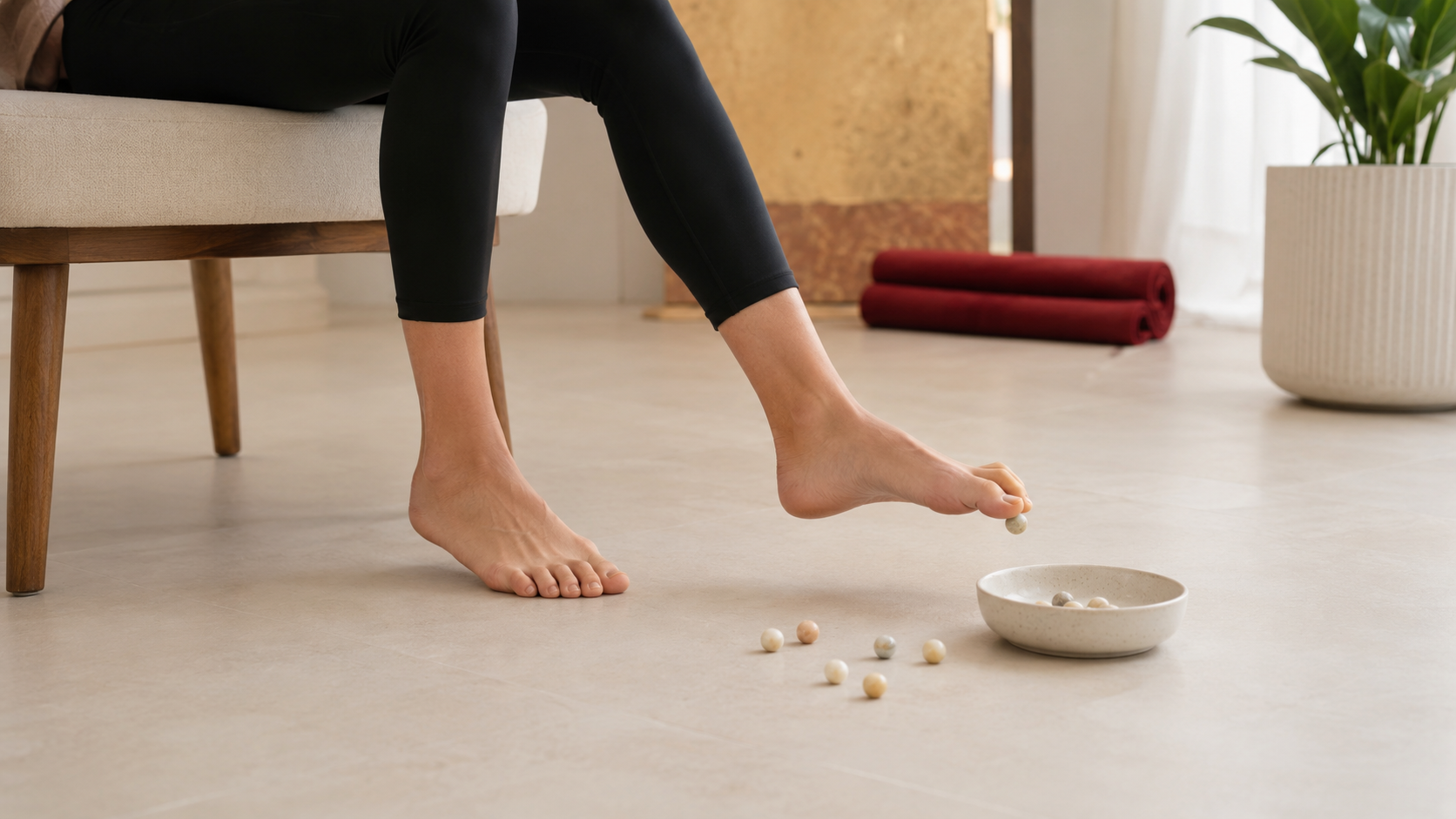
Marble pick-ups are another foot-strengthening exercise that can be done seated or standing. They help train toe control and small foot muscles.
How to Do It
- Place a bowl on the floor.
- Place marbles, small balls, or similar small objects in front of your foot.
- Use only your toes to pick up one object at a time.
- Drop each object into the bowl.
- Continue for a few minutes, staying relaxed and controlled.
3. Arch Lifts
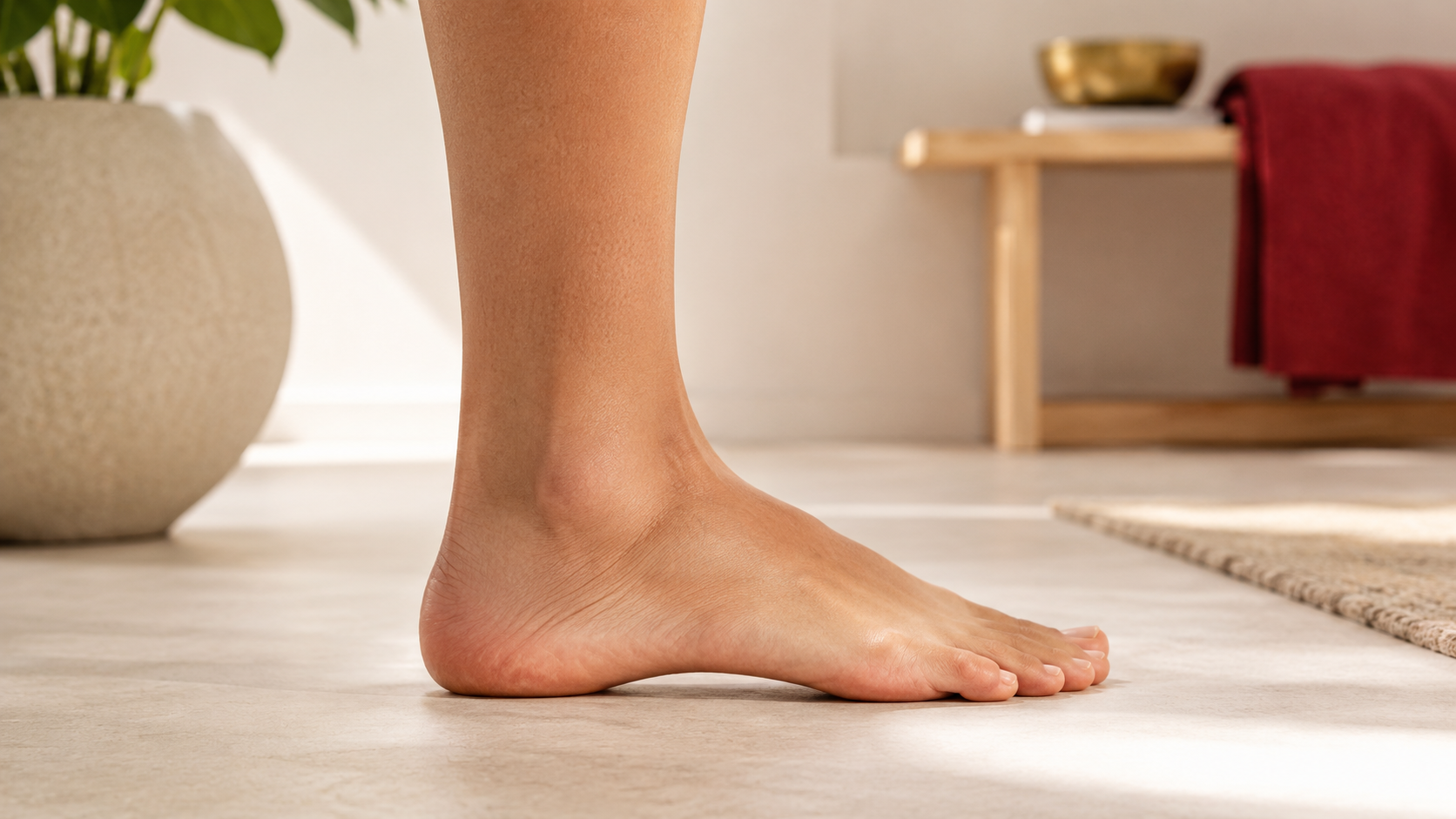
Arch lifts target the muscles on the sole of the foot that help support the arch. This exercise is subtle, but it can be useful for building better foot control.
How to Do It
- Sit on a chair with your foot flat on the floor.
- Keep your heel and the ball of your foot touching the floor.
- Gently lift the arch of your foot by engaging the muscles under the foot.
- Hold for a few seconds.
- Relax and repeat slowly.
4. Heel Raises
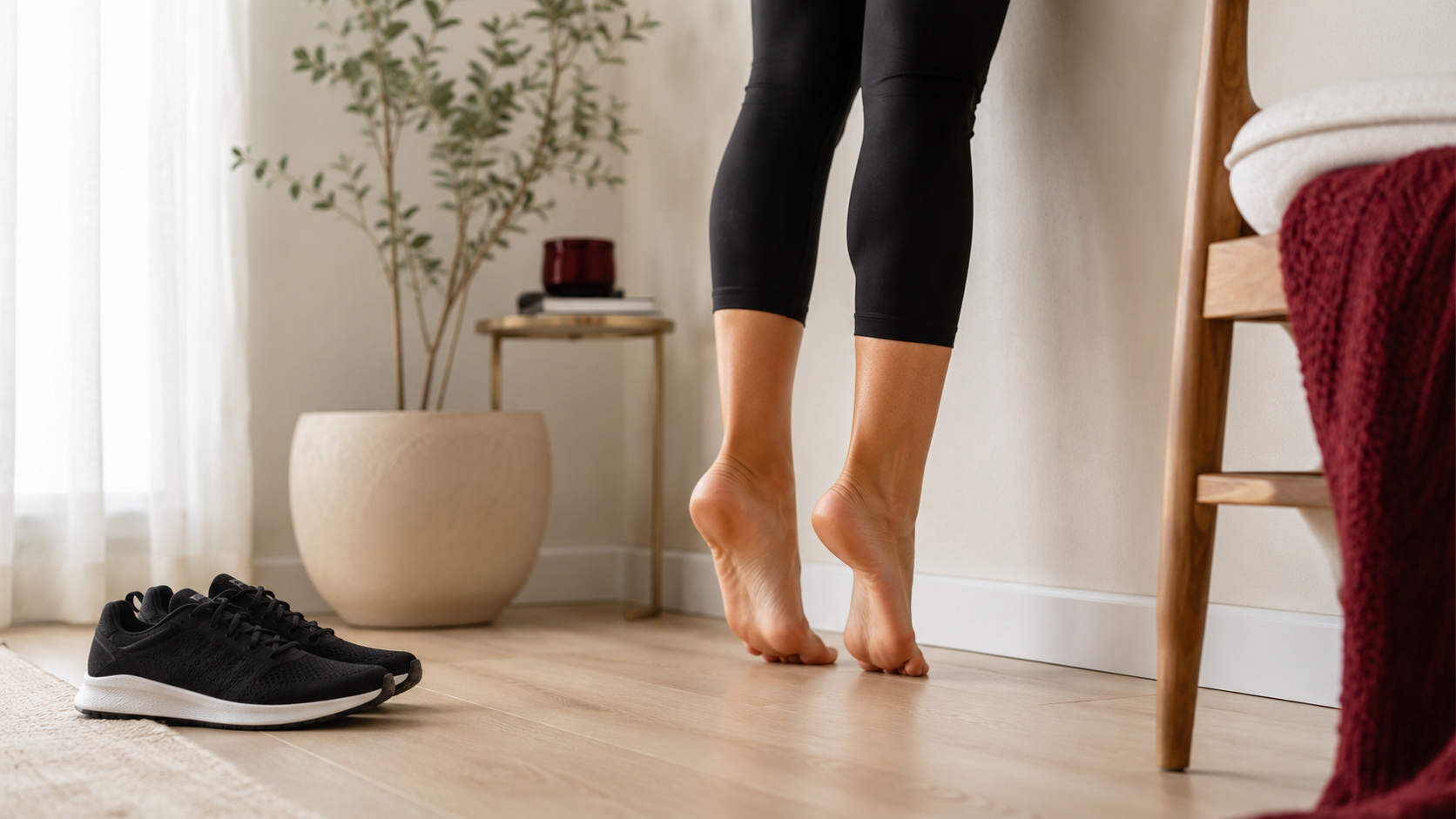
Weak calf muscles can affect how the foot moves. Heel raises help strengthen the calf and improve control through the ankle and foot.
How to Do It
- Stand with both feet flat on the floor.
- Hold a wall, chair, or railing for balance if needed.
- Push through the balls of your feet and raise your heels.
- Hold the tip-toe position for a couple of seconds.
- Lower your heels slowly with control.
5. Heel Raises on the Stairs
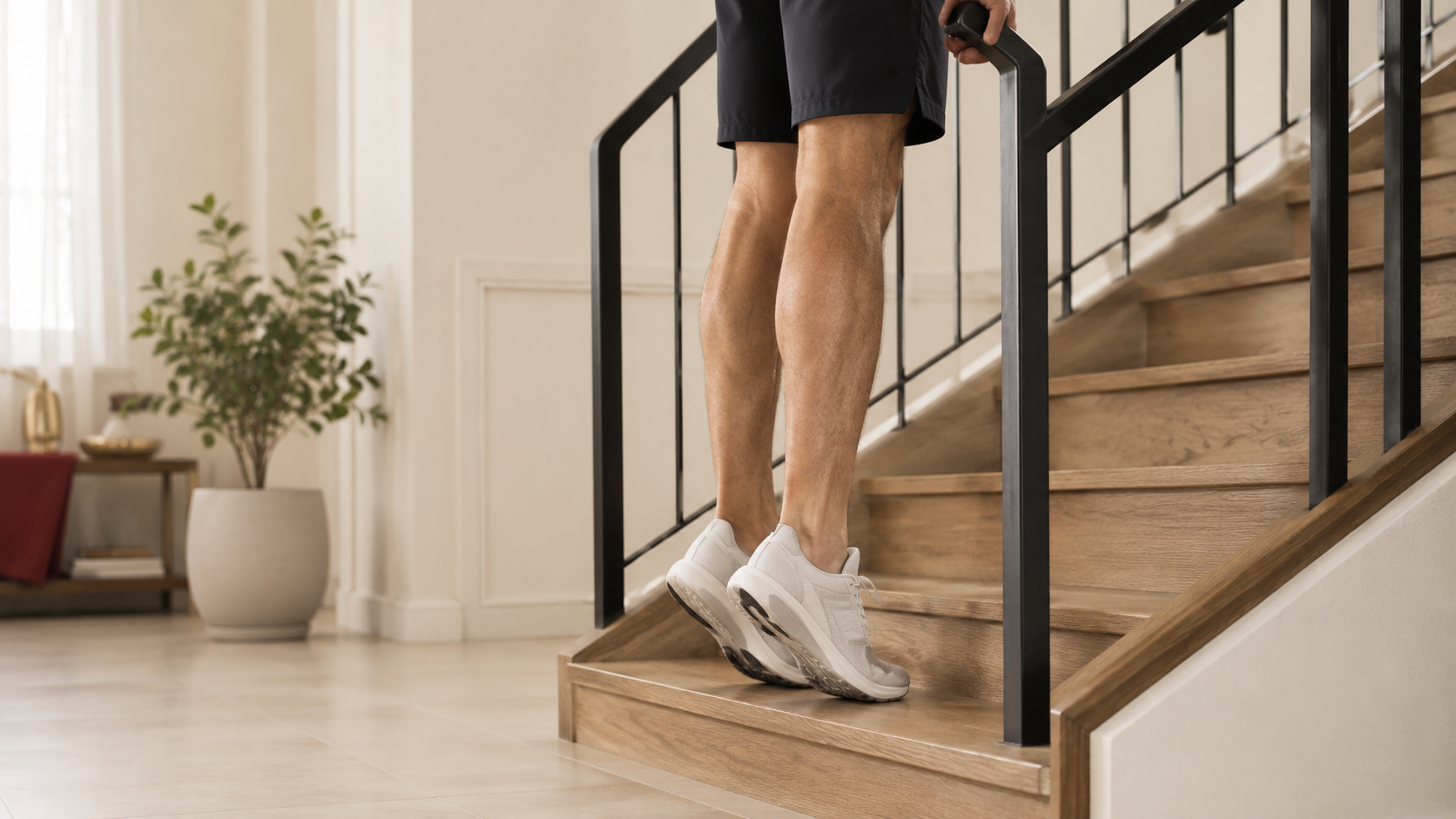
This is similar to a standard heel raise, but it is more challenging because you stand on a step. Use caution and keep the movement controlled.
How to Do It
- Stand on a step while holding a railing for support.
- Position your feet so the heels are near or slightly over the edge.
- Push up on the balls of your feet into a heel raise.
- Lower slowly back to the starting position.
- Do not drop your heel far below the step level if that causes discomfort.
6. Tip-Toe Walking
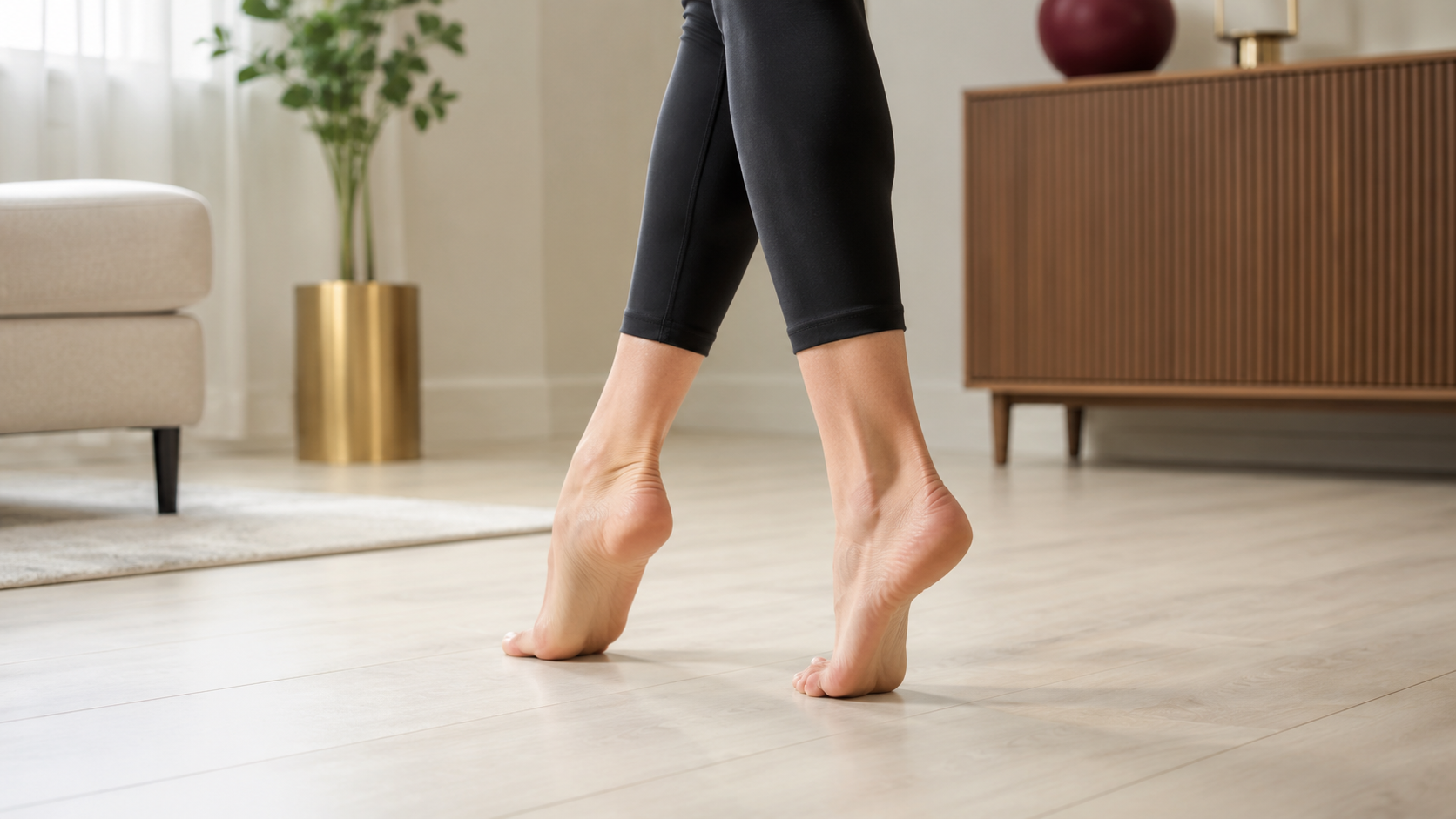
Tip-toe walking can strengthen the calf muscles and improve control and stability around the ankles. It should feel controlled, not rushed.
How to Do It
- Stand tall and rise onto the balls of your feet.
- Walk slowly around the room on tiptoes.
- Keep the steps small and controlled.
- Use a wall, walking stick, or support if balance is difficult.
- Stop if heel or calf pain increases.
7. Single-Leg Standing
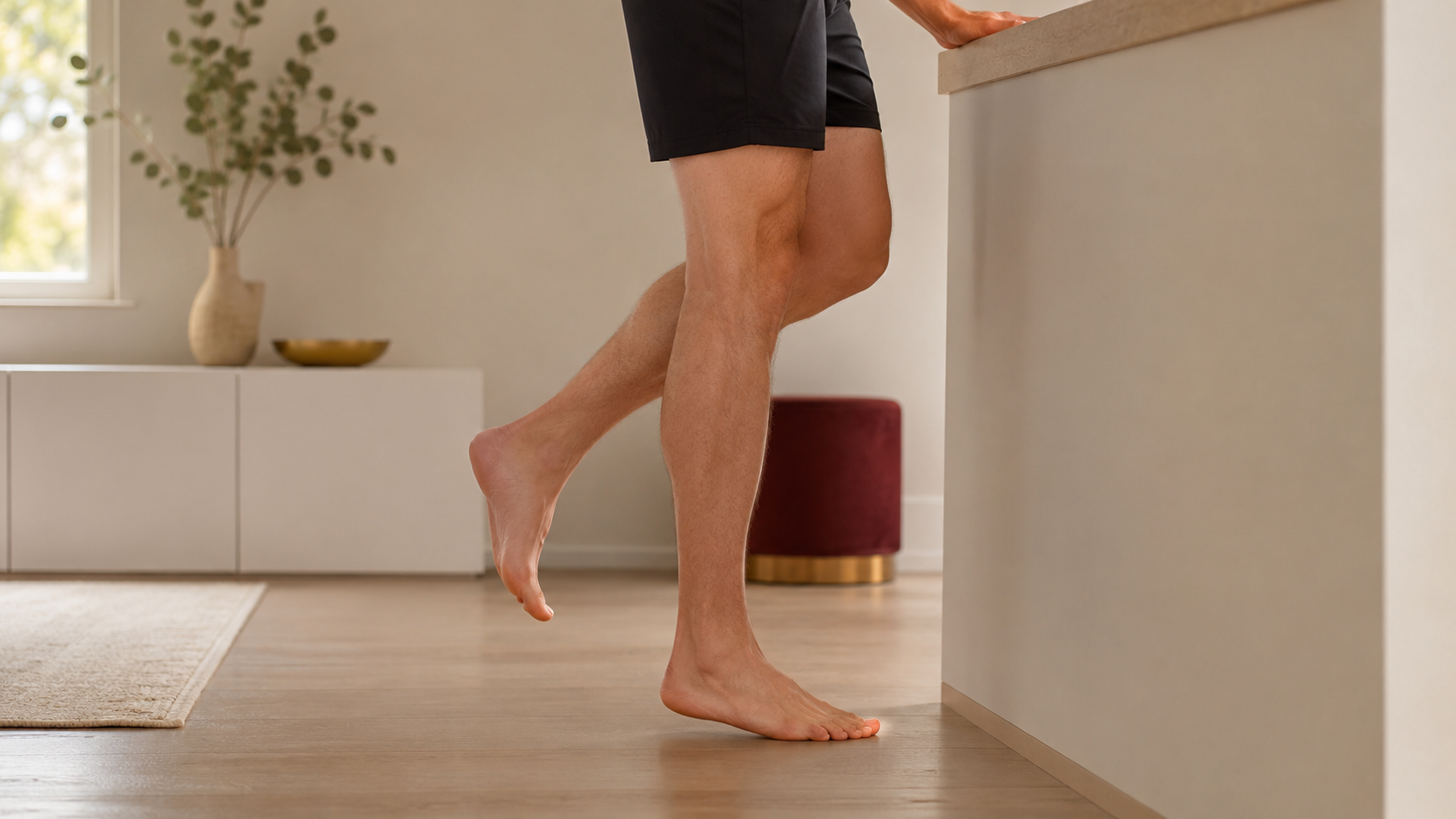
Single-leg standing helps improve balance and foot-and-ankle control. It is simple enough to add into a daily routine, such as while brushing your teeth or standing near a counter.
How to Do It
- Stand near a wall, chair, or counter.
- Lift one foot off the floor.
- Balance on the other foot.
- Keep your knee soft, not locked.
- Switch sides and repeat.
8. Towel Stretch
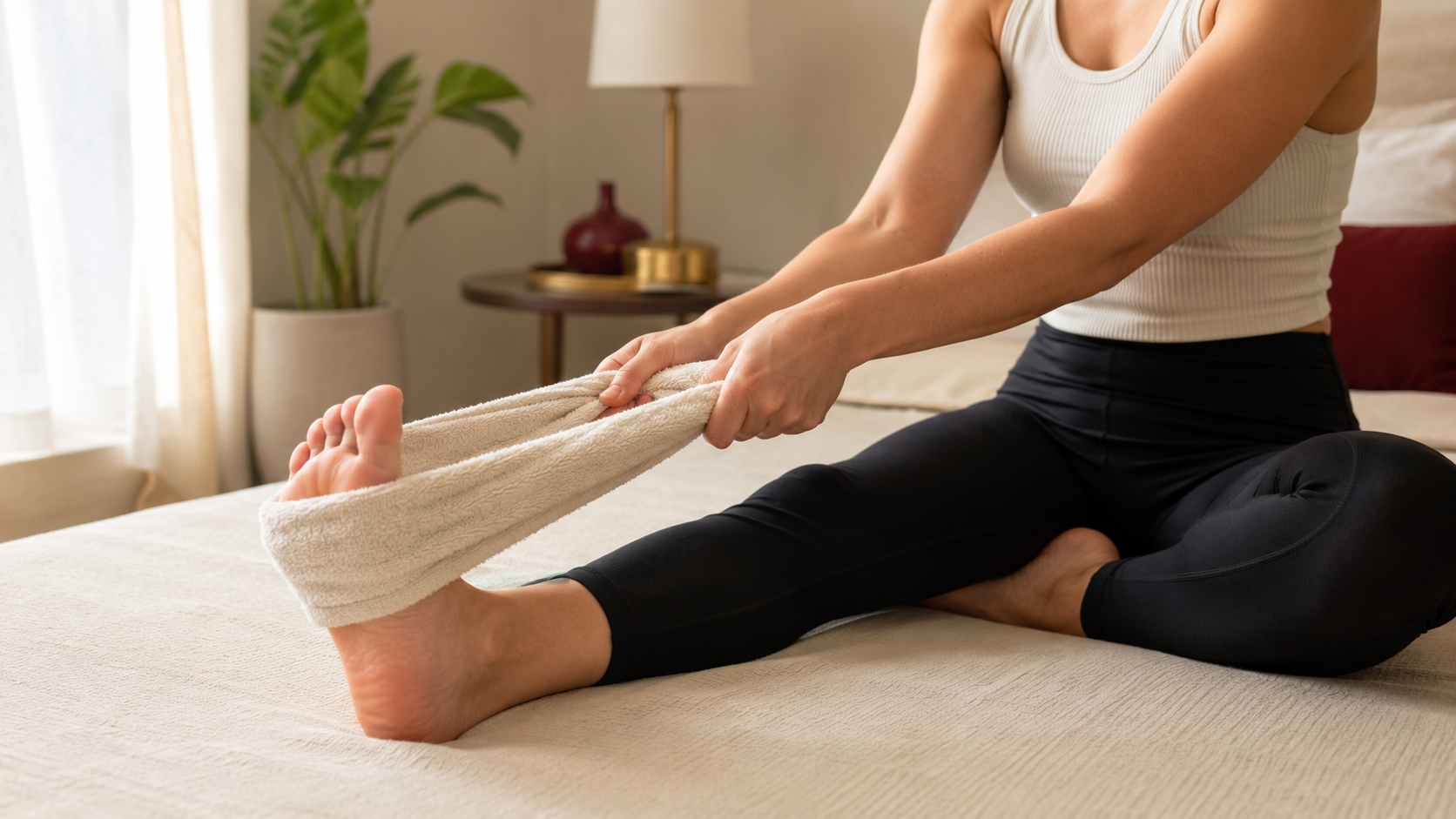
The towel stretch is an easy seated stretch that targets the calf and bottom of the foot. It can be especially useful before standing in the morning.
How to Do It
- Sit on the floor or bed with your legs outstretched.
- Loop a towel around the ball of your foot.
- Hold both ends of the towel.
- Gently pull the towel toward you while keeping the knee straight.
- Hold for about 30 seconds if comfortable.
9. Toe Stretch
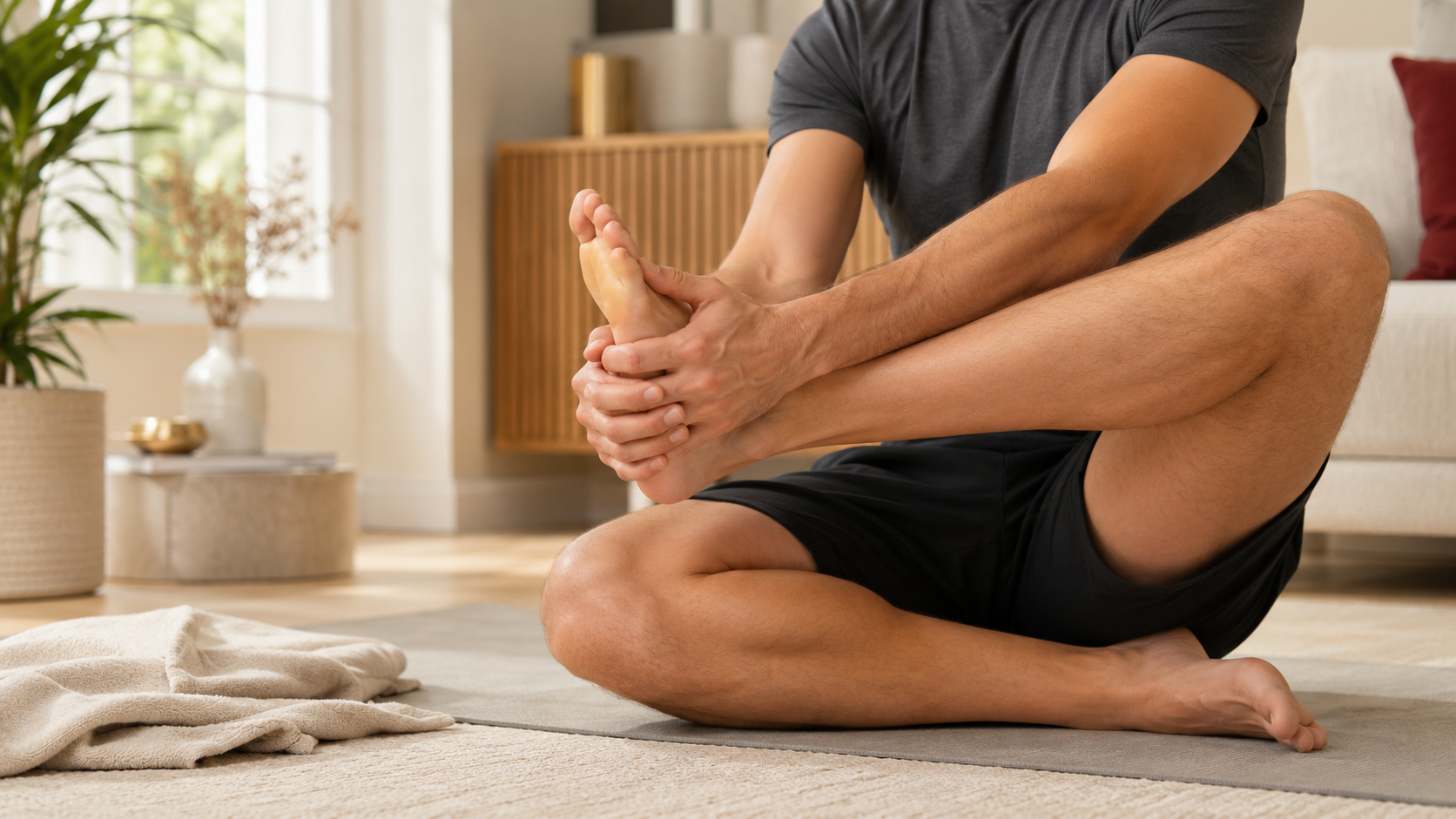
The toe stretch directly targets the plantar fascia area by gently pulling the toes back toward the shin.
How to Do It
- Sit on a chair.
- Extend the affected leg with the heel resting on the floor.
- Reach down and gently pull the big toe upward and back toward you.
- Hold for up to 30 seconds if comfortable.
- Repeat a couple of times per session.
10. Foot Roller
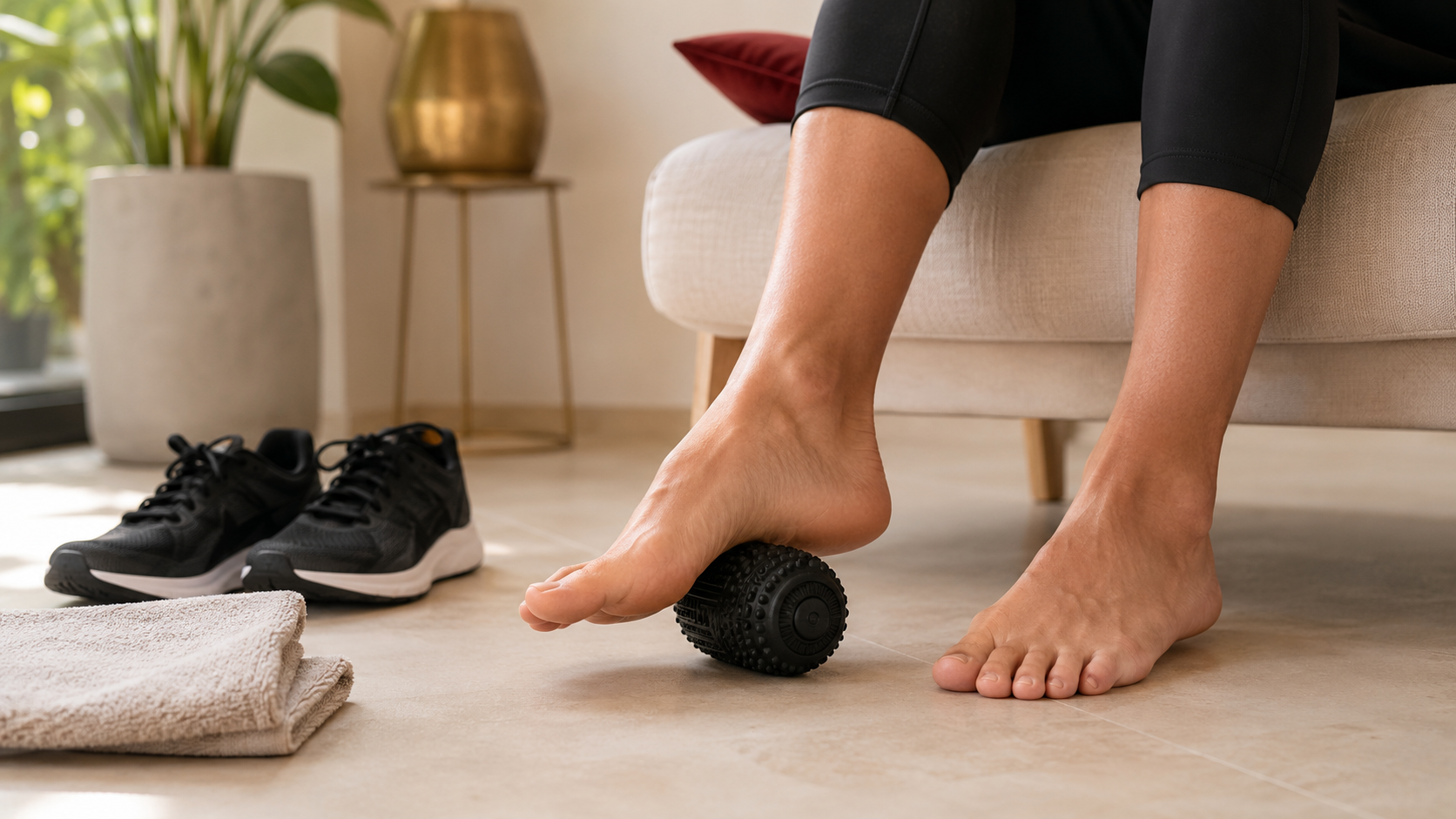
A foot roller, massage ball, tennis ball, or iced bottle can be used to roll the underside of the foot. This may help massage the plantar fascia and improve short-term comfort.
How to Do It
- Place a tennis ball, massage ball, foot roller, or iced bottle under your foot.
- Start while seated so you can control pressure.
- Roll gently back and forth under the arch.
- Avoid pressing aggressively into sharp heel pain.
- Continue only as long as it feels comfortable.
Simple Daily Routine
You do not need to do every exercise at full volume every day. A smaller routine done consistently is usually more practical than forcing all 10 exercises at once.
| Goal | Exercises to Try | Best Time |
|---|---|---|
| Ease first-step pain | Towel stretch, toe stretch, foot roller. | Before getting out of bed or after rest. |
| Build arch control | Towel scrunch, marble pick-ups, arch lifts. | Seated daily routine. |
| Strengthen calf support | Heel raises, stair heel raises, tip-toe walking. | When symptoms are calm and controlled. |
| Improve balance | Single-leg standing. | Near a wall, counter, or stable support. |
Shoes, Insoles, and Daily Support
Exercises can help, but they work best when your feet are supported during the rest of the day. If your shoes are flat, worn out, unstable, or lacking arch support, your plantar fascia may keep getting irritated between exercise sessions.
What to Look For
- Heel cushioning: Helps soften repeated impact during walking and standing.
- Arch support: Helps support the foot’s natural shape and reduce plantar fascia strain.
- Stable midsole: Helps reduce wobble and excessive foot movement.
- Secure fit: Helps prevent sliding and toe gripping inside the shoe.
- Low-profile insole design: Adds support without overcrowding compatible everyday shoes.
For more guidance, see our Fit & Trim Guide, Size Guide, or explore supportive insoles designed for everyday comfort.
Related Guides
Plantar fasciitis exercises work best when they are part of a broader comfort plan. These related guides can help you build that plan more clearly:
Support Your Feet Between Exercise Sessions
Exercises can help build strength and flexibility, but your feet still need support during the rest of the day. InsoleLux insoles are designed to add low-profile arch support and heel comfort inside compatible everyday shoes.
FAQ
What are the best plantar fasciitis exercises?
Helpful exercises often include towel scrunches, marble pick-ups, arch lifts, heel raises, towel stretches, toe stretches, and foot rolling. The best routine depends on your symptoms and comfort level.
Should plantar fasciitis exercises hurt?
No. A mild stretch or controlled effort is okay, but sharp pain is a sign to stop. Reduce intensity or speak with a professional if symptoms worsen.
How often should I do plantar fasciitis exercises?
Many gentle stretches can be done daily, while strengthening exercises should start with low volume and build gradually. Consistency matters more than intensity.
Are strengthening exercises important?
Yes. Stretching may reduce tension, while strengthening the foot, ankle, and calf can improve support and control during walking and standing.
Can I do heel raises with plantar fasciitis?
Heel raises may help strengthen the calf, but they should be controlled and pain-free. Start on flat ground before trying stair variations.
What should I do first in the morning?
Try gentle ankle movement, a towel stretch, toe stretch, or light foot rolling before standing. Then step into supportive shoes instead of walking barefoot on hard floors.
Do insoles help with plantar fasciitis exercises?
Insoles do not do the exercises for you, but supportive insoles may help improve heel and arch comfort during the rest of the day inside compatible shoes.
When should I get professional help?
Seek professional advice if heel pain is severe, worsening, lasting more than a few weeks, affecting walking, linked with swelling or numbness, or caused by injury.
Final Take
The best plantar fasciitis exercise routine combines gentle stretching with gradual strengthening. Towel scrunches, marble pick-ups, arch lifts, heel raises, towel stretches, toe stretches, and foot rolling can all play a role.
To see progress, consistency matters. Start gently, avoid sharp pain, and build the routine around what your foot tolerates.
For better day-to-day comfort, pair exercises with supportive shoes and low-profile insoles that help reduce strain through the heel and arch.

Pingback: Simple Plantar Fasciitis Stretch for Heel Comfort | InsoleLux
Pingback: 3 Ways a Foot Roller May Help Plantar Fasciitis | InsoleLux